From Curling Controversy to Olympic Comeback: Canada's Dramatic Turnaround
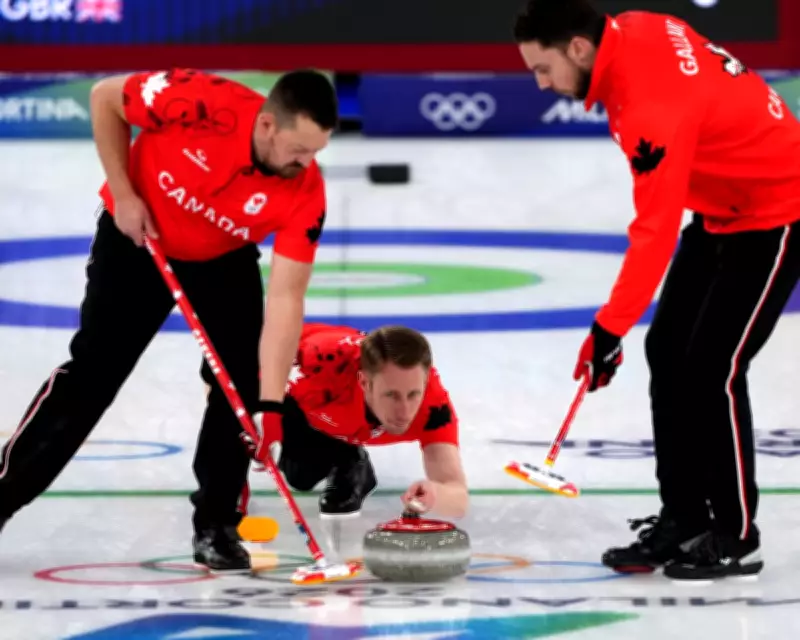
The Canada men's curling team, embroiled in a heated controversy involving confrontations with Sweden, remains firmly in contention for Olympic gold at the Milano Cortina Games. This development comes as part of a broader narrative shift for the Canadian Olympic delegation, which has transformed from early disappointment to genuine medal contention.
A Rocky Start and Viral Scandals
Canada's Olympic journey began with significant challenges, including a cheating scandal and an extended gold medal drought that lasted through the first eight days of full competition. The initial narrative focused overwhelmingly on what became known as the Great Curling Kerfuffle of 2026, which generated substantial viral attention online.
Through the opening ten days of the Games, Canada found itself generating more internet memes than podium finishes, more embarrassing gaffes than gold medals, and more expressions of disappointment than renditions of the national anthem. The team's first gold medal didn't arrive until the ninth day of competition, creating mounting pressure and scrutiny.
Historical Context and Program Evolution
To understand Canada's current position, one must examine their Winter Olympic history. At the 1988 Calgary Games, the host nation failed to win any gold medals, securing only two silver and three bronze medals. However, those Games offered glimpses of future success through demonstration sports including curling, freestyle skiing, and short-track speedskating, where Canada excelled.
As the Olympic program expanded, Canada's medal tally grew proportionally. The implementation of the "Own the Podium" campaign in 2005 represented a strategic investment that paid substantial dividends when Canada hosted again in 2010, earning a then-record 14 gold medals and 26 total podium finishes.
The Current Medal Landscape
Through Tuesday's competition, Canada has accumulated three gold medals and twelve total podium finishes. While this might suggest another modest performance similar to Beijing 2022's four-gold outcome, the distribution of remaining events favors Canadian strengths.
The early portion of these Games featured numerous events in disciplines where Canada traditionally doesn't dominate, including Alpine skiing, Nordic skiing, biathlon, luge, and skeleton. The nation's greatest Winter Olympic opportunities have consistently emerged from those same demonstration sports that showed promise in 1988: curling, freestyle skiing, and short-track speed skating.
Freestyle Skiing Leads the Charge
Freestyle skiing has emerged as Canada's most productive discipline thus far, delivering four medals including gold and silver for Mikaël Kingsbury and gold and bronze for Megan Oldham. Additional medal opportunities remain with skicross phenom Reece Howden, halfpipe medalist Cassie Sharpe, and the mixed aerials team. Canadian snowboarders competing at the same venues also present strong podium potential.
Short-Track Speed Skating Adjustments
The only area underperforming relative to expectations has been short-track speed skating. Courtney Sarault has secured medals in two individual events with one remaining opportunity, plus a third medal in the mixed relay. Steven Dubois and William Dandjinou have reached finals without securing individual medals but retain additional chances in both individual events and the men's relay.
Team Sports: Hockey and Curling Dynamics
The Olympic curling tournament continues with both Canadian teams navigating challenging paths. The mixed doubles team missed playoffs with a 4-5 record, while the women's team, despite consecutive world championships and dominant rankings since Rachel Homan and Tracy Fleury joined forces, suffered unexpected losses to underdog American, less-experienced British, and powerful Swiss teams.
However, Homan's team has demonstrated resilience, securing convincing victories against China and Japan before winning a thrilling match against first-place Sweden on Tuesday to strengthen their playoff prospects.
In ice hockey, the men's team, featuring returning NHL players and considered overwhelming favorites to reach the podium, comfortably won their group. The women's team experienced a 5-0 rout against the United States in their initial showdown without captain Marie-Philip Poulin, then required two goals from Poulin to defeat a determined Swiss team 2-1 in the semi-finals, setting up Thursday's seventh gold-medal meeting between the historic rivals.
The Curling Controversy Unpacked
While curling originated in Scotland, it has found its greatest popularity in Canada, where the sport aligns with positive national stereotypes of politeness and sportsmanship. This image suffered significant damage during Canada's men's match against defending Olympic champion Sweden.
Marc Kennedy, a 2010 gold medalist, reacted with profane anger to Swedish accusations that he illegally touched a stone upon delivery. When video evidence strongly suggested Kennedy had indeed touched the granite after release, the Canadian response focused on accusing the Swedish team of illegally recording video inside the venue rather than addressing the infraction directly.
Kennedy's teammates compounded the controversy by suggesting Sweden was "frustrated" and "trying to get in our heads," while pointedly comparing team records, despite maintaining they would share postgame drinks with their opponents as curling tradition dictates.
Projected Outcomes and Final Push
Round-robin curling play continues through Thursday, with the men's final scheduled for Saturday and women's for Sunday. Overall, Canada has a solid chance to secure ten to twelve additional medals, potentially pushing their total comfortably into the twenties.
While matching the fourteen-gold performance of the 2010 home Games appears increasingly unlikely, repeating the modest four-gold outcome of Beijing 2022 seems equally improbable. The possibility exists for Canada to challenge the United States in gold medal counts, though surpassing American total medal numbers remains doubtful given US strengths in ice hockey, speed skating, women's figure skating, freestyle skiing, and snowboarding.
What began as a narrative dominated by "curling controversy" has transformed into a story of "Canadian comeback," with the team demonstrating resilience across multiple disciplines as the Games approach their conclusion.