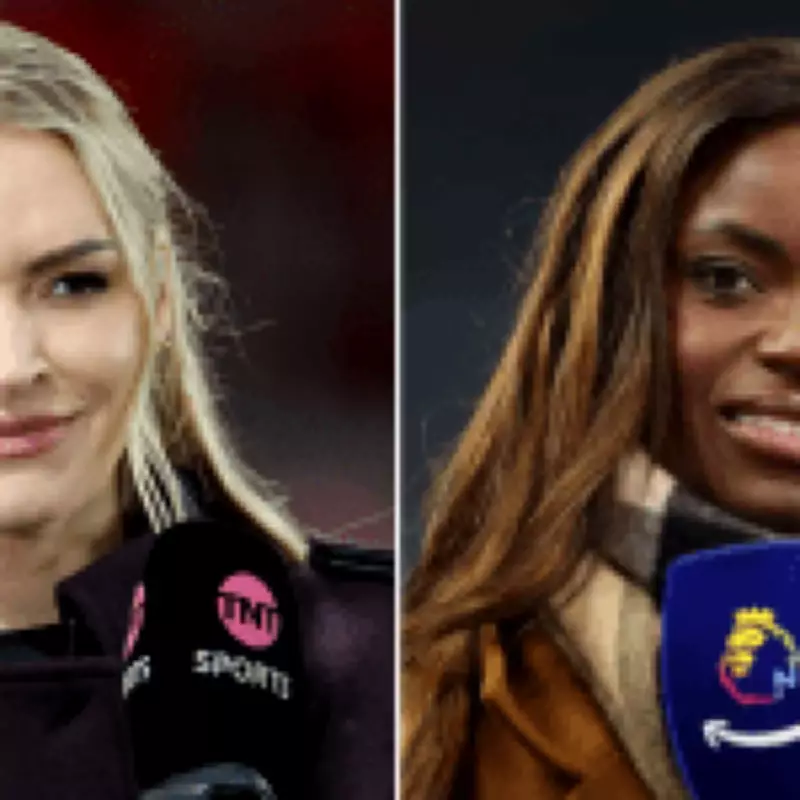
Laura Woods has publicly criticised fellow broadcaster Eni Aluko over what she describes as 'damaging' comments regarding who should cover women's football on television. The dispute centres on Aluko's recent remarks about the inclusion of male pundits in high-profile women's matches, which have reignited a feud with former footballer Ian Wright.
The Controversial Comments
Former England forward Eni Aluko, speaking on the 90s Baby Show podcast, expressed strong views about punditry opportunities in women's football. The 38-year-old argued that women should take the leading roles in covering their own sport, suggesting that male involvement should be limited to supporting positions.
Aluko stated: 'In the women's game the opportunities are even more limited, so the main characters of the show should be the women. Men should be part of that. I'm not saying anybody should be excluded, I believe in diversity wholeheartedly, but the same way we've played a role in the men's game that's a supporting role, you're part of the ensemble, you're never going to get the premium final games, it should be the same way for women's football.'
Historical Context and Personal Investment
The former footballer emphasised her long-standing commitment to women's football, noting: 'I've always been protective about women's football because I've done a lot, I've invested a lot, I was doing women's football when it didn't pay to do women's football. Now we're reaping the rewards I'm like women should be winning right now.'
Aluko highlighted specific examples from last year's Lionesses Euro 2025 final coverage, pointing out that while she and former teammate Fara Williams (with a combined 290 England caps) were sitting in the stands, broadcasters ITV and BBC featured male pundits including Ian Wright and Nedum Onuoha in their studio panels.
Woods' Strong Rebuttal
Laura Woods, who has worked alongside Aluko in covering women's football, responded forcefully on social media platform X. She challenged Aluko's assertion that caps should guarantee punditry roles, writing: 'Caps don't win automatic work and they don't make a brilliant pundit either. The way you communicate, articulate yourself, do your research, inform your audience, how likeable you are and the chemistry you have with your panel are what makes a brilliant pundit.'
Calling Out 'Damaging' Language
Woods took particular issue with Aluko's statement that 'the women's game should be by women for women,' describing it as 'one of the most damaging phrases I've heard.' She argued: 'It will not only drag women's sport backwards, it will drag women's punditry in all forms of the game backwards.'
The presenter emphasised the importance of inclusivity for growing the sport: 'If you want to grow something, you don't gate keep it. We want to encourage little boys and men to watch women's football too, not just little girls and women. And when they see someone like Ian Wright taking it as seriously as he does – they follow suit. That's how you grow a sport.'
Broader Implications for Broadcasting
Woods defended ITV's approach to women's football coverage, noting that their production team won best production at the Broadcast Sport Awards 2025 for their coverage of the women's Euros, with commentator Seb Hutchinson also receiving recognition. She concluded: 'So I think ITV got it just right.'
Aluko responded to questions about potential solutions, suggesting that more female pundits should be included in high-profile men's matches to create fairness. She stated: 'If I'm not doing the women's final but I'm getting a job doing the men's final then it is what it is, but I can never do the men's final so the only way I have an opportunity is to do the women's final but now I can't do the women's final, and I can't bring all of that experience and insight.'
The Ongoing Feud with Ian Wright
This latest controversy follows Aluko's previous criticism of Ian Wright, whom she accused of 'blocking' opportunities for female broadcasters by appearing regularly on women's football coverage. Although she issued an apology that Wright did not accept, the feud has been reignited through these latest comments about punditry selection.
The debate raises fundamental questions about:
- The criteria for selecting sports pundits
- The balance between experience and broadcasting ability
- How to grow women's football through inclusive coverage
- The role of male allies in promoting women's sport
As women's football continues to grow in popularity and commercial value, this public disagreement between two prominent figures in sports broadcasting highlights the ongoing tensions around representation, opportunity, and the best path forward for the sport's media coverage.