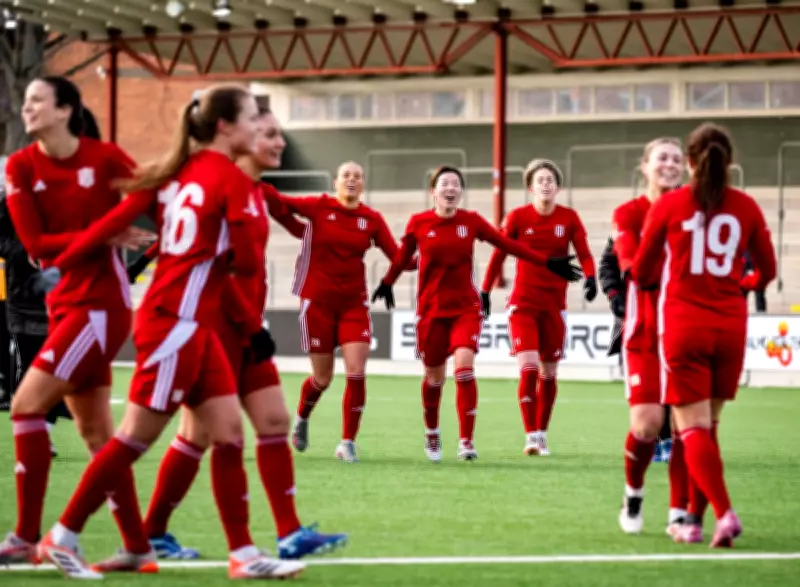
Piteå IF's Financial Struggle: Sweden's Northern Football Outlier Faces Impossible Puzzle
Piteå IF are entering their 17th consecutive season as a top-division side in Sweden's prestigious Damallsvenskan, but the challenges confronting this northern club are intensifying with each passing year. The primary obstacle isn't budgetary constraints relative to southern powerhouses like Hammarby and Häcken, who benefit from affiliations with major men's clubs, or the revitalized Malmö FF squad. Instead, it's the profound geographical isolation that has placed an unsustainable strain on the club's financial resources.
The Geographical Reality of Swedish Women's Football
The stark reality is that Piteå IF stand as a solitary outlier in the league's geographical landscape. Thirteen of the fourteen Damallsvenskan teams are based in southern Sweden, with four clubs located within Stockholm municipality and three more on its outskirts, plus two teams in Malmö at the country's southernmost tip. Piteå's closest away fixture requires a grueling 487-mile road journey to Uppsala, while trips to Malmö stretch to an astonishing 908 miles each way.
"We are prioritising costs over performance, which is the saddest part," reveals Emelie Lövgren, Piteå's managing director and a former player for the club. "What is changing now, especially since Covid-19, is prices are going up. It's increasing every season, getting harder and harder. Teams are developing, it's been fast-tracked, and that makes it even tougher for us. But if we don't increase salaries and expand the organisation we won't keep up, it's an impossible puzzle."
The Crushing Weight of Travel Expenses
The 2018 league champions, who subsequently competed in the Women's Champions League, are now feeling the severe pinch of escalating travel costs. At the beginning of last month, they joined five other elite sports clubs across northern Sweden in issuing a joint appeal regarding the unsustainable rise in operational expenses.
James Burgin, the club's sporting director and an Englishman who spent many years playing for Piteå's men's team, explains the dilemma: "It's a complete catch-22. Inflation ... wages are going up 15-20% a year. From a sporting perspective, from where we are it's an added challenge to bring players here and have players in our squad from the south."
The financial realities are laid bare through specific examples. An average trip to Stockholm, of which there are approximately six per season, costs roughly £8,000 (95,000KR). One recent cup match resulted in travel expenses reaching £14,000. Even home games incur increasing costs because match officials are predominantly based in southern regions, with some official travel expenses now as high as £700 per match.
Survival Strategies and Their Consequences
Burgin estimates the club currently spends approximately £200,000 annually on travel alone. To balance the books, Piteå have been forced to sell several of their best players, including goalkeeper Lauren Brzykcy to Bristol City in January. "To get a player here for more than a year is really hard," Burgin admits. "This is seen as a stopgap to go to Stockholm."
The club has implemented various cost-saving measures, including traveling with reduced squads and enduring travel disasters like a coach trip to Karlstad for a cup match against Mallbackens IF, only to discover the match had been postponed when they were mere miles from their destination.
Seeking Solutions and Raising Awareness
Lövgren emphasizes that Piteå aren't alone in this struggle: "We're not the only elite sport in the north. There is handball, ice hockey, basketball, they are all in the same boat as us, but without the support from their FAs. We're planning to team up with an initiative to increase awareness of the struggles for not just us, but all the other sports too."
She stresses the need for systemic change: "It's not something that we can just change, it has to come centrally. We have the Athletics Association who lead all the sports and we have sat down with their chairman, so we are raising awareness together because this is going to bring the northern teams down, which will be devastating."
The human impact extends beyond the club itself: "It's not for me, it's for the players running around on the pitch, the hundreds of thousands of kids in this part of Sweden dreaming of becoming an elite footballer. If we're not going to be here there won't be a team for them, that would be devastating for the region."
Potential Pathways Forward
Burgin notes that increased media attention is helping the cause: "Main TV channels have picked up on it too, so it's gaining traction here." Regarding potential solutions, he suggests: "We have to look at possibilities such as external investment. FC Rosengård, who have a long history, have been taken over by the Crux Group, but it needs someone to understand the issues we have and the effects of it, it could be fatal for us. Every club has their own intentions, most clubs would happily get rid of us. The fans care, the Hammarby fans are great, but we need wider support."
Lövgren highlights structural barriers to investment: "What we struggle with compared to England is we are owned by members, so a Michele Kang cannot just come in without agreement with those members. There is the 51% rule [a rule designed to ensure club members retain overall control of club shares], so you'd have to change laws etc. I'd gladly be bought by an investor, but it's not possible right now."
When asked about the club's sustainability timeline, Lövgren delivered a sobering assessment to the Swedish FA: "I said three years, we can't keep going beyond that at the moment." This statement underscores the urgent need for systemic solutions to preserve top-flight women's football in Sweden's northern regions.