Sunday's Super Bowl LX in Santa Clara promised a correction from last year's Trump-dominated spectacle, aiming to welcome the sport's non-Maga contingent back into the tent. The event unfolded as a potential referendum on America's post-Trump sporting future, with a subdued tone that contrasted sharply with previous years' political fervour.
A Game of Restraint and Reflection
The absence of Donald Trump, who skipped the Bay Area event amid low approval ratings and midterm concerns, created space for what many hoped would be a depoliticised celebration. The pre-game ceremony marking the Declaration of Independence's 250th anniversary carried what observers described as "jingoism on Ozempic" - a muted, almost apologetic patriotism. YouTuber Charlie Puth delivered a whisper-soft national anthem, dressed like a fun dad heading to parent-teacher night, further establishing the evening's restrained atmosphere.
On-Field Action and Broadcast Commentary
The Seattle Seahawks' victory over the New England Patriots unfolded as a defensive struggle that commentators described as having "all the carefree charm of a medieval torture procedure." NBC's broadcast team of Mike Tirico and Chris Collinsworth matched the soporific mood, with Collinsworth noting the obvious - "this is shaping up as a defensive game" - while Tirico juggled Super Bowl duties with Winter Olympics coverage reminders.
Even in victory, Seahawks quarterback Sam Darnold focused on improvement, telling sideline reporter Melissa Stark: "I know we won the Super Bowl, but we could have been a little bit better on offense." This corporate retreat mentality permeated the event, positioning it as a moment for reflection rather than celebration.
The Cultural Question: Woke or Not?
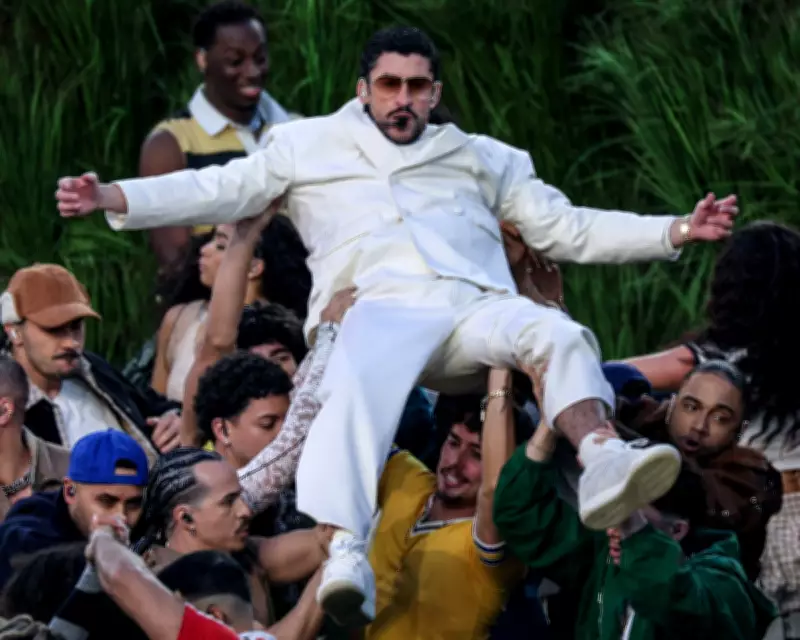
The selection of Bad Bunny as halftime headliner appeared designed as ragebait for Red America, yet the performance avoided overt political statements. Despite the field's unconvincing transformation to resemble San Juan's hinterland, no protests about ICE or laments about authoritarianism emerged. The event seemed more about ledger-evening than liberation, welcoming back disaffected fans without committing to progressive causes.
Commercial Realities and Capitalist Spectacle
The advertising breaks revealed more about contemporary culture than the game itself. Apart from eccentric cameos from Guy Fieri as "some guy" for Bosch tools and William Shatner as Raisin Bran's "Will Shat," commercials clustered around predictable themes: artificial intelligence, gambling, food delivery, and insurance. This taxonomical miniature presented a vision of slop, speculation, commons retreat, and disaster indemnification.
Amid the on-field tedium, Super Bowl LX served as a powerful advertisement for capitalism's theatre and violence. The $180 burger shock provided bipartisan unity, while the overall production carefully balanced inclusion with commercial imperatives.
Conclusion: Normalisation or Stagnation?
The question remains whether football can be normal again after years of political polarisation. While Sunday's event avoided last year's Trumpified debacle, it replaced drama with corporate restraint. The NFL successfully welcomed back some alienated fans without fundamentally challenging commercial realities. Progress appeared measured in boredom rather than breakthrough, suggesting that in America's biggest sporting spectacle, capitalism's spectacle remains the main event.