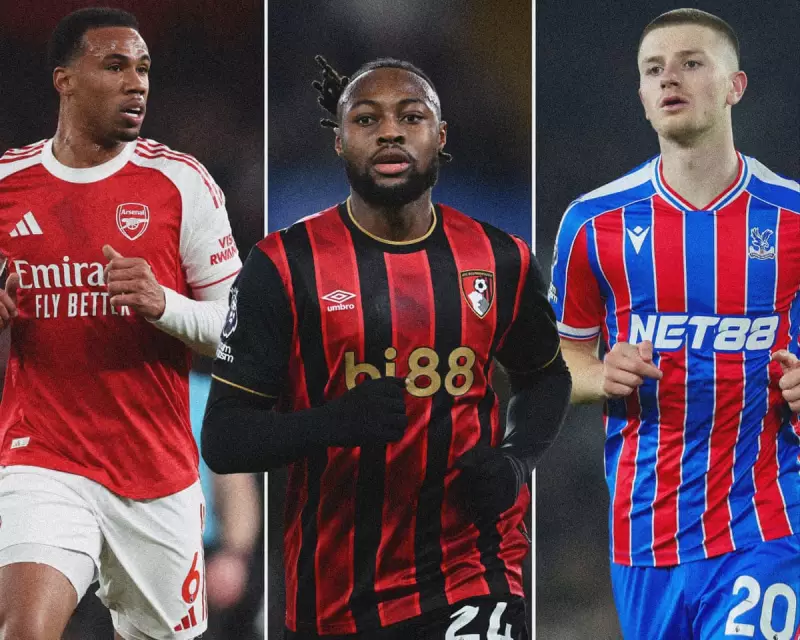
As the 2025 Premier League season unfolds, a pervasive sense of uncertainty hangs over English football's top flight. Having watched all twenty clubs in live action this term, culminating in Arsenal's dominant second-half display against Aston Villa, a pressing question emerges: is anyone still genuinely enjoying this?
The Age of Efficiency Over Artistry
The beautiful game has always reflected its era, and the current Premier League paradigm is one dominated by analytics and a ruthless drive for efficiency. The spontaneous, improvisational flair that once defined English football is increasingly being consumed by pre-ordained playbooks and data-driven strategies. While pockets of artistry remain—exemplified by the graceful control of Crystal Palace's Adam Wharton or the explosive dribbling of Manchester City's Jérémy Doku—creativity has undoubtedly become a casualty.
This shift is palpable across the league. From the fragile egos of managers to players enduring the gruelling physical demands of a high-pressing 90-minute slog, joy seems in short supply. Clubs once hailed as well-run models, like Brighton and Bournemouth, have hit glass ceilings, while high-profile projects at Manchester United and Chelsea continue to falter. Even within Crystal Palace's remarkable 2025 campaign, a regrettable schism emerged among supporters, mirroring wider societal divisions.
The Set-Piece Revolution and the Rise of Specialists
The most visible symbol of analytics' grip on the modern game is the inexorable rise of set pieces. What was once a marginal tool for resource-limited managers is now a non-negotiable discipline for every club. Inefficiency from dead-ball situations is now considered ruinous, with specialist coaches like Arsenal's Nicolas Jover and Aston Villa's Austin MacPhee operating in a high-pressure, numbers-driven environment.
This season has seen the emergence of a new breed of specialist: the long-throw expert. Brentford's Michael Kayode is currently considered the best in class, a skill that significantly inflates a player's valuation. Similarly, Bournemouth's Antoine Semenyo, reportedly a target for Manchester City, is coveted as much for his javelin-like throws as for his attacking artistry. These long launches have become unexpected highlights for fans, a testament to a game searching for edges in increasingly rehearsed patterns.
Even the great Pep Guardiola, whose Manchester City side still exhibits revolutionary flair, has adapted. In Erling Haaland, he has refined a physical powerhouse into the archetypal 2025 striker: a blend of raw prowess and machine-like productivity.
Customers in the Stands and Conspiracy in the Air
The transformation off the pitch is equally stark. The Premier League's crowds have steadily morphed from supporters into customers. Lavish stadiums like the Tottenham Hotspur Stadium are monuments to customer experience, yet their comfortable seats often house wells of discontent, mirroring the financial pressures felt in wider society where cash does not stretch as far.
This discontent finds a loud outlet in the widespread, vehement rejection of Video Assistant Refereeing (VAR). Match officials have achieved a pariah status, with their professionalism questioned after almost every decision. Meanwhile, the instant nature of digital communication leads to a cultural flattening; a creative terrace anthem like Liverpool's adaptation of 'Sway' for Federico Chiesa is repurposed across the country within days, losing its exclusive identity.
While a unified protest against rising ticket prices and commercial exploitation has yet to coalesce, the mood is restless. If football continues to hold a mirror to society, an age of protest within the game may not be far behind. For now, fans are left to find solace in moments like Arsenal's opener against Villa—a powerful header from Gabriel Magalhães from a Bukayo Saka corner—a comforting, if increasingly familiar, script in a league where spontaneity is being systematically coached out.