Thursday 07 May 2026 7:00 am | Updated: Wednesday 06 May 2026 4:17 pm
LIV Golf’s decline leaves the sport with more questions than answers. By Ed Warner, Sports Business Columnist.
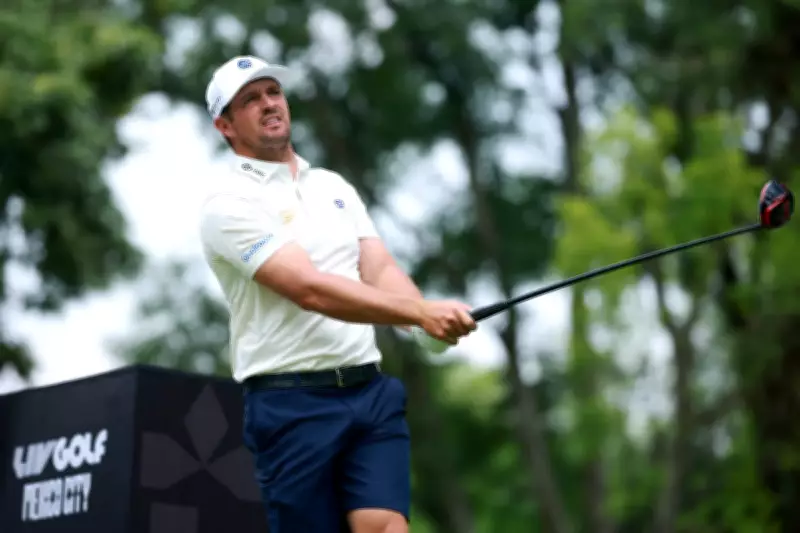
Perhaps DeChambeau and fellow players could buy the series LIV Golf. What was that all about? The past tense might be a bit harsh, but could anyone have the appetite and depth of pockets to rescue a venture that has burned through $5bn from the ignominy of collapse? Where does this embarrassing failure leave Saudi Arabia and its sporting ambitions?
Time has flown in the four years since I strolled beside the fairways at LIV’s first mis-geographied London event, held 25 miles from Marble Arch. The sun shone, money had clearly been lavished, tickets were free unless you’d failed to spot the offers, and a young if sparse crowd thrilled at proximity to a handful of big-name golfers who largely failed to acknowledge the fans’ greetings.
For a new dawn it all seemed to lack energy and enthusiasm. Perhaps the war with the incumbent PGA Tour had already taken its toll on the renegade stars’ appetites, even if it had fattened their wallets.
With a handful of exceptions, LIV’s events have drawn relatively few spectators while online audiences have been derisory. Perhaps the most wounding reaction from golf’s followers and the media has been the overwhelming indifference to the competition itself. Only the attendant politics has raised heart rates. Britain’s dose of LIV is now held at Rocester, Uttoxeter. Branded as LIV United Kingdom and now in a four-day format, you can buy day passes for the end of July from £24. Go while you still can.
So bitter has been golf’s infighting that it is difficult to pass an effective judgement on LIV’s format innovations. Maybe 54 holes over three days rather than 72 over four can work. Perhaps there is a place for shotgun starts to shorten competition days. Crucially, there may be a team format on someone’s drawing board that could tap into the magic of the Ryder Cup and become a key part of the regular golf calendar. The answer to each is “possibly” – but frankly we are no closer to answers than when LIV launched.
What we already knew was that elite golf is a money-obsessed enterprise; that its economics only stack up because it taps into the cultural obsessions of enough CEOs of the world’s largest corporations. Even in a sponsorship world that is shifting from brand focus to social impact, there are still willing sponsors of tour events who believe that a hospitality marquee is the key way to cement business relationships and that association with golf is the way to entice society’s wealthier classes. So 1980s and 90s.
Saudi Arabia’s sovereign wealth fund PIF swallowed that sponsorship pitch whole. What better way to sell the brand of a nation state with an image problem to the people that supposedly matter in the western world than to re-engineer a sport that supposedly is dear to them? Not just re-engineer, but ultimately own. Must have been some PowerPoint deck.
“The reality is that you’re funded through the season, and then you work like crazy as a business to create a business and a business plan to keep us going. But that’s not different from any other private equity-funded business in the history of mankind.” – LIV Golf CEO Scott O’Neil
There is much to be said for the impetus LIV provided to the PGA Tour to sharpen up its act. That the breakaway also served to remind the complacent of the enduring value of the four majors and the Ryder Cup. Also that it reminded the players of their collective duties and opportunities in this quintessentially individual profession.
For me, though, golf’s financial obscenity is what has shone through the heat of the battle. The rebels attempting to negotiate their way back into the PGA fold will long be tainted by their original departures, but a sport which has sold itself in part on awe at the size of its victors’ prizes may find that this has more negative connotations for all players in future, whether traitor or faithful. Bryson DeChambeau, who it is reported had been seeking $500m to renew his LIV contract, says he is committed to finding a future for the enterprise. It is hard to envisage a single backer with the capability of bridging the financial void, or of any golf-obsessed CEOs being permitted by their boards to hitch their brand’s wagons to LIV.
“I’m committed to making team golf work in the best way possible. I think there’s a place for it in the ecosystem and I want to continue to grow the game across the world.” – Bryson DeChambeau
Private equity is surely too smart to be suckered in as, however tiny the initial purchase price for this distressed asset, its running costs simply make no sense unless the players slash their financial aspirations. Maybe DeChambeau and colleagues should offer a token single dollar to buy LIV, right-size its prize money to its realistic immediate revenue potential, then seek to grow the value of their investment over time. I know – it flies in the face of all that we suspect of motivations within golf.
As to Saudi Arabia, its exit from LIV demonstrates that, while it may have immense resources, it does also have some idea of the value of a dollar – and perhaps now a finer understanding of the difficulties and pitfalls in brand-building. Owners of other sporting assets that have secured Saudi backing will doubtless be checking the fine print in their contracts. By the time the 2034 Fifa World Cup comes around, the tournament may constitute an isolated oasis in a desert landscape which until recently had been verdant sporting ambitions.
And as to team formats, other individual sports have similarly struggled. Doubles players in tennis have long been regarded as second-class citizens and the top stars have dabbled with the format mainly for fun. Athletics snobs have a tendency to regard a relay medal as inferior to an individual one, and elite team competitions have long struggled to lure stars to take part.
If I was at the golfing helm, though, I still wouldn’t give up on the dream of crafting a new team event. How about, say, four of the PGA events turning themselves into four-day pairs tournaments with shared ranking points, provided the same golfer duos compete in each of the events? Let the pairs marry up themselves, which should appeal to capitalist tendencies. As to the format, all for debate – which would certainly be a test of collective awareness and responsibility in a reunifying sport.
Keep on running. I was on gopher start-line duties at the Worthing Run-Fest races on Sunday, around 4,000 people taking part across three distances from family mile up to half marathon. The number of runners was up sharply from last year, mirroring growth across the race sector. This week, London Marathon organisers announced over 1.3m people have entered the ballot for next year’s event, which the organisers hope can be held twice across a single weekend for the first time.
In a lull between the starts at Worthing I mulled on the chicken v egg question of whether London’s popularity is dependent on the organic growth of these local races, or whether their own success is being driven by London-mania. The answer of course is that the two are interdependent. What I can testify to is that the endorphin rush that comes from the collective experience of a race is addictive.
Worthing was a microcosm of a big marathon experience but with guaranteed entries and easier journeys home. Shorter recovery times before the next challenge, too. What’s not to like? Hard to see a peak in the running boom any time soon.
Ed Warner is chair of GB Wheelchair Rugby and writes his sport column at sportinc.substack.com