The monolithic tactical consensus that has dominated elite football for almost two decades is showing significant cracks. The era defined by Pep Guardiola's possession-based 'Guardiolismo' – a philosophy prioritising control, pressing, and spatial manipulation – is fragmenting, giving way to a new period of diverse and often retrograde tactical experimentation.
The Set-Piece Backlash and Tactical Recalibration
This season, a dramatic shift has been spearheaded by specialists like Arsenal's Nicolas Jover, Aston Villa's Austin MacPhee, and Brentford's Bernardo Cueva. Their focus on dead-ball situations has yielded a staggering rise in set-piece goals. Where last season only 13.9% of Premier League goals came from corners or throw-ins, that figure has skyrocketed to 21.8% this campaign.
This surge is partly due to referees allowing more physical challenges on goalkeepers, but it also represents a classic tactical counter-punch. As elite defenders were increasingly selected for their ball-playing skills over traditional aerial prowess, a vulnerability was exposed. Teams began ruthlessly exploiting this, leading to a brief 'moral panic' about football becoming a series of rehearsed set-plays.
Adaptation and the Fracturing of a Dogma
However, football has a natural capacity for balance. Defenders are relearning how to defend, and teams are adapting. A prime example came when Chelsea, under Enzo Maresca, left three players upfield against Tottenham. Spurs, fearing the counter, dropped men back, which allowed goalkeeper Robert Sánchez to comfortably claim long throws into a less crowded box. Consequently, the proportion of goals from set-plays has already fallen by 5.2% since its peak in October.
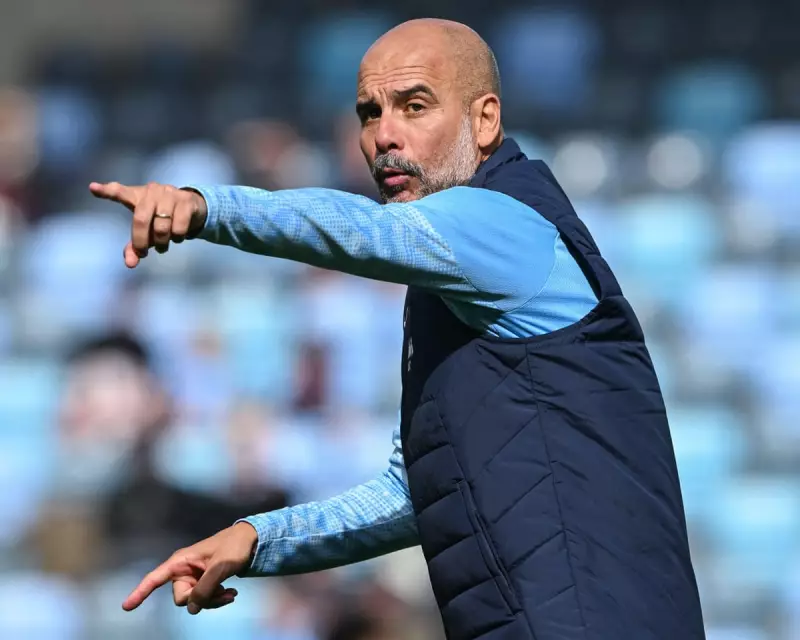
This mirrors a broader retreat from radicalism, even by its chief architect. Pep Guardiola has himself stepped back from the purist ideals of his Barcelona reign. He attributes this to the hectic modern calendar, which prevents the deep philosophical indoctrination of a small squad and forces managers to work with larger, more rotated groups. The result is an era of pragmatic tweaks and data-informed adaptations, often raiding the past for forgotten strategies.
The New Era of Pragmatic Experimentation
We are now in a fascinating transitional phase, akin to English football's reckoning after the 1953 defeat to Hungary. The old certainties are gone. Leeds United's revival after Daniel Farke switched to a front two is a case in point, exploiting centre-back partnerships unused to marking two strikers and fuelling Dominic Calvert-Lewin's best scoring form.
The future likely holds fewer earth-shattering revolutions and more of this iterative, counter-reactive evolution. Any profound change will probably require a technological leap, similar to improved pitch technology that enabled Guardiola's initial revolution. For now, the fractured landscape of football tactics promises a period of compelling, small-scale innovation as the game searches for its next synthesis.