
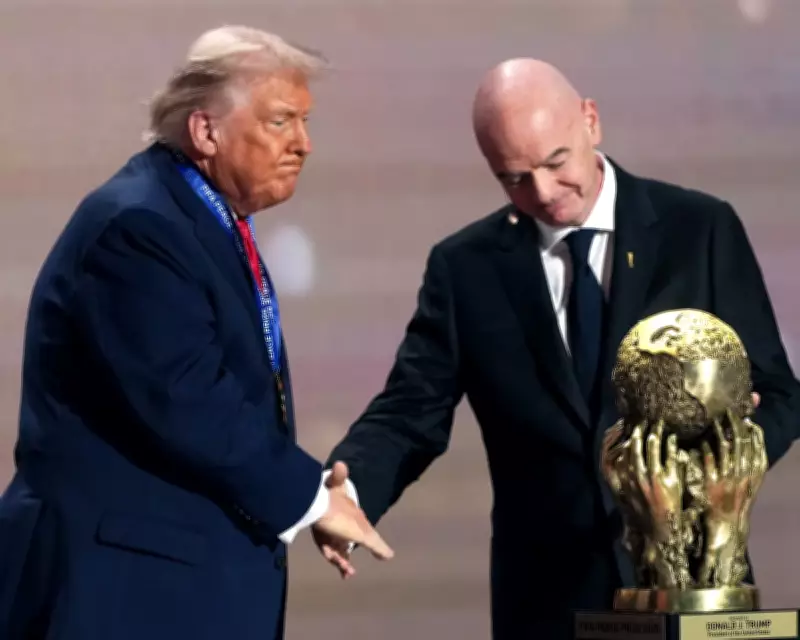
FIFA Unable to Secure US Tax Exemption for World Cup Nations
FIFA has failed to reach an agreement with the United States government for a blanket tax exemption for all countries participating in the upcoming World Cup. This failure means that more than half of the 48 qualified nations will face additional financial burdens and potential losses due to varying international tax treaties with the host country.
Disproportionate Impact on Smaller Nations
The tax burden is set to fall disproportionately on many smaller national associations whose governments lack a Double Taxation Agreement (DTA) with the US. Of the 48 qualifiers, only 18 countries have signed DTAs, primarily from Europe, along with co-hosts Canada and Mexico, and non-European nations like Australia, Egypt, Morocco, and South Africa.
As a result, tournament debutants such as Curaçao and Cape Verde will incur potentially larger tax liabilities compared to major footballing nations like England and France, which benefit from DTAs. This discrepancy highlights a significant financial inequality among participants.
Tax Implications for Players and Staff
The exemption does not apply to players' earnings, as US federal law requires athletes and artists to pay taxes on income earned while performing in the country. However, it covers backroom staff and coaches, who often receive substantial payments from their federations. For example, Brazil's head coach Carlo Ancelotti will face double taxation on his earnings in both Brazil and the US, whereas England's manager Thomas Tuchel will only be taxed in the UK.
In practice, federations like Brazil's are likely to cover these extra costs, but smaller associations may struggle with the financial strain. The US federal corporate tax rate stands at 21%, while higher-rate taxpayers, including international footballers and coaches, face an income tax rate of 37%.
Financial Challenges Amid Tournament Expansion
FIFA's operational budget for each of the 48 teams is fixed at $1.5 million, despite the expansion of the World Cup. Additionally, daily allowances for living expenses have been reduced from $850 in 2022 to $600, even as travel and hotel costs in the US have risen. This reduction compounds the financial pressures on participating nations.
Tax consultant Oriana Morrison, who has advised federations such as Portugal and Brazil, noted, "Many of the smaller teams, ones for whom this kind of windfall would have made a huge difference to their football industries, are going to be penalised with massive US tax bills. That is money that could have developed their football industries locally a lot better, but it's going to stay in the US."
Varied State Tax Rates and Exemptions
Further complicating matters, state taxation levels vary significantly across the US. For instance, Florida imposes no state tax and will host seven games in Miami, while New Jersey, site of the final at MetLife Stadium, has a 10.75% rate, and California, with games in Los Angeles and San Francisco, charges 13.3%. In contrast, Canada and Mexico have granted tax exemptions to all associations, reducing costs for teams with group games in those countries.
FIFA has declined to comment on the situation, but sources indicate that the governing body is working with national associations to provide assistance on tax issues. This ongoing support aims to mitigate some of the financial challenges faced by teams, particularly those from smaller nations.