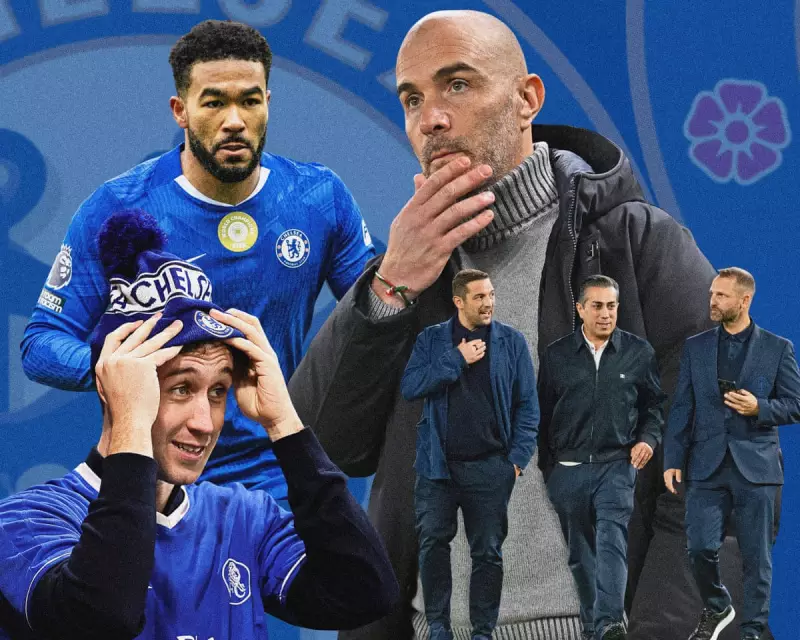
Chelsea Football Club have parted company with head coach Enzo Maresca, bringing a sudden end to the Italian's 18-month reign at Stamford Bridge. The decision, confirmed in the early hours of New Year's Day 2026, follows a fundamental and irreparable breakdown in the relationship between the manager and the club's hierarchy over the direction and running of the team.
The Final Straw: A Provocative Silence
The immediate catalyst for Maresca's dismissal was his refusal to conduct a post-match press conference following Chelsea's 2-2 draw with Bournemouth on Tuesday 30 December. The club initially stated the 45-year-old was too unwell to speak, despite him having managed the game from the touchline. However, reports swiftly emerged that this was a cover, and Maresca had instead chosen not to face the media as he wanted time to consider his future.
This act of defiance proved the final provocation for Chelsea's board. Sources indicate the club believed Maresca was actively attempting to engineer his exit and dared them to sack him. By the stroke of midnight on New Year's Eve, their patience had expired, and they called his bluff, terminating his contract less than 24 hours later.
A Relationship Built on Cracks
The tensions had been simmering for weeks. The relationship began to fracture publicly after an otherwise routine win over Everton last month, when Maresca made cryptic comments about experiencing his "worst 48 hours" at the club. He later clarified this related to friction with the medical department over player load management, a core club policy implemented to avoid a repeat of the injury crises seen under previous manager Mauricio Pochettino.
Chelsea's structure, led by co-controlling owner Behdad Eghbali and the recruitment team of Paul Winstanley and Laurence Stewart, is built on a model where the head coach is not the ultimate authority. The club fundamentally disagreed with Maresca's demands for a new centre-back after Levi Colwill's pre-season injury, seeing it as a challenge to their data-led strategy of signing young players on long-term contracts.
Further friction arose from Maresca's perceived ambition to leave. The board was infuriated by claims he used interest from Juventus and, most pointedly, Manchester City as leverage for a new contract. It subsequently emerged Maresca had informed Chelsea bosses on three separate occasions this season that he had held discussions with associates about potentially replacing Pep Guardiola at the Etihad.
On-Field Struggles and Fan Discontent
While Maresca's tenure started strongly—securing Champions League qualification and winning the Conference League and Club World Cup in his first season—form dipped alarmingly. A promising position in late November evaporated with a run of just one win in seven Premier League games.
Tactical concerns grew, with Chelsea dropping 20 points from winning positions this season. Fans also struggled to connect with his cautious, possession-based style, which often looked ponderous against defensive teams. His relationship with supporters soured further when he was booed for substituting a tired Cole Palmer in the Bournemouth draw.
Maresca also publicly questioned the depth of his squad, hinting that backup players like Andrey Santos were not ready, which was viewed internally as another red flag. The club believed he failed to handle the pressure and external criticism, particularly over his rotation policy which was a non-negotiable part of the club's approach to player welfare.
What Happens Next for Chelsea?
Chelsea now move swiftly to appoint a successor, with Liam Rosenior, the manager of partner club Strasbourg, a leading candidate. The timing is particularly poignant as Chelsea travel to face Manchester City at the Etihad Stadium this Sunday, a fixture Maresca will now watch from afar.
The club's statement is expected to be brief, with no regret over the decision. For Maresca, a manager once hailed as a 'mini-Guardiola' after leading Leicester City to the Championship title, the gamble to force Chelsea's hand has cost him his job. Whether it accelerates a move to a club he perceives as a better fit, or damages his burgeoning reputation, remains to be seen.