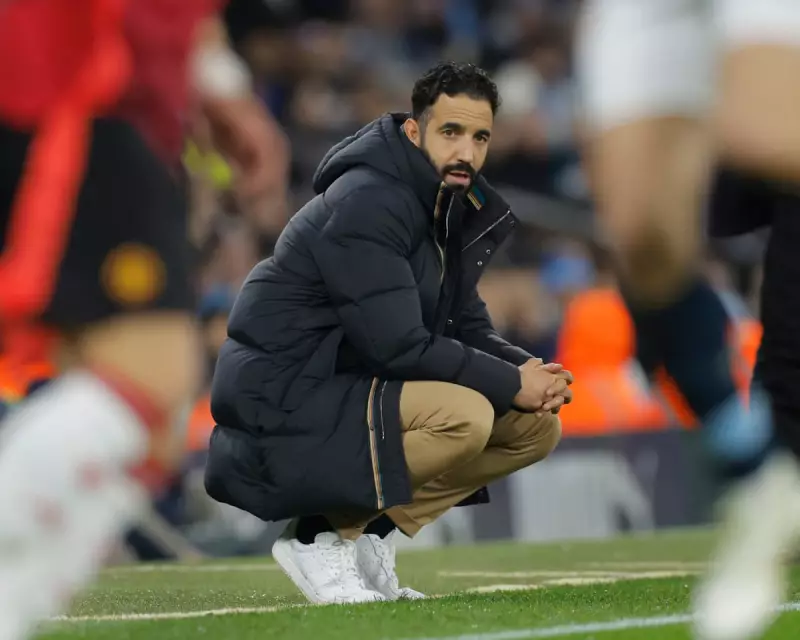
The sacking of Ruben Amorim by Manchester United after less than a season in charge was not merely a bad result, but the product of a deeply flawed process that began with his appointment. An investigation into the club's decision-making reveals a series of institutional failures that echo the club's troubled recent past, despite the supposed fresh start under Sir Jim Ratcliffe.
A Process Built on Sand
When Sir Jim Ratcliffe's INEOS group assumed sporting control at Old Trafford, there was widespread hope for a new, data-driven era. However, a senior football executive, speaking to us early in the season, offered a starkly different view. "It's clear they don't have a process," the executive said of the new regime, a warning that proved prescient.
The recruitment of Ruben Amorim, driven by chief executive Omar Berrada and director of football Jason Wilcox, was hailed as a bold new direction. Ratcliffe was reportedly audibly excited by the appointment. Yet, from the outset, there were dissenting voices. Dan Ashworth, the then sporting director, expressed significant reservations before his own departure a month later. Ashworth cautioned that United required a multi-year squad and infrastructure rebuild, suggesting a safer managerial choice was needed. Crucially, he warned that the existing squad was ill-suited to Amorim's rigid 3-4-3 formation.
This scepticism was not isolated. Both Tottenham Hotspur and Liverpool had previously assessed Amorim as a potential successor to Antonio Conte and Jürgen Klopp respectively, and both clubs decided to look elsewhere. United, it seems, ignored these red flags from their rivals.
The Fundamental Flaws in the Amorim Gamble
According to industry experts, a sound managerial appointment rests on answering several key questions, areas where Amorim's candidacy showed critical weaknesses.
Firstly, his achievements at Sporting Lisbon were arguably overhyped. "What has he achieved compared to expectations?" asked the executive. "Sporting had a great time... but Benfica and Porto had their problems, it's an easy league and Sporting's title win was overhyped because of special circumstances. He left and Sporting still won the league last season. Maybe it was the players?"
The most damning flaw, however, was tactical intransigence. Amorim's unwavering commitment to a 3-4-3 system, even when it clearly did not fit United's personnel, was the ultimate cause of his downfall and his fallout with Wilcox. "If United asked in interview: 'Will you change 3-4-3?' and he said 'No', that should have been their red flag," the source stated. "Pragmatism is underrated at the top level."
The belief in a magical tactical system, a trend since Pep Guardiola's Barcelona, often overlooks a fundamental truth: player quality is paramount. As the legendary Giovanni Trapattoni noted, a good coach might improve a team by 10%, but a bad one can make it 50% worse.
Systemic Issues and a Data Dilemma
Ratcliffe himself acknowledged cultural failures, famously stating United's data analysis was in the "last century." In response, the club appointed Michael Sansoni from the Mercedes Formula One team as director of data in April 2024, a bold move given his lack of football experience.
This new department has already made bold claims, with unnamed United sources suggesting it is now among the Premier League's top four, alongside data pioneers Brighton and Brentford. Experienced analysts have viewed this claim, made less than a year into Sansoni's tenure, with scepticism, noting it is ironically unsupported by public data.
The spotlight now falls on Berrada, Wilcox, and Sansoni's department. "How do you appoint the next manager when you got the last one so wrong?" questioned a source close to the club. "United has been one reactive lurch after another."
Just two months ago, the club was publicly backing Amorim on his one-year anniversary, vowing to break the cycle of sackings. Now, they find themselves trapped in the very same pattern, their flawed process for all to see. The task of appointing a successor will be the ultimate test of whether any real lessons have been learned at Old Trafford.