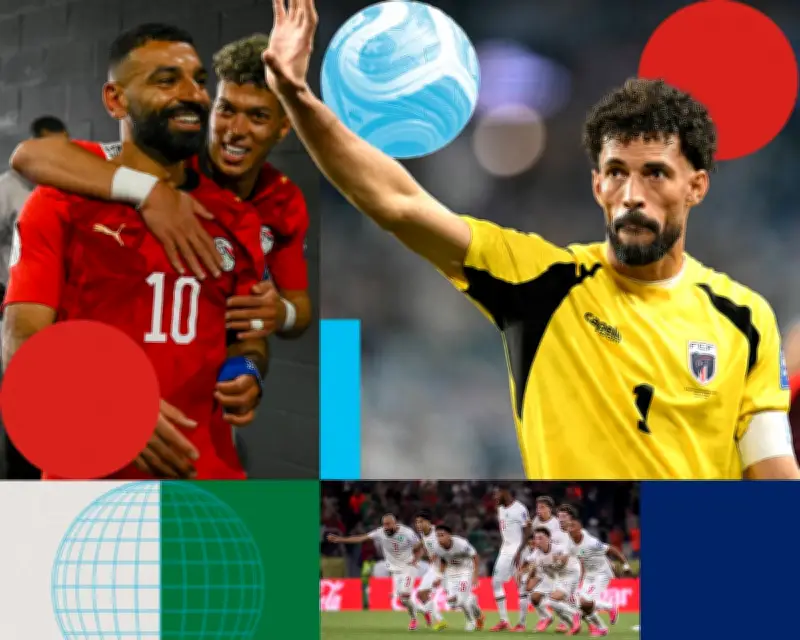
For Africa, this World Cup presents a paradox: is it a triumph or a reminder of persistent challenges? Nine of ten African sides advanced from the group stage, a record that seems to vindicate calls for more representation. Yet none topped their groups, and only two—Egypt and Morocco—reached the last 16, both via penalty shootouts.
Group Stage Success and Concerns
The Confederation of African Football (CAF) had long argued that five World Cup spots were insufficient for 54 members. With the expansion to 48 teams, Africa secured nine guaranteed slots plus a potential tenth via intercontinental playoffs, claimed by the Democratic Republic of the Congo (DRC). However, fears lingered that poor performances could undermine the argument. In the end, 90% of African teams advanced, a success rate unmatched by other confederations: UEFA had 13 of 16, CONMEBOL 5 of 6, while Asia (2 of 8) and CONCACAF (3 of 6) underperformed.
Despite the high number of qualifiers, no African team topped its group. Tunisia set an unwanted record for most time trailing in a World Cup at 256 minutes, breaking Mexico's 96-year-old mark. They fell behind after seven, four, and three minutes in their three games.
Narrow Margins and Missed Opportunities
Algeria, South Africa, Ghana, and Cape Verde all lost by a single goal in the knockout stage. Algeria were well beaten by Switzerland, though Ibrahim Maza impressed. South Africa lost to an injury-time goal against Canada after a passive performance. Ghana, managed by Carlos Queiroz, struggled after going behind to Colombia. Cape Verde's remarkable journey ended after extra time against Argentina, having twice equalized.
Senegal's defeat was the most devastating. Leading Belgium 2-0 with four minutes remaining, they allowed the game to go to extra time and lost on penalties after a controversial VAR decision. Côte d'Ivoire equalized against Norway but lost, and DR Congo led England before succumbing to fatigue. Morocco led Brazil and Senegal led France in the group stage but failed to win.
Belgium coach Rudi Garcia attributed the losses to inexperience: "Teams unfamiliar with leading against higher-level opponents lack the nous to see games out." Other factors include lack of depth, fatigue (notably for DRC), and perhaps a lack of belief.
Outlook for African Football
Morocco's 2022 semi-final run raised hopes, but the broader trend suggests a widening base without a proportionate rise at the top. Many African teams can reach the last 32, but few belong in the last 16. For progress, teams like Senegal and Côte d'Ivoire must capitalize on good starts and win against vaunted opponents. As Jonathan Wilson writes, "The pyramid of African football is becoming broader, but not a huge amount higher."