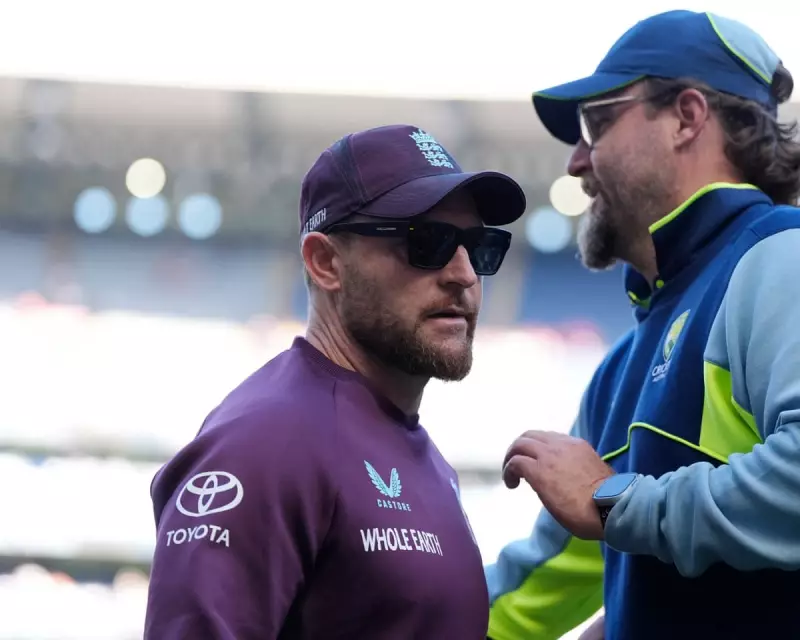
The potential for England to finish the Ashes series in Australia with a 3-2 scoreline should not obscure the fundamental failures in planning and preparation overseen by coach Brendon McCullum and managing director Rob Key, with serious questions now hanging over their futures.
A Failure of Preparation and Planning
The touring environment managed by McCullum and Key notably lacked a pink-ball practice match before the crucial day-night Test, a glaring omission for players unfamiliar with the conditions. This oversight forms the core of a critique that the regime has operated on a philosophy of inspirational, pared-back management that veered into outright slackness for a challenge as exacting as an Ashes tour.
McCullum's celebrated approach, often termed 'Bazball', champions a relaxed, instinctive state. A masterclass video with Rob Key from 2016 reveals his method: maintaining simplicity, relying on fast hands, and acknowledging he never possessed a defensive game in Test cricket to sustain against quality bowling. While this mindset revolutionised England's Test batting, it has proven a flawed blueprint for orchestrating the intricate logistics of a major overseas tour.

The Danger of Rewarding Late Fightbacks
There is a growing argument that securing two Test victories in Australia, after failing to win any of the previous 18 attempts, could provide a convenient smokescreen for the leadership's deficiencies. You cannot reward a failure of planning simply because world-class players like Ben Stokes clawed back some pride when the series was already lost.
The revisionist talk suggesting it was acceptable to forgo practice matches because England had done so before misses the critical point. Previous opponents were similarly undercooked, whereas Australia were perfectly prepared. Just because you once passed an exam without revising doesn't mean you should never revise again.
Other details compound the picture of a poorly managed tour: the absence of a dedicated fielding coach, and the puzzling selection shuffle that saw Shoaib Bashir replaced by the all-rounder Will Jacks. If such fundamental oversights are deemed inconsequential, it sets a dangerous precedent for the entire sport.
Stokes Holds the Key to Accountability
The captain, Ben Stokes, is now the pivotal figure. He will provide his own tour review, and a clear, impartial account could leave McCullum's position precarious and force Rob Key to admit to a lack of oversight. Should Stokes believe the leadership can genuinely learn and adapt, the regime may survive.
However, the upcoming Sydney Test must not cloud the central issue. The celebratory reaction to England's Melbourne victory, and the distracting furore over the MCG pitch, should not mask the original failings. Changing the coach will not solve English cricket's deep structural problems, but tolerating 'jobs for the boys' and PR-driven shortcuts is a symptom of those very ills.
Ultimately, the sport must demonstrate that performance matters and that there are consequences. McCullum's appointment was a bold gamble on pure inspiration. The Ashes have revealed that, at the highest level, inspiration without rigorous preparation is not enough. Whatever the result in Sydney, accountability must follow.