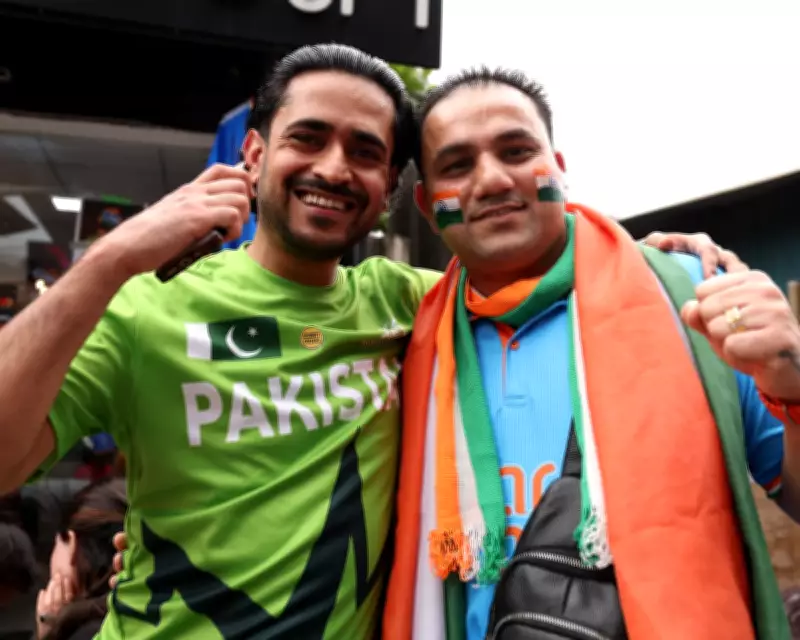
A cricket match between India and Pakistan is scheduled to take place in Colombo today, proceeding despite significant political tensions that nearly led to its cancellation. The fixture, part of the T20 World Cup, has become a focal point in the strained relations between the two nations, with cricket increasingly used as a political football in South Asia.
Political Disputes Threaten Cricket Fixture
Last month, the Pakistan government initially refused permission for their cricket team to play this T20 World Cup match against India, citing solidarity with Bangladesh. Bangladesh had been removed from the tournament after declining to travel to India due to security concerns. Scotland, who narrowly missed qualification to Italy last year, was hastily called up as a replacement with just two weeks' notice.
In reality, Bangladesh's decision stemmed from worsening tensions with India, a geopolitical dispute that has spilled over onto the cricket field. This incident is part of a broader pattern where cricket has become entangled in diplomatic conflicts between South Asian nations.

Historical Context of Cricket and Politics
The intertwining of cricket and politics is not new. In January, Bangladesh bowler Mustafizur Rahman was removed from the Indian Premier League by the Board of Control for Cricket in India, a move widely seen as a result of political pressure. Pakistan seized this opportunity to make a symbolic gesture, influenced by India's previous refusal to play in Pakistan during the Champions Trophy last year.
During the Asia Cup in Dubai last September, India's players refused to shake hands with their Pakistani counterparts and declined to accept the tournament trophy from the head of the Pakistan Cricket Board. More strikingly, India's Prime Minister Narendra Modi took to social media after a match, comparing the cricket team's victory to 'Operation Sindoor,' referencing a military conflict in Kashmir in May 2025.
Last-Minute Negotiations Save the Match
Over the past two weeks, officials from both governments and cricket's governing bodies scrambled to ensure the match would proceed, primarily to protect the ICC's lucrative £2.2 billion broadcast deal. The situation underscores the fragility of world cricket's ecosystem and mirrors the deteriorating relations between countries in a region where cricket holds immense cultural significance.
Today's game has been reinstated after all parties and the International Cricket Council reached an agreement, essentially acknowledging that the fixture was too significant to cancel. The match represents a compromise amid ongoing diplomatic friction.
Criticism and Player Perspectives
In The Times, former England captain and journalist Michael Atherton described the match as a miserable, toxic spectacle. He noted that what was once a highly anticipated event for journalists and broadcasters has now become a proxy for political point-scoring. This sentiment reflects broader concerns about the politicization of sports.
While sympathy often lies with the players caught in these disputes, comments from some on both sides have exacerbated tensions. Today, players will not shake hands but will compete on the field. There is hope that the game itself can serve as a brief distraction and a unifying force, offering a few hours of respite from political strife.
The match is set to begin at 1.30 PM GMT, with the toss and team announcements scheduled half an hour prior. As cricket enthusiasts tune in, the event will test whether sports can transcend political divisions, even temporarily, in a region where the game means so much.