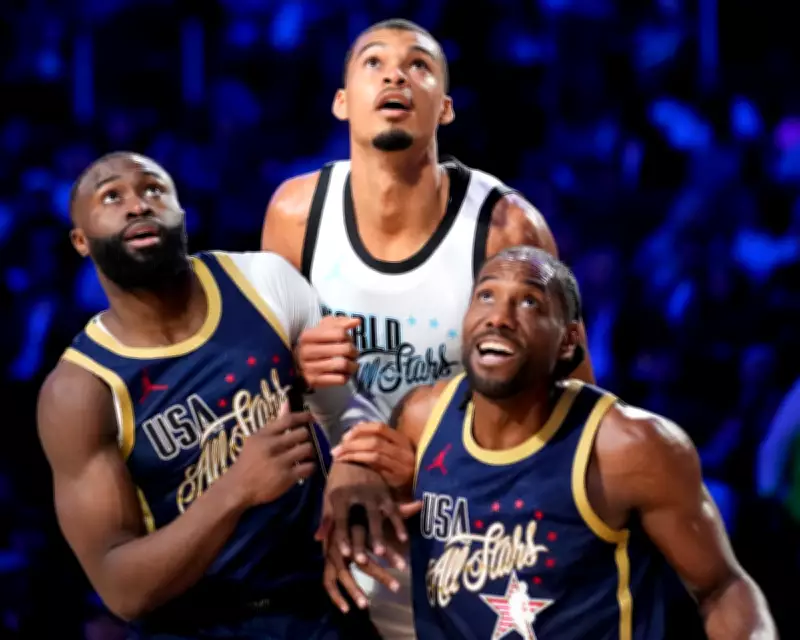
NBA's USA vs World Format Sparks Competitive Revival in All-Star Game
Critics have long argued that the NBA All-Star Game had devolved into a glorified practice session, but signs emerged during Sunday's round-robin tournament that an updated format may have successfully revived competitive spirit. Basketball Hall of Famer Tracy McGrady expressed disdain for last year's event, stating it barely resembled an All-Star game, reflecting years of disarray in what was once a league showpiece.
Format Evolution and Global Competition
In an effort to increase competition, the NBA replaced the classic East vs West matchup with various formats, including team captain selections and last year's four-team tournament featuring Rising Stars. These changes often resulted in minimal effort from players, with games resembling shoot-arounds devoid of defense and filled with uncontested three-pointers and dunks.
The latest innovation introduced a "USA vs World" format, featuring a three-team tournament between Team USA Stars, Team USA Stripes, and Team World. This round-robin included four 12-minute games and overtime with a target score of five, aiming to tap into global pride as motivation.
American-born players once dominated basketball, particularly during the Dream Team era, but the gap has narrowed significantly. International players have won every NBA MVP award since 2018, with James Harden being the last American-born recipient. McGrady noted that American players are aware of this shift, suggesting that player pride, rather than just format changes, drives competitiveness.
Player Perspectives and On-Court Impact
Kevin Durant offered a more conciliatory view, questioning whether past All-Star games were truly as intense as remembered and suggesting that fans and media often seek something to complain about. However, Victor Wembanyama emphasized that representing one's country fosters pride, which can elevate the game's intensity.
Wembanyama set an early tone on Sunday by scoring the first seven points for Team World and finishing with 33 points, eight rebounds, and three blocks across two games. His effort inspired others, including Anthony Edwards, the 2026 NBA All-Star Game MVP, who acknowledged that Wembanyama's performance "woke me up for sure."
From the tip-off, this year's event displayed a different energy, with players contesting shots on defense and embracing motion offense over one-on-one scoring. In the final, Team Stars defeated Team Stripes 41-25, led by Edwards' 32 points in three games. Despite the lopsided score, players competed with purpose, suggesting the league may have addressed a long-standing issue.
Future Outlook and League Implications
Durant praised the increased competitiveness compared to last season, expressing hope that this trend will continue and enhance fan enjoyment. The USA vs World format appears to have successfully leveraged national pride to reinvigorate the All-Star Game, marking a potential turning point for an event that had struggled to maintain relevance.
As international talent continues to rise in the NBA, this format not only highlights global basketball growth but also provides a platform for meaningful competition. The league's willingness to adapt and experiment with formats demonstrates a commitment to preserving the All-Star Game's status as a premier showcase, potentially setting a new standard for future editions.