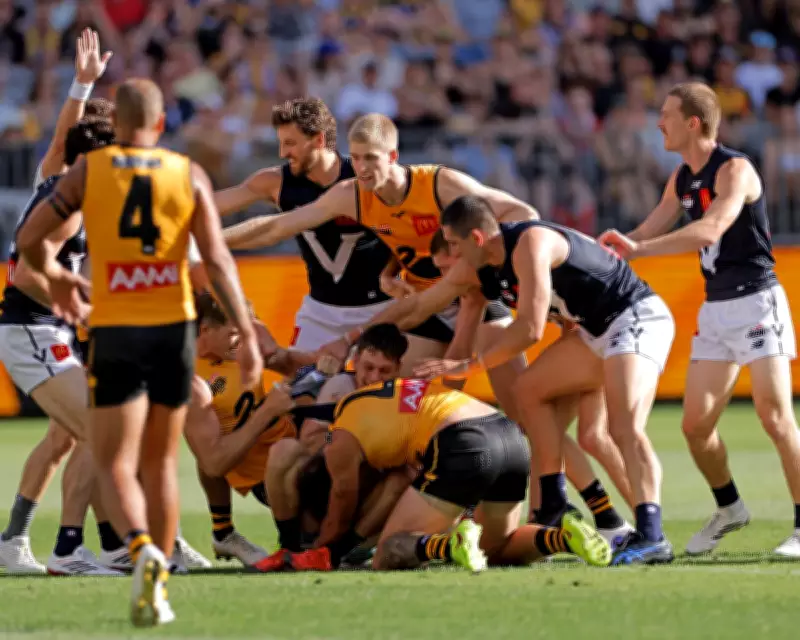
The highly anticipated return of AFL State of Origin delivered a thrilling spectacle at Perth's Optus Stadium, showcasing elite talent and fierce competition between Victoria and Western Australia. However, the specter of serious injuries cast a shadow over the event's future, highlighting the inherent risks of mid-season exhibition matches.
A Showcase of Elite Talent and Intensity
The game featured an extraordinary concentration of footballing excellence, with three Brownlow medallists, two Coleman medallists, 29 All-Australians, and 19 premiership players taking the field. Patrick Dangerfield and Max Gawn alone boasted 16 All-Australian selections between them, surpassing the combined tally of the entire Western Australian squad.
Despite initial skepticism about player commitment, the contest proved to be far more than a casual exhibition. Defenders hurled themselves into packs with abandon, midfielders attacked contests with ferocity, and exhausted players continued chasing opponents until the final siren. This intensity transformed what many expected to be a "kick and giggle" affair into a genuine contest that captivated the 59,000-strong crowd.
Controversial Honors and Local Reception
The awarding of the EJ Whitten Medal to Lachie Ash sparked bewilderment both online and within Optus Stadium, particularly given Nick Daicos's prominent role throughout the match. However, the selection panel comprising Chris Scott, Sam Mitchell, and Garry Lyon recognized Ash's strategic long kicks that consistently opened up Western Australia's defense.
Daicos faced persistent booing from the local crowd despite his recent promotional work for Tourism Western Australia, highlighting the partisan atmosphere that characterized the event. The Western Australian government's substantial financial backing and Channel Seven's extensive pre-game coverage contributed to the game's successful marketing and execution.
The Inevitable Injury Concerns
Despite the on-field spectacle, the game's most significant talking point emerged from the injury ward. Carlton defender Jacob Weitering suffered a frightening neck injury that required him to be stretchered from the field in a neck brace, while GWS midfielder Tom Green sustained a serious knee injury just 24 hours before the match.
These incidents underscored the fundamental tension surrounding State of Origin's revival. While ambassador Garry Lyon correctly noted that injuries can occur "anywhere, at any time," the reality remains that clubs bear the consequences when their key players are injured in exhibition matches. Weitering's importance to Carlton's structure cannot be overstated, with few players possessing his combination of defensive prowess and organizational skills.
Future Uncertainties and Format Questions
The AFL now faces difficult decisions regarding the future of State of Origin. South Australian fans are already clamoring for their turn to host the event, while Perth has demonstrated its capacity to support such fixtures with enthusiastic crowds similar to those seen during Big Bash League finals and elimination finals.
However, the injury risks present an ongoing dilemma. Coaches, high-performance managers, and supporters inevitably watch these matches with apprehension, knowing that any significant injury could derail a club's entire season. Weitering's subsequent clearance from neck, spinal, or major internal injuries provides some relief, but his ongoing chest soreness requires further investigation.
The players themselves understood the stakes, with all 50 participants accepting the risks involved. Yet when injuries occur, it's their clubs that ultimately pay the price in terms of lost personnel and disrupted campaigns. This fundamental tension between celebrating football's elite talent and protecting club investments will likely dominate discussions about State of Origin's place in the AFL calendar moving forward.