Indigenous Housing Crisis Deepens as Families Face Homelessness
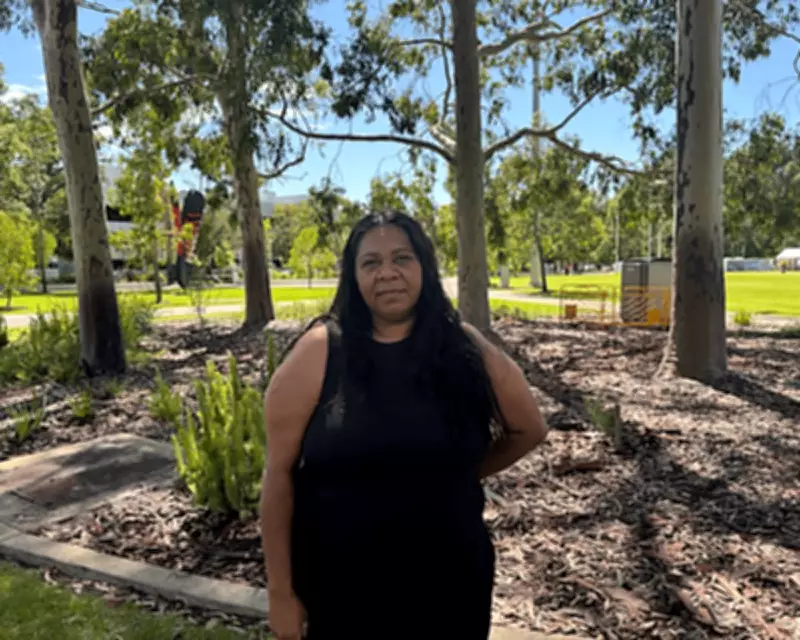
For two long years, Loma Bropho has navigated the relentless uncertainty of homelessness while trying to secure a stable home for her six children. The single mother, a Noongar and Yamatji woman, has exhausted every possible avenue in her search for rental accommodation in Perth, only to face repeated rejections that have left her family sleeping in cars or relying on the temporary shelter of relatives.
"It's a horrible feeling," Bropho confesses, describing nights spent in a vehicle with windows barely cracked for air. "If I put the window down a little bit I can't sleep, because I'm thinking that someone is gonna come along and rip the window off and try to hurt us." The psychological toll extends to her children, whom she worries will inherit her pervasive anxiety about where they'll sleep each night.
A System Failing Indigenous Families
New research from the Australian Housing and Urban Research Institute reveals that families like Bropho's represent a growing crisis within Australia's Indigenous housing system. The comprehensive three-year study, released this week, concludes that government initiatives designed to increase self-determination and strengthen the Indigenous Community-Controlled Housing sector are failing to deliver meaningful results.
The statistics paint a stark picture of systemic failure:
- One in eight low-income Indigenous households have unmet housing needs
- 45,700 low-income Indigenous households lacked adequate housing in 2021
- This represents double the rate of non-Indigenous Australians facing similar challenges
- Only 13% of Indigenous people in public housing are connected to community-controlled organizations
"We just go day by day," Bropho explains of her family's precarious existence. "I keep telling them, 'You do understand, we don't have a home' - and they always say, 'Yes mum, we know.' I say, 'Well, tomorrow get up and get ready for school and that way I can go and see more people about getting us a house.'"
Policy Disconnect and Growing Crisis
Associate Professor Megan Moskos from Adelaide University, the study's lead researcher, identifies a fundamental disconnect between policy intentions and implementation. "There's an uncoordinated policy response with no evidence of shared decision-making," she states bluntly. Despite government acknowledgment that community-controlled housing organizations achieve better outcomes for Indigenous people, there remains a "real lack of growth plans for the sector."
The research projects the crisis will worsen significantly over the coming decades, with an additional 26,400 low-income Indigenous households expected to face unmet housing needs within twenty years. This alarming growth stems from multiple intersecting factors:
- Unaffordable rental markets pricing out Indigenous families
- Persistent overcrowding in existing housing
- Inadequate housing conditions that fail to meet basic standards
- Both direct and indirect discrimination in private rental markets
Community Solutions Hampered by Systemic Barriers
Tina Ugle, managing director of Perth-based Indigenous Community-Controlled Housing organization Noongar Mia Mia, confirms that while community-controlled organizations are "absolutely" best positioned to address Indigenous housing needs, they face insurmountable barriers. "There is no stock transfer and investment from the government," she explains, highlighting the critical shortage of available homes. "Aboriginal people are not going to get a foot in and that's a fact."
The federal government maintains it is "working in genuine partnership" with Indigenous communities, citing significant investments including $600 million through the Housing Australia Future Fund and $2 billion dedicated to Northern Territory housing initiatives. However, researchers argue these efforts remain disconnected from the ground realities facing organizations like Noongar Mia Mia.
As Bropho and her children continue their daily struggle for stability, their experience underscores the human cost of policy failure. The research makes clear that without coordinated action, adequate funding for Indigenous housing peak bodies, and genuine community-led decision making, the gap between policy promises and lived reality will continue to widen, leaving more families to navigate the terrifying uncertainty of not knowing where they'll sleep tomorrow.