
Wyoming's New Six-Week Abortion Ban Ignites Legal Battle and Political Tensions
Wyoming's Republican-dominated legislature has enacted a stringent six-week abortion ban this week, a move that has immediately triggered a lawsuit and drawn sharp criticism from lawmakers who label it "an insult to voters and our institution." Governor Mark Gordon signed the bill into law while cautioning about its constitutional vulnerabilities, referencing the state supreme court's decision in January to overturn previous abortion restrictions.
Constitutional Hurdles and Immediate Legal Response
The bill effectively prohibits abortions after six weeks of pregnancy, a timeframe during which many women are unaware of their pregnancy. Violators face felony charges with potential prison sentences of up to five years. Almost instantly, an identical group of plaintiffs filed a lawsuit against the new legislation, mirroring challenges to earlier bans that were rejected by the Wyoming supreme court. The court had previously upheld the state's constitutional guarantee allowing adults to make their own healthcare decisions.
Democratic representative Mike Yin expressed frustration with the recurring legislative cycle, stating, "I don't see why the court would see this ban any different than a full ban." He views the annual introduction of such bills as disrespectful to both voters and the legislative process.
Political and Moral Debates Intensify
Republican speaker of the house Chip Neiman, the bill's primary sponsor, defended the legislation on moral grounds, dismissing concerns about legal entanglements. "I know a lot of folks get out there and get all shook up about how we're creating legislation that gets tied up in court," Neiman remarked. "But I'll tell you what, the only person that gets broke down is the person that doesn't do anything." Neiman did not respond to requests for comment from the media.
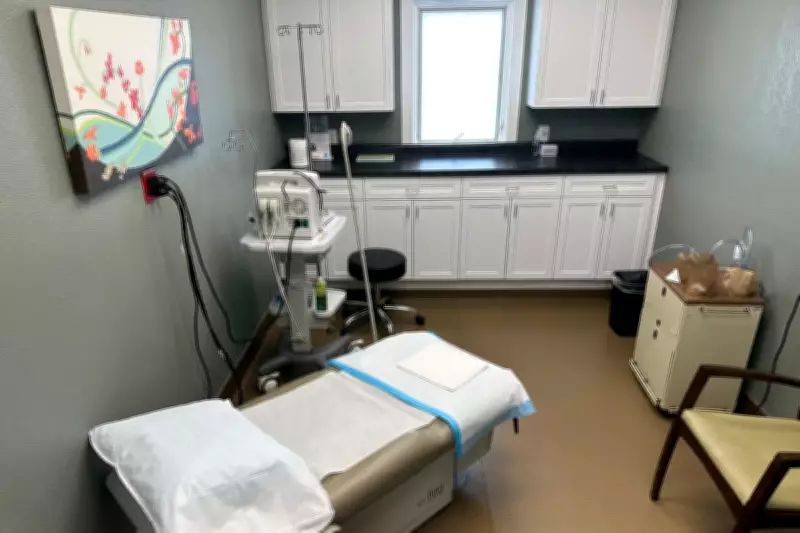
The legal challenge has been filed as an amendment to an ongoing lawsuit against prior abortion bans, highlighting the extensive legislate-then-litigate pattern in Wyoming. Katie Knutter, executive director at Wellspring Health Access—the state's only operational procedural abortion clinic and a plaintiff in the case—noted that the bill will temporarily halt services at her clinic. She emphasized the challenges of providing abortion care in conservative states, revealing that patients travel an average of 250 miles for treatment, with about a third coming from out of state.
National Trends and Legislative Trends
Kimya Forouzan, principal state policy advisor at the Guttmacher Institute, pointed out that the bill's incorporation of fetal personhood aligns with national trends, increasingly linked to criminal penalties. Wyoming's legislative efforts have included various restrictive measures, such as a bill mandating transvaginal ultrasounds and a 48-hour waiting period, currently held up in court, and another requiring costly upgrades for abortion clinics to meet ambulatory surgery center standards.
The state's constitutional right to individual healthcare decisions has consistently posed obstacles to such legislation. A failed 2025 bill aimed at redefining healthcare, if passed, would have outlawed chemotherapy, illustrating the broad implications of these debates.
Frustration and Calls for Constitutional Amendment
Republican representative Rachel Rodriguez-Williams, chair of the Wyoming Freedom caucus, voiced frustration with the supreme court's rulings, unsuccessfully attempting to block additional security funding for state courts. "If this branch of government has a vested interest in protecting your life, why does it suddenly lose that interest when the life in question comes to the unborn?" she argued on the house floor. Rodriguez-Williams did not respond to requests for comment.
One potential resolution to the ongoing conflict between the judicial and legislative branches is a constitutional amendment put to voters in an election year. Data from the University of Wyoming suggests that Wyoming voters may be more supportive of abortion rights than their legislators. A 2026 legislative attempt to draft such an amendment failed, though it proposed letting the legislature define healthcare without explicitly mentioning abortion.
Republican representative Daniel Singh, a co-sponsor of the heartbeat bill, expressed weariness with the protracted battle. "I'm more of a trap shooter and not a tennis player," Singh said. "And so I'd like to just get this thing finished and sorted out." He hopes for a future amendment that would allow Wyoming voters to settle the abortion issue definitively.




