A woman in China has won a rare legal victory in a workplace sexual harassment case, being awarded 5,000 yuan (£554) in emotional damages. The ruling, originally made in January and upheld on appeal last week, ordered her former manager at Beijing Grassland Alliance, an environmental NGO, to pay the damages and write an apology.
Case Details and Background
The woman, who asked to be referred to by her nickname Xiong to protect her privacy, joined the NGO as an intern in early 2022 in Fujian province. Soon after starting, she said her manager, a man ten years her senior, began sexually harassing her, including joking about her bra size, holding her hand, and sending sexually suggestive text messages. In one message submitted as evidence, the manager said: “Don’t get caught up in romance and hang around with your girlfriend, think about me more.” In another, he stated: “I have a special fondness for you.”
Xiong detailed her experience in an essay published on WeChat last year, noting she did not immediately identify the jokes as harassment. “I didn’t realise it was sexual harassment, the atmosphere was cheerful and my embarrassment and sense of weirdness seemed out of place,” she wrote. She said that when she tried to speak to people in her industry, her concerns were brushed off, and it was only after talking to DeepSeek, a Chinese AI chatbot, that she felt her suffering was acknowledged.

Legal Context and Rarity
Only since 2021 have victims of sexual harassment in China had the right to sue perpetrators for civil liability, but cases remain extremely rare. A 2018 study found only 34 judicial decisions from 2010 to 2017 where workplace sexual harassment was the primary issue, with most brought by employees fired after being accused of harassment. May Lu, managing partner at Shanghai Yaowang law offices, said that while more victims are filing lawsuits due to the MeToo movement and legal developments, “overall, we could not say it is common to see such cases successfully filed.” She added that culturally, it is difficult for women to speak up about sexual harassment.
Comparison with Other Cases
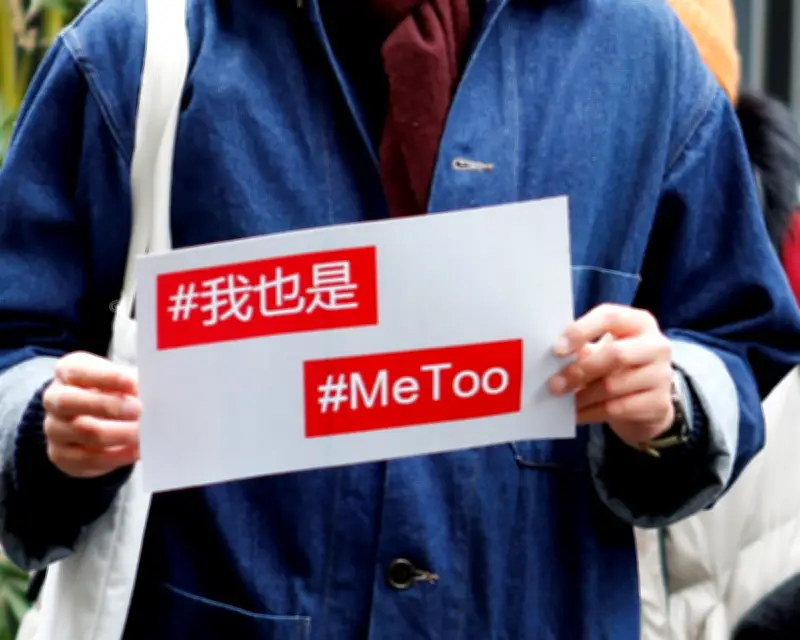
The case stands in contrast to other high-profile MeToo cases in China. In 2018, Zhou Xiaoxuan accused TV presenter Zhu Jun of sexual assault but lost her case due to insufficient evidence. In 2021, tennis player Peng Shuai disappeared after accusing former vice-premier Zhang Gaoli of sexual coercion, later saying there was a misunderstanding. The MeToo movement in China, which surged in 2017 after allegations against Harvey Weinstein, was quickly censored, with the hashtag #MeToo blocked.
Evidence and Ruling
Xiong’s case succeeded partly because she provided evidence from WeChat conversations, including apologies from her former manager for making her feel uncomfortable. The manager argued the apologies were an attempt to smooth over a professional relationship, not an admission of guilt. The ruling acknowledged power imbalances, stating: “As a team leader, an individual’s words and deeds have a far greater impact on employees than those of ordinary colleagues. Therefore, a leader should be more circumspect regarding the scale of their words and deeds, and fully respect the personal dignity of female employees.”
Xiong said the result “exceeded her expectations” and that she had “successfully defended my personal dignity.” Beijing Grassland Alliance did not respond to a request for comment, and her former manager could not be reached.