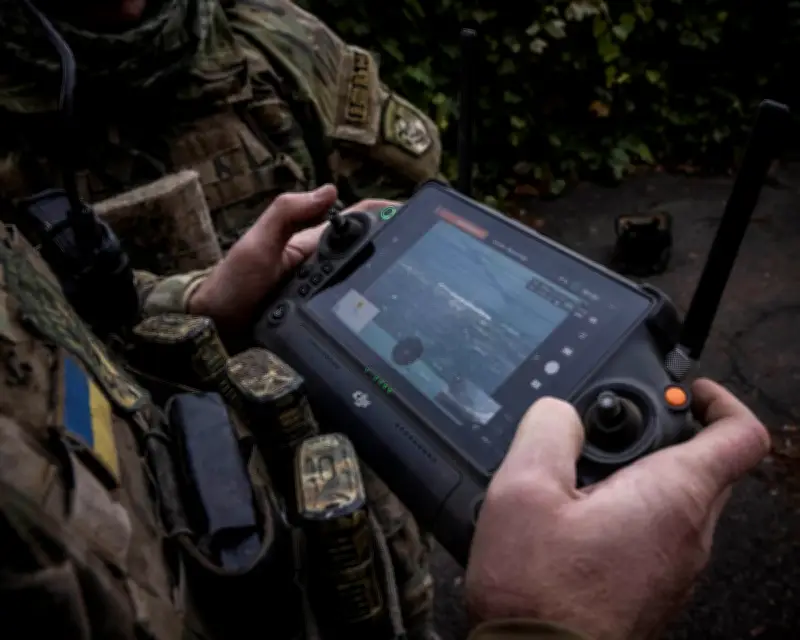
The United Kingdom must urgently adapt to the new age of drone warfare or risk falling behind, military experts warn, as fibre optic first-person view (FPV) drones transform battlefields in Ukraine and beyond.
New drone technology changes warfare forever
In eastern Ukraine, a modern dystopia unfolds daily: young men gathered around computer screens in hidden bunkers search for targets. On their screens, a soldier realises he has been spotted moving through heavily forested frontlines. It is too late. The screens go blank as the drone explodes.
The rise of new drone technology, particularly fibre optic FPV drones, has changed war forever. Expensive tanks, aircraft and multimillion-pound logistics equipment can be destroyed in an instant. The UK government announced an extra £5bn for drones operating on land, sea and air as part of its new defence strategy, unveiled by outgoing Prime Minister Keir Starmer on Tuesday ahead of next week's Nato summit in Turkey. However, some military experts question whether this is enough.

Lessons from Ukraine
Senior international correspondent Luke Harding, who has reported extensively from Ukraine, describes the terror of these drones. "I cannot overstate how terrifying these drones are," he says. "On my most recent trip to Ukraine, I went to Zaporizhzhia to see a Ukrainian reconnaissance drone unit. We were outside taking photos of them and an FPV drone appeared on the tree line and turned towards us. We didn't know if it was Russian or Ukrainian so we all threw ourselves back in the dugout. Thankfully, it was Ukrainian. But you cannot outrun them. It's a bit like Blade Runner meets the first world war."
Fibre optic cables, resembling spider webs draped over trees and bushes in eastern Ukraine, provide digital connectivity that makes the drones almost undetectable and unhackable. The cables stretch for miles, with drones buzzing over enemy territory hunting for targets. This technology has played a key role in holding back Russia's invasion of Ukraine, despite Ukraine being vastly outnumbered. Daily drone attacks by Ukraine on Russian infrastructure cause chaos and fuel shortages. There are widespread reports that Vladimir Putin fears an assassination attempt from the sky, especially after Ukraine's "operation Spiderweb" attack last year on Russian airbases, where drones destroyed dozens of Russian bombers and aircraft.
Threats to the UK
Defence chiefs are particularly concerned about future drone attacks from Russia, especially once the war in Ukraine ends. Last summer, Russian drones entering Polish airspace caused panic and a large Nato air response. "There's pretty compelling evidence that Russia is using its shadow fleet to send drones to overfly airports, ports and military facilities in western Europe," says Harding. "Russia thinks it is at war with the west in a rolling, existential struggle with European countries, particularly the UK. For whatever reason, they really hate the UK. It's portrayed by state TV as a place of unsleeping, tea-drinking spies who wake up every morning plotting to destroy and humiliate Russia. This fear of Russia is not imaginary."
Hostile states are not the only threat. Organised crime and terror groups may also use the technology. Harding notes, "The new drone technology has enormous implications for criminal gangs and terrorism. I remember back in the 90s when the IRA managed to fire a mortar at Downing Street. Now, if you send in 20 drones and two get through, that's a success. The implications are terrifying."
Changing face of soldiers
The rise of drone technology is also changing what a soldier looks like. "Weedy gamers" who are often best at operating drones due to their experience playing video games have become crucial fighters in Ukraine. Headsets and goggles used for PlayStation and Xbox have become tools of war. "Forget the macho guy with a serrated knife. Think of a bloke in a basement with a latte tracking a drone on a screen," says Harding.

A documentary film by the Kyiv Independent shows young men vaping and playing with pet kittens as they hunt for Russian soldiers on their monitors. The film offers a horrifying insight into war in 2026, and other militaries are likely to replicate such units. Harding suggests that part of the UK's investment could include a new drone division staffed by the country's best video gamers. "We need a Royal Naval Drone College in Greenwich where we hire a whole load of gamers and train them. They then become the drone squadron," he says.
Tough funding decisions
Once Keir Starmer's successor is in place, tough decisions loom on funding new defence spending, including drones. With a £4.7bn black hole in the budget for Starmer's replacement, likely Andy Burnham, the new leader may be tempted to trim spending rather than raise taxes, raising questions about balancing defence needs with a squeezed population. Of the £300bn total investment in the UK's armed forces over the next four years, £5bn is pledged for drone capabilities.
At the Nato summit in Turkey next week, many leaders will want to impress US President Donald Trump with investments in tanks, fighter jets and other expensive equipment. But Harding warns that war has changed forever. "The invasion of Ukraine has transformed all wars in the 21st century. They are completely different to things that governments have previously prepared for. Whether it's battle cruisers or armoured vehicles, these big-ticket items are becoming obsolete. They are dodos. You can take even a cheap first-person view drone and destroy a lot of this equipment – or anything else that moves on the ground. This has profound consequences," he says.