A provocative question is being asked in foreign policy circles: could the chaotic foreign actions of US President Donald Trump be inadvertently reviving a geopolitical concept popularised by a Nazi legal theorist?
The Schmittian 'Great Space' Theory
Following a series of dramatic international moves by the Trump administration in early 2026, analysts are revisiting the work of Carl Schmitt. Schmitt, infamously known as the Nazis' 'crown jurist', was outraged by Germany's post-WWI humiliation. He viewed international law as a tool of victors to subjugate nations like Germany.
In April 1939, Schmitt delivered a significant lecture in Kiel, later published, proposing the world be divided into 'great spaces' (Großraum). Each space would be dominated by a central empire, or Reich, radiating influence over smaller states in its orbit. Crucially, outside or 'spatially alien' powers would be forbidden from intervening. Schmitt envisioned Nazi Germany as the heart of Europe's great space, shielded from Anglo-American influence. His theory was laced with antisemitism, viewing 'world Jewry' as a universalising force breaking down nations.

Trump's Actions and a New Geopolitical Order?
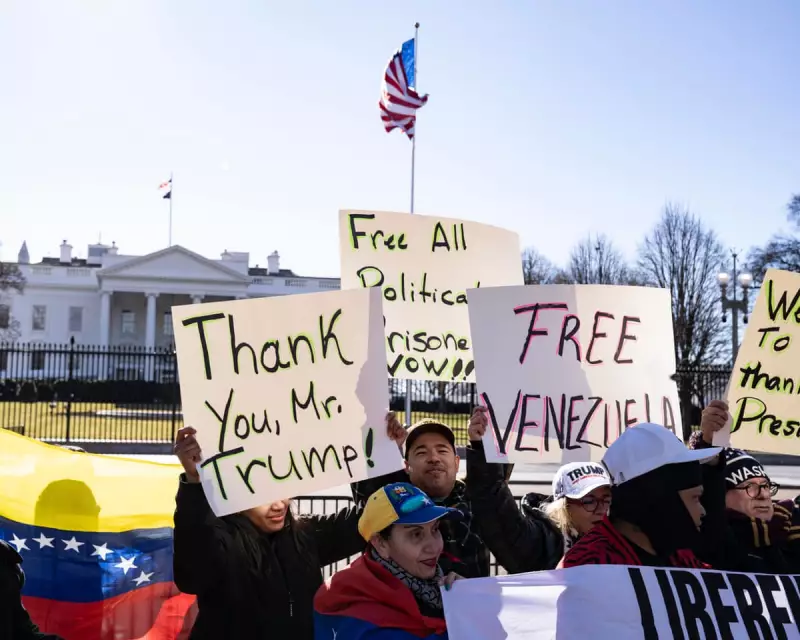
The contemporary relevance of Schmitt's ideas is being debated in light of recent US policy. The release of the 2025 US National Security Strategy, a military raid on Venezuela, and Trump's rhetoric concerning Greenland, Panama, Colombia, Mexico, and Cuba have sparked this analysis. His apparent leniency towards Vladimir Putin's Russia further fuels the discussion.
Schmitt's ideas have found modern adherents in anti-Western states, notably Russia. The Eurasianist Alexander Dugin, a key influence on Putin, champions Schmittian concepts, advocating for a Russian sphere excluding 'Anglo-Saxon' influence. Trump's willingness to accept territorial concessions for Ukraine has led some to speculate about a formal division of global spheres of influence between Trump, Putin, China's Xi Jinping, and perhaps India's Narendra Modi.
Chaos or Strategy? The Limits of the Comparison
However, experts caution that this comparison may be flawed. While the Trump administration has explicitly reinvigorated the Monroe Doctrine, focusing on US hegemony in the Western Hemisphere, its actions globally contradict a Schmittian model of mutual non-interference.
Trump has not acknowledged other powers' spheres of influence, except potentially in limited parts of Ukraine. His record shows confrontation: striking Iran, destroying Russian air-defence systems in Venezuela, intercepting Russian tankers in European waters with UK assistance, and overseeing CIA-backed Ukrainian attacks on Russian oil infrastructure.
This pattern suggests strategic chaos or unilateralism, not collusion based on respected spheres. As Brendan Simms, Director of the Centre for Geopolitics at Cambridge University, argues, Trump is less a fascist ideologue than a narcissist who 'will not accept any other gods beside him'. Putin and Xi are aware of this. Schmitt might see hypocrisy in Anglo-Saxon actions, but Trump's unpredictable doctrine does not align with a coherent, Schmittian world partition.