Religious Leaders and MAGA Supporters Unite in Condemning Trump's AI Jesus Image
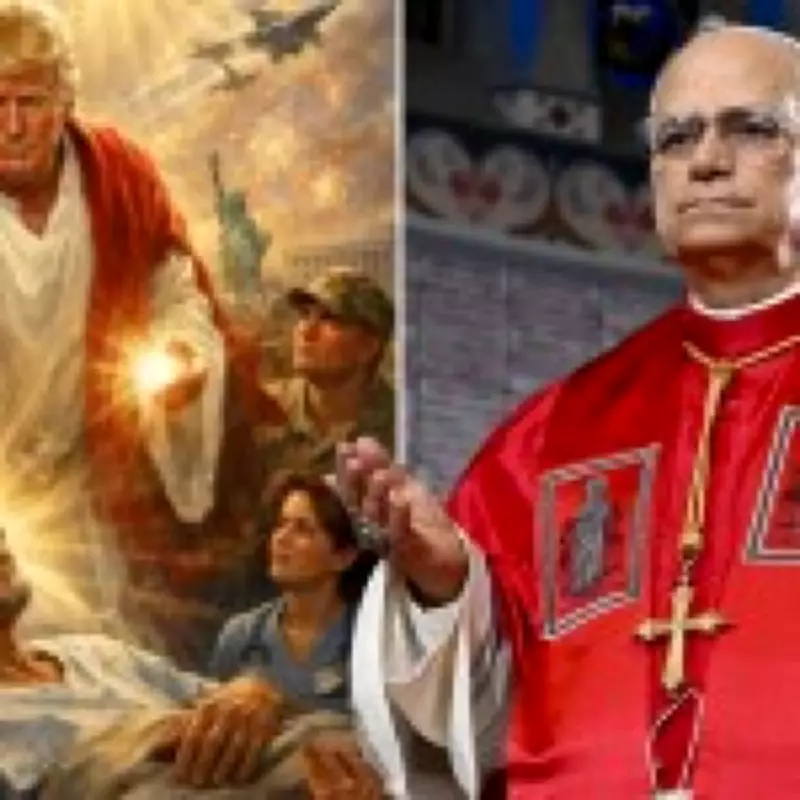
In a remarkable display of unity, numerous high-profile religious figures and members of the MAGA movement have publicly rebuked former President Donald Trump over an AI-generated photograph that depicted him as Jesus Christ. The controversial image, which showed Trump healing a man in a hospital bed, has since been deleted from his social media accounts, but the fallout continues to reverberate across political and religious circles.
Trump's Feeble Explanation and Immediate Backlash
Facing immediate accusations of blasphemy from his own supporters, Trump attempted damage control with a confusing explanation. 'I posted it thinking it was me as a doctor,' he claimed in a rambling statement. 'And had to do with red cross as a red cross worker, which we support, and only the fake news could come up with that one. I just heard about it. It was supposed to be me as a doctor making people better, and I do make people better. I make people a lot better.'
The response from religious conservatives was swift and severe. Douglas Wilson, an influential minister from Idaho who previously led worship services at the Pentagon, stated plainly: 'I was very grateful to see how many conservative Christians immediately denounced the blasphemous Jesus Trump image.'

Pope Leo's Subtle Rebuke and Wider Religious Condemnation
Pope Leo, the first American pope, appeared to reference the controversy without directly naming Trump during remarks to Reuters. 'I don't think that the message of the Gospel is meant to be abused in the way that some people are doing,' he stated, adding that he would continue speaking out against war and promoting peace through dialogue.
Other prominent voices joined the criticism. Fox News commentator Riley Gaines wrote: 'Is he looking for a response? Does he actually think this? Either way, two things are true. 1) A little humility would serve him well. 2) God shall not be mocked.' Former MAGA Republican Congresswoman Marjorie Taylor Greene posted a screenshot of the deleted image with the caption: 'I completely denounce this and I'm praying against it.'
MAGA Supporters Express Disgust and Accusations of Blasphemy
On Trump's Truth Social platform, the backlash was particularly intense from his own supporters. One follower replied to the now-deleted image: 'The book of Revelations speaks of this, are you literally depicting yourself as a savior or messiah? Just asking, as the Book of Revelations tells us the Antichrist will claim he is.'
Another longtime Trump supporter expressed profound disappointment: 'Disgusting. Sad... we elected the antichrist. I am a solid Trump supporter & fan, but Trump is not Christ and this art is blasphemous.' Multiple users directly accused Trump of being 'the AntiChrist' and committing blasphemy through the image.
Broader Context: Trump's War of Words with Pope Leo
The Jesus photo controversy erupted amid an escalating conflict between Trump and Pope Leo over foreign policy matters. The tension began when Pope Leo branded the Iran war as 'unjust,' prompting Trump to lash out on Truth Social over the weekend.
Trump accused the pontiff of catering to 'the Radical Left' and criticized his political stances, writing: 'Pope Leo is WEAK on Crime, and terrible on foreign policy. I don't want a pope who thinks it's OK for Iran to have a nuclear weapon.' He further attacked the pope's position on Venezuela, claiming the country was sending drugs and criminals into the United States.
Pope Leo responded by telling Reuters he had no interest in debating Trump directly but would continue advocating for peace and multilateral solutions to international conflicts. The exchange highlights the deepening divide between Trump's nationalist approach and the pope's emphasis on global cooperation and diplomacy.
The convergence of religious condemnation and internal MAGA criticism represents a significant challenge for Trump, whose political brand has long been intertwined with evangelical Christian support. The incident raises questions about how his core supporters will navigate the tension between political loyalty and religious conviction moving forward.