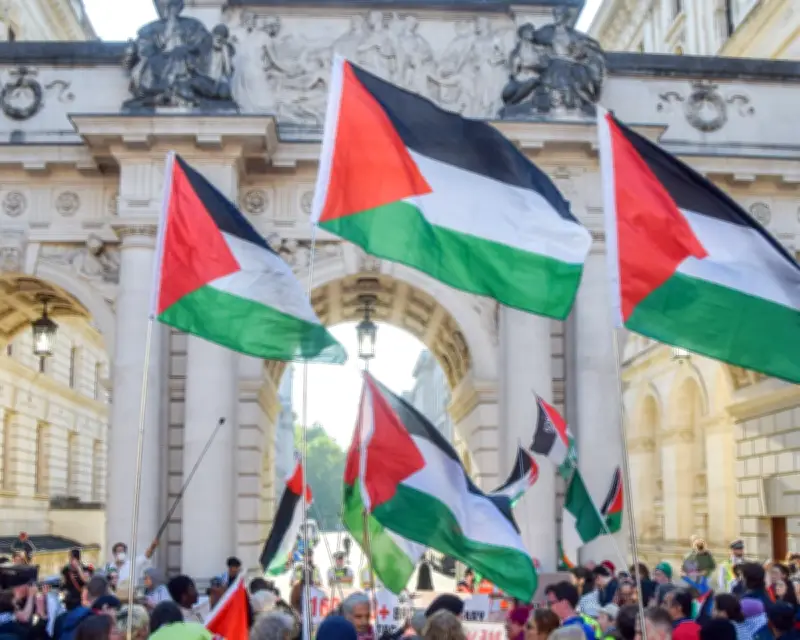
Pro-Palestine activists believe a significant shift in the Labour Party's approach to the Middle East crisis may be imminent, potentially leading the UK government to adopt a tougher stance on Israel. This optimism follows a surge in support for the Green Party in local elections, the anticipated departure of Keir Starmer from Downing Street, and recent polling indicating strong support among Labour members for a complete ban on arms exports to Israel.
Changing Dynamics
The mood among campaigners has shifted after a series of setbacks, including losing high-profile court cases, the classification of Palestine Action as a terrorist organization, and the failure of Donald Trump's peace initiative to advance Palestinian self-governance. Both Wes Streeting and Andy Burnham, the leading candidates to succeed Starmer, have previously urged stronger Labour support for Palestine. However, neither has detailed specific policy changes for Gaza.
In July 2025, Streeting wrote that Israel's rogue state behavior justified sanctions against the state, not just certain ministers. The government's most significant moves so far have been the partial suspension of arms exports to Israel in September 2024 and the recognition of Palestine as a state a year later.

Expert Perspectives
Brian Brivati, executive director of the British Palestine Project, expressed confidence in an impending policy shift. He cited the departure of Morgan McSweeney, former adviser linked to antisemitism accusations against Jeremy Corbyn, and the electoral impact of the Greens' performance. A recent poll by Medical Aid for Palestinians showed 87% of Labour members support a ban on trade with illegal settlements, and 78% back a total arms embargo.
Emily Thornberry, chair of the foreign affairs select committee, criticized Labour for failing Palestinians. She noted that after recognizing Palestine, the government lost momentum while the Trump peace plan stalled. She questioned the lack of further steps and the tolerance of ongoing violence in Gaza.
Potential Actions
Possible measures discussed at a British Palestine Project conference include a full trade ban on illegal settlement goods, publishing a government response to the 2024 International Court of Justice ruling on occupation illegality, and deterring British and European firms from bidding on settlement development projects. A letter from Labour select committee chairs included some of these ideas, but the government instead imposed sanctions on settler groups, citing practical difficulties in banning settlement trade.
Vincent Fean, former consul general in Jerusalem, argued that Europe has lost diplomatic control to Trump and must reclaim it, with Britain playing a larger role. Activists feel Starmer has not acknowledged Gaza as a defining generational issue, while the Greens have called for the release of imprisoned Palestinian leader Marwan Barghouti.
Daniel Levy, former Israeli negotiator, emphasized the need for Britain to focus on impacting Israel's actions. He suggested that targeting cultural and sporting events, such as Eurovision and football, could send stronger signals than sanctioning individual leaders. He argued that apartheid was undermined by offering an alternative vision, and a similar approach is needed for Zionism.