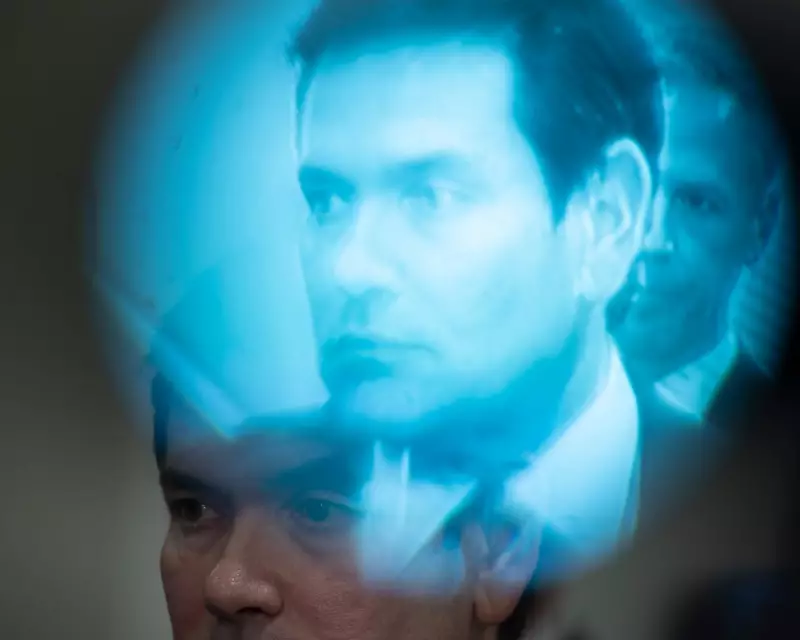
Marco Rubio, the US Secretary of State, has undergone a remarkable political transformation. Once a fierce rival of Donald Trump with starkly contrasting neoconservative views, he has become a pivotal and enduring figure within the former president's cabinet, defying widespread expectations of an early departure.
From 'Little Marco' to Loyal Lieutenant
The nature of Rubio's current role was crystallised during a jarring incident in early January. At a White House meeting with oil executives to discuss post-Maduro investment in Venezuela, Rubio discreetly passed a note to President Trump. To Rubio's visible discomfort, Trump announced the note's contents to the room, captured on live television, patting him condescendingly afterwards.
This display of a master-servant dynamic came just days after Trump referred to the 54-year-old Rubio and Vice-President JD Vance as "kids," claiming he bought them new shoes to replace their "shitty" footwear. These episodes were particularly striking given Rubio's recent influence, notably his success in persuading Trump to authorise military action against Venezuela—a significant shift from Trump's 'America First' pledge to avoid foreign wars.

A Worldview Transformed
This is a far cry from the 2016 Republican primaries, where Trump famously belittled Rubio as "little Marco." At the time, Rubio, a Florida senator, espoused classic neoconservative principles: staunch opposition to Vladimir Putin, support for free trade, globalisation, and championing human rights and democracy abroad.
Today, Rubio has morphed into a vocal advocate for Trump's 'America First' foreign policy, though he retains elements of his interventionist past. This pragmatic pivot has secured his position, allowing him to amass influence, including gaining the additional role of National Security Advisor in April 2024.
Professor Daniel Drezner of Tufts University notes Rubio has confounded predictions by not only surviving but strengthening his standing. "He has clearly made a political calculation that he is better bending to the winds of MAGA than sticking to whatever previous principles he's held," Drezner stated.
Principles Jettisoned, One Core Focus Remains
Rubio's compromises are extensive. He has diluted his once-fervent support for Ukraine and criticism of Putin, acquiesced to the dismantling of USAID, and embraced Trump's restrictive immigration agenda—a stark reversal for the son of Cuban immigrants.
He has struck deals with autocratic leaders like El Salvador's Nayib Bukele and overseen the cancellation of thousands of visas. This week, the State Department announced the indefinite suspension of immigrant visas for citizens of 75 countries, including Cuba.
Yet, observers argue one abiding principle unites his career: an unwavering obsession with overthrowing Cuba's communist government. This focus, fuelled by Florida's Cuban exile community, explains his vigorous push for action against Venezuela, a key Cuban ally.
"He has always been – and I think this is the right word – obsessed with Cuba and bringing down the regime there," said Ernesto Castañeda of American University. This obsession may now be paying dividends, with Trump vowing to cut off Cuba's Venezuelan oil lifeline and even joking that Rubio might become "president of Cuba."
The Long Game for Higher Office
Having once likened Trump to a "third-world strongman," Rubio now lavishly praises him as a "president of peace." This volte-face, according to close watchers, is part of a long-term strategy. Retired ambassador Eric Rubin suggests Rubio's careful navigation aims at the ultimate prize: the US presidency itself.
Rubio's reported plan is to avoid a 2028 run, potentially letting a weaker candidate like JD Vance falter, positioning himself for a bid in 2032. By adapting to the Trump era without compromising his core goal on Cuba, Marco Rubio has not just survived—he is playing what appears to be a deeply calculated long game.