In the wake of a foiled Islamic State plot to attack their neighbourhood, the Orthodox Jewish community in Greater Manchester is demonstrating a powerful blend of vigilance and an unwavering commitment to everyday life. The resilience of this vibrant community stands in stark contrast to the hate that targeted it.
A Plot Thwarted, A Community Unshaken
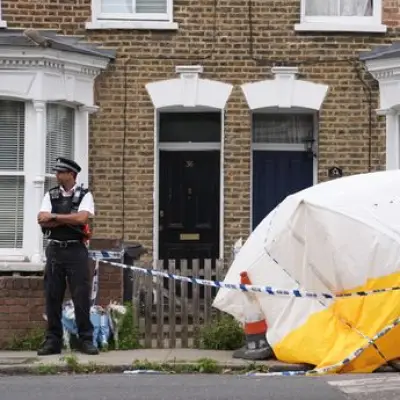
This week, Walid Saadaoui and Amar Hussein were found guilty of terrorism offences for planning a marauding firearms attack aimed at killing "as many Jews as possible" in the area. The plot, orchestrated by an Islamic State sleeper cell, specifically identified this part of Salford as a target.
Yet, for local independent councillor Andrew Walters, the community's spirit is best captured by an old Jewish saying: "They tried to kill us. They failed. Let's eat." Walters, a tax adviser and father of nine, emphasises that the plot has not shaken the community's fundamental desire for peaceful coexistence. "My business partner is a religious Muslim and we get on great," he stated, adding, "Most just want to live in peace."

Daily Struggles Beyond the Headlines
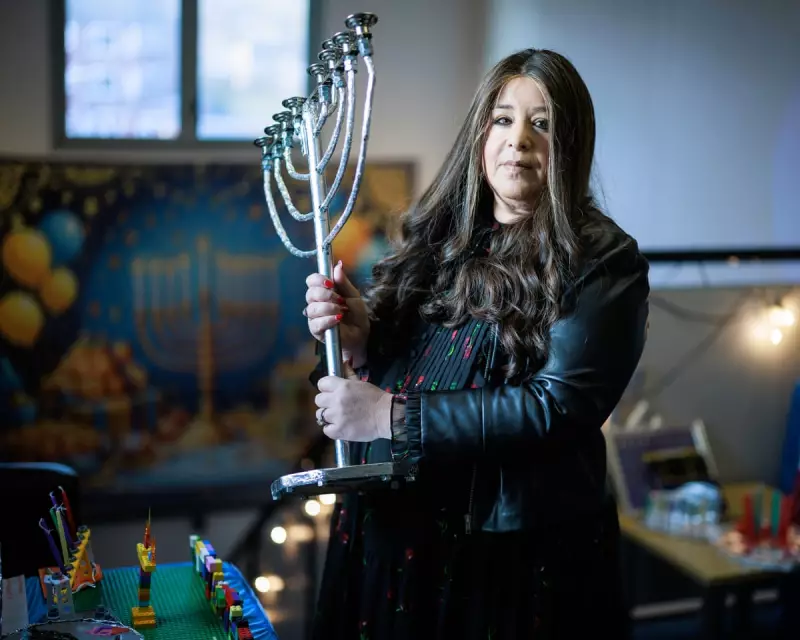
While security threats dominate external perceptions, community workers highlight that pressing social concerns are the daily reality for many families. Michelle Ciffer Klein, who runs the Hershel Weiss children and families centre supporting 650 families, is clear on the priorities.
"People outside think the biggest issue is security – that's rubbish," Ciffer Klein said. "Women I work with are struggling to cope with day-to-day lives." Her centre, which grew from a single synagogue room to a council-funded hub, deals with the soaring cost of kosher food, energy bills, and families missing benefits. She also supports ultra-Orthodox families who eschew modern technology and some Muslim women, fostering community cohesion through projects like December's 'Spread a Little Light' Hanukah initiative.
Solidarity and Vigilance in the Face of Threat
The pressure has strengthened two key themes within the community. The Institute for Jewish Policy Research notes a clear shift towards greater community solidarity and involvement. Simultaneously, a culture of vigilance operates on an unprecedented scale for a UK suburb.
MD Factor, executive director of the Jewish civilian patrol Salford Shomrim, explained their critical role. "We can get to an incident in two minutes," he said, describing the group as a bridge between Yiddish and Hebrew speakers and the police. He reported a "massive increase" in calls to their 24-hour hotline about suspicious activity, confirming that "the mood is definitely tense."
Despite this, Councillor Walters, one of few Orthodox Jewish local politicians in the UK, stressed that his community, among the fastest-growing in Europe, does not live in fear. "We love life," he asserted. "We refuse to be afraid."
A Shifting Security Landscape
Security experts point to a concerning pattern in the region. Dave Rich, head of policy at the Community Security Trust (CST), highlighted a series of incidents: the Heaton Park synagogue attack, the recent Saadaoui and Hussein case, a man flying from Blackburn to Texas to hold synagogue hostages, and a stabbing at a Burnley Marks & Spencer motivated by the store's perceived support for Israel.
"You've got a pattern now of Islamist terrorism and antisemitism coming out of towns and suburbs north of the city," Rich said. "I think there's a genuine question to be asking: 'what is going on there specifically?'" While the CST recorded more anti-Jewish hate incidents with far-right motivation (175) than Islamist extremism (65) in 2024, the most violent recent plots have been Islamist in nature.
Defiance and an Uncertain Future
Russell Langer, the Jewish Leadership Council's director of public affairs, suggested a postwar sense of security has eroded. "There was sort of a view there was a golden age... an idea the world saw the evil of the Holocaust and won't let that be repeated. I think that viewpoint is starting to be seen as far too optimistic."

He urged the government to bring forward a new extremism strategy, arguing that too many are more comfortable discussing the far-right threat than Islamist extremism. Langer was careful to distinguish ideology from religion, stating, "We're not talking about the religion, we're not talking about the people. We are talking about a distinct threat."
Yet, even amidst serious conversations about the future, moments of joyful defiance emerge. Langer recalled a recent London gathering marking the anniversary of the 7 October attacks, where the Manchester incident was discussed. "Unplanned at the end, a musician started playing Jewish tunes... and, spontaneously, people started dancing. That's the positive spin."
As Sara Radivan, community engagement officer for the Board of Deputies of British Jews, summarised the community's dual identity: "I'm proud to be British, proud to be Jewish and can't say which comes first." In Greater Manchester, that pride is being tested, but it is far from broken.