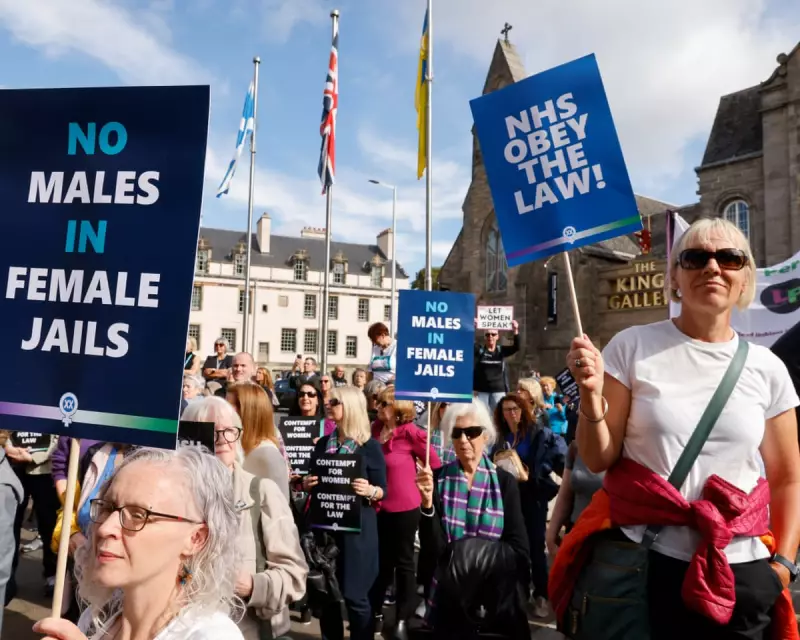
Legal Fallout Continues Seven Months After Landmark Judgment
The legal landscape surrounding gender rights in the UK remains in flux seven months after a landmark Supreme Court ruling in April redefined the legal understanding of sex for Equality Act purposes. The judgment, originating from a case brought by campaign group For Women Scotland against the Scottish government, determined that biological sex forms the basis for defining a woman in law.
Ongoing Legal Challenges and Policy Delays
Despite the clarity of the April ruling, practical implementation has proven complex. For Women Scotland, which initially celebrated the decision as a victory for women's rights, has now launched fresh legal action against the Scottish government over its transgender prison policy. The organisation claims the current approach, which allows some transgender prisoners to be housed according to their chosen gender following risk assessments, violates the Supreme Court's judgment.
Meanwhile, service providers across the UK find themselves in a state of uncertainty. Most businesses and public bodies are awaiting updated official guidance from the Equality and Human Rights Commission (EHRC) that will outline how to apply the ruling in practical terms. The commission submitted its final guidance to the government in September, but Equalities Minister Bridget Phillipson has yet to approve the document for parliamentary consideration.
Real-World Impacts and Competing Concerns
The delay in publishing definitive guidance has created a patchwork of responses from service providers. Some companies, including Barclays and Virgin Active, have moved quickly to implement policies restricting toilet access based on biological sex. However, many organisations remain hesitant, concerned about the costs of providing additional facilities and the complexities of navigating competing legal rights.
Trans advocacy groups report that the ruling has already led to increased challenges for transgender individuals in everyday situations. Many face being questioned about their use of single-sex facilities or being directed to use different facilities by employers, effectively outing them to colleagues. The Council of Europe's human rights commissioner, Michael O'Flaherty, has expressed concern that the judgment could lead to widespread exclusion of trans people from public spaces.
Future Legal Battles and Guidance
The anticipated EHRC guidance faces its own legal challenges. The Good Law Project is pursuing a judicial review against the commission's interim advice, arguing it was rushed and legally flawed. Their case, expected to conclude before year's end, may influence the final code's implementation.
Additional employment tribunal cases involving healthcare workers objecting to sharing changing facilities with transgender colleagues are being closely watched. These rulings, expected in the coming months, will provide crucial insight into how the Supreme Court judgment applies in workplace settings.
As the legal battles continue and service providers await clear guidance, the fundamental tension between protecting single-sex spaces and ensuring transgender inclusion remains unresolved, leaving many organisations and individuals navigating uncertain territory.