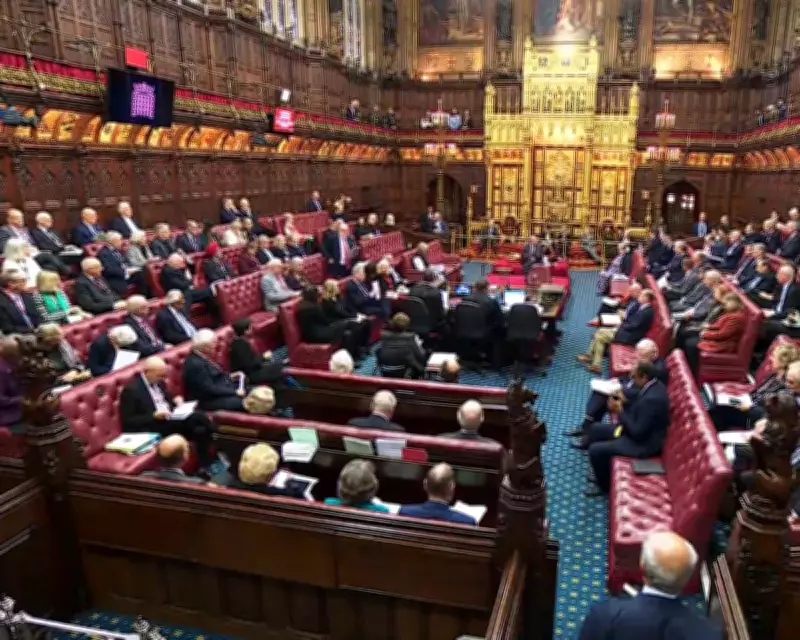
Exclusive parliamentary records obtained by the Guardian have revealed that peers Evgeny Lebedev and Ian Botham share the dubious distinction of having the lowest attendance rates in the House of Lords, each managing to appear for just 1.12% of sessions over the past four years. The data shows both men, who were appointed by former Prime Minister Boris Johnson, attended only seven of the 625 sessions held between the beginning of 2022 and the end of 2025.
Bare Minimum Compliance with Lords Rules
Under established House of Lords regulations, peers must attend at least one sitting during each year-long parliamentary session to maintain their seat in the upper chamber. Both Lebedev and Botham have managed to meet this minimal requirement in recent years, though their overall participation remains strikingly low compared to their colleagues.
Lebedev, the newspaper proprietor and son of a Russian oligarch who received his life peerage from Johnson in 2019, attended once in 2022 before increasing his presence to two appearances annually in 2023, 2024, and 2025. His formal title is Baron Lebedev of Hampton and Siberia, and he sits as a cross-bench peer. Interestingly, Lebedev has shown some recent signs of increased engagement, casting his first votes in six years with two ballots already this year and delivering one of his six total speeches this month.

Botham's Initial Enthusiasm Fades Quickly
Ian Botham, the legendary cricketer who became Baron Botham of Ravensworth in North Yorkshire after his September 2020 appointment, demonstrated somewhat more enthusiasm initially. He attended 26 sessions in 2021 before his participation plummeted to just seven appearances over the subsequent four years. Botham's record shows two attendances in 2022, one in 2023, and two each in 2024 and 2025.
Unlike Lebedev, Botham has not spoken in the Lords since November 2020 and has not submitted any written questions since November 2024. While he has voted 21 times total, his last recorded vote occurred in July 2021, indicating a significant decline in parliamentary activity over time.
Context of Lords Operations and Responsibilities
The functioning of the House of Lords differs substantially from that of the House of Commons, with peers often maintaining professional careers outside Parliament or specializing in particular policy areas. This structure means many contribute only occasionally to chamber proceedings rather than maintaining regular attendance.
It is important to note that the attendance statistics do not account for work conducted on Lords committees, which can demand considerable time and effort. However, neither Lebedev nor Botham has ever served on any parliamentary committee, suggesting their limited engagement extends beyond mere chamber attendance.
Options for Reduced Participation
Peers have formal mechanisms available if they cannot maintain regular attendance, including taking leave of absence or retiring completely without forfeiting their titles. While some older members attend irregularly, none appear to have maintained such consistently low participation rates as Lebedev and Botham over an extended period.
Broader Implications for Lords Reform
The House of Lords currently comprises 868 members, with 842 active peers, making it the world's largest legislative chamber after China's National People's Congress. Recent legislative changes will eliminate the remaining 92 hereditary peers, but broader efforts to reduce the chamber's size have achieved limited success.
Retirements have been consistently offset by high rates of new appointments from successive prime ministers. Keir Starmer has created 96 peers since taking office, while Boris Johnson appointed 87 during his tenure. Johnson faced particular criticism for perceived nepotism in his appointments, which included Lebedev and his own brother, Jo Johnson.
The attendance records of Lebedev and Botham highlight ongoing concerns about appointment practices and the functioning of Britain's second chamber, raising questions about accountability and the effective use of parliamentary resources in a chamber that continues to expand despite reform efforts.