London's Jewish Community Faces Existential Crisis After Ambulance Arson Attack
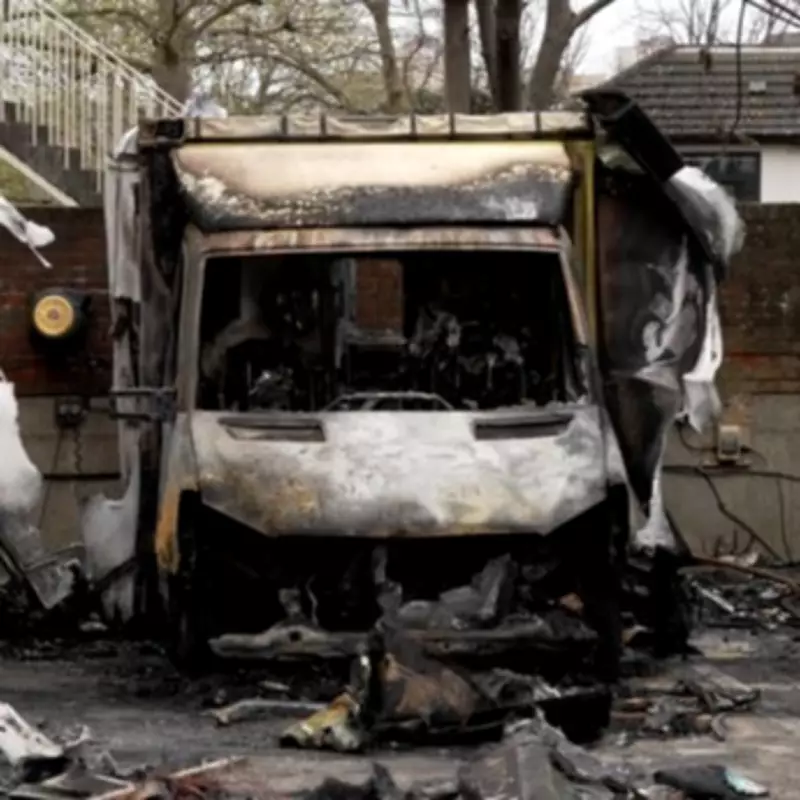
In the early hours of Monday, March 23, emergency sirens pierced the night around the Hatzola ambulance fleet in Golders Green, North London. Residents initially assumed the sounds signaled another medical emergency, but the grim reality soon emerged: the ambulances themselves were ablaze.
Four volunteer-operated ambulance vehicles were deliberately set on fire in what authorities have classified as an arson attack with intent to endanger life. Two men, aged 47 and 45, were arrested two days later in connection with the incident, which has sent shockwaves through London's Jewish communities.
A Community Living in Fear
Rabbi Levi Schapiro of the Jewish Community Council, based in Stamford Hill, described the attack as highlighting the daily anxieties faced by London's Hasidic Jewish population. "The community is obviously living with a lot of anxiety and uncertainty," Rabbi Schapiro told reporters. "The mood is very sombre. The issue facing many families is, 'Do we have a future here or not?'"

Stamford Hill hosts London's largest community of Hasidic Jews and represents the biggest concentration of orthodox Ashkenazi Jews in Europe. The ambulance attack has reportedly left Jewish residents across the capital deeply shaken, questioning their place in British society.
"If this is the sort of thing we're going to see each day - rising antisemitism - then people will want to make alternative plans," Rabbi Schapiro explained. "These are the conversations that people are having. Can I bring up my children in what is supposedly a modern, tolerant Britain? Are we still able to do that? That question in itself is a very big problem."
The Vital Role of Hatzola Ambulances
Hatzola represents a Jewish volunteer ambulance service that operates in Jewish communities worldwide. The organization trains community members as first responders who provide emergency medical assistance regardless of the patient's background or religion.
"I felt very bad for the community, I felt very bad for the volunteers," said Rabbi Schapiro. "Whether those people are Jewish or not makes absolutely no difference. If they happen to pass the road and you are having a heart attack, they will stop and provide emergency medical care and take you to hospital."
The deliberate targeting of these life-saving vehicles has struck at the heart of community safety infrastructure. "To have those ambulances burnt, it's something which is utterly... You can't find the right words to explain it," Rabbi Schapiro continued. "These perpetrators knew what they were doing. They didn't just target any ambulance."
Escalating Antisemitism in the Capital
The attack occurs against a backdrop of increasing antisemitic incidents across London, with geopolitical tensions from the Middle East spilling onto UK streets through weekly protests and organized demonstrations that have sometimes targeted Jewish businesses.
"There's a big change in antisemitism in this country," Rabbi Schapiro observed. "It's no longer just on social media, it's now physical. They are coming into our community and attacking Jewish facilities, they are taking it to a different level we haven't seen in recent years."
The community leader expressed frustration with government responses that emphasize solidarity without concrete action. "You can understand why the community is expressing its frustration to the government. They are putting out solidarity 'shoulder to shoulder' statements. We don't need that, we need them to do what is right. Cut the antisemitism at its root and deal with it."
Rabbi Schapiro called for a comprehensive, cross-party action plan with a clear roadmap to eradicate antisemitism from British society. He emphasized that the motivation behind such attacks stems from straightforward hatred rather than complex political reasoning.

A Call for Unity and Action
Despite the current tensions, Rabbi Schapiro highlighted the multicultural harmony present in areas like Hackney, where synagogues, mosques, churches, and community centers coexist peacefully. He stressed the importance of returning to this spirit of mutual respect and cooperation.
For the general public, Rabbi Schapiro delivered a simple yet powerful message: "If you see antisemitism, stand up and say something. Don't stand by the side-lines. Call it out and don't be scared. Everyone needs to make an effort to live in unity and to live in peace together."
The ambulance arson attack has forced London's Jewish community to confront difficult questions about safety, belonging, and future prospects in a city that has long been home to diverse religious and ethnic groups. As investigations continue and community leaders seek meaningful government action, the incident serves as a stark reminder of the urgent need to address rising antisemitism before it further erodes social cohesion.