Soaring Nomination Fees Reshape African Democracy, Excluding Challengers
Presidential elections in Djibouti and Benin this past weekend have cast a harsh spotlight on a growing trend across Africa: exorbitant nomination fees that are fundamentally reshaping democratic participation. These financial barriers are creating what critics describe as "systematic wealth tests" that privilege affluent political actors while excluding genuine opposition voices.
The Djibouti Dilemma: A Ceremonial Democracy
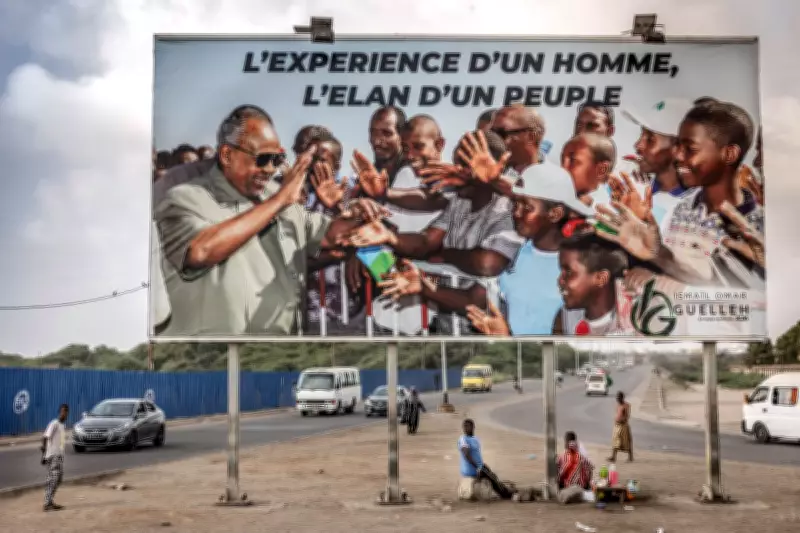
In Djibouti, incumbent President Ismail Omar Guelleh, who has ruled since 1999, faced minimal opposition in the latest election. The £20,000 nomination fee presented a steep barrier for potential challengers, particularly when combined with what former adviser Alexis Mohamed describes as a "ceremonial" political environment where Guelleh habitually wins with figures approaching 97% of the vote.
Mohamed, who resigned last September citing democratic regression, explains: "On paper, this may appear to be a simple legal requirement. In reality, it is an additional mechanism of selection and exclusion." The fee is only refundable to candidates who obtain at least 10% of votes cast—a provision Mohamed says "locks down" competition in a country where the incumbent consistently achieves near-unanimous results.

Benin's Even Higher Barrier
Meanwhile, in Benin, the nomination fee reached a staggering £328,000, drawing widespread protest and criticism. This astronomical figure effectively prices out all but the wealthiest candidates or those with powerful financial backers, fundamentally altering the nature of political competition.
A Continent-Wide Pattern
This pattern extends far beyond these two French-speaking nations. Across Africa, nomination fees and broader campaign costs are rising rapidly, reshaping who can run for office and what democracy looks like in practice.
In Zimbabwe, the nomination fee increased by 1,900% to £15,000 in the last elections. Opposition leader Linda Tsungirirai Masarira, president of Labour Economists and Afrikan Democrats, was unable to participate in the 2023 polls due to these "exorbitant fees."
"The notion that high nomination fees produce serious leadership is fundamentally flawed," Masarira argues. "Financial capacity is not a measure of political competence, integrity, public support or visionary leadership."
The Consequences of Commercializing Candidacy
Motlapele Raleru, executive director of the Botswana-based Centre for Democracy and Electoral Awareness, warns that rising fees do "more harm than good." She explains that while they may reduce candidate numbers, they don't improve the quality of remaining choices. Worse, they "reduce candidacy to a commercial transaction, not a civic right."
In practice, Raleru says high fees become a "systematic wealth test" that privileges affluent political actors, shrinks voter choice, and "puts democracy at stake," effectively placing it "on sale to the highest bidder."
The Malawi Paradox: More Money, More Candidates
Malawi presents a fascinating counterpoint. There, the presidential nomination fee rose from about £800 to approximately £4,200 for the September 2025 election. The theory was simple: raise the price to attract only "serious" contenders. Yet the ballot expanded dramatically from seven candidates in the previous election to seventeen.
Malawian political science professor Nandini Patel doesn't rule out the possibility that powerful actors financed "proxies" to split votes and confuse opponents. She fears that increased nomination fees "may inspire corruption" and that current "horrendous" fee levels could block capable candidates.
Milward Tobias, an independent presidential candidate in Malawi's 2025 elections, rejects the idea that money measures seriousness. "Political competition is too heavy a sacrifice to be measured by nomination fee," he insists, arguing that some aspirants failed to run not because they lacked conviction, but because they were priced out.

The Broader Implications for African Democracy
Political scientist Michael Wahman of the University of Michigan, who has researched election costs in Malawi and Zambia, points out that nomination fees represent only a fragment of the massive costs candidates incur in many African elections. As in the United States, where presidential campaign costs run into billions, the sums involved make elections a dangerous breeding ground for corruption.
The pattern visible across Djibouti, Benin, Zimbabwe, and Malawi suggests a continent-wide trend toward what critics describe as "commercialized democracy"—where financial capacity increasingly determines political opportunity. This development particularly disadvantages women, young people, independent candidates, and smaller parties, while consolidating power among already-resourced political actors.
As African nations approach the approximately eighteen presidential elections scheduled for 2026, the debate over nomination fees and their impact on democratic participation will only intensify. The fundamental question remains: Should democracy be accessible to all citizens with vision and commitment, or only to those with sufficient financial resources?