Harry Barnes: The Independent-Minded Labour MP Who Championed Peace and Principle
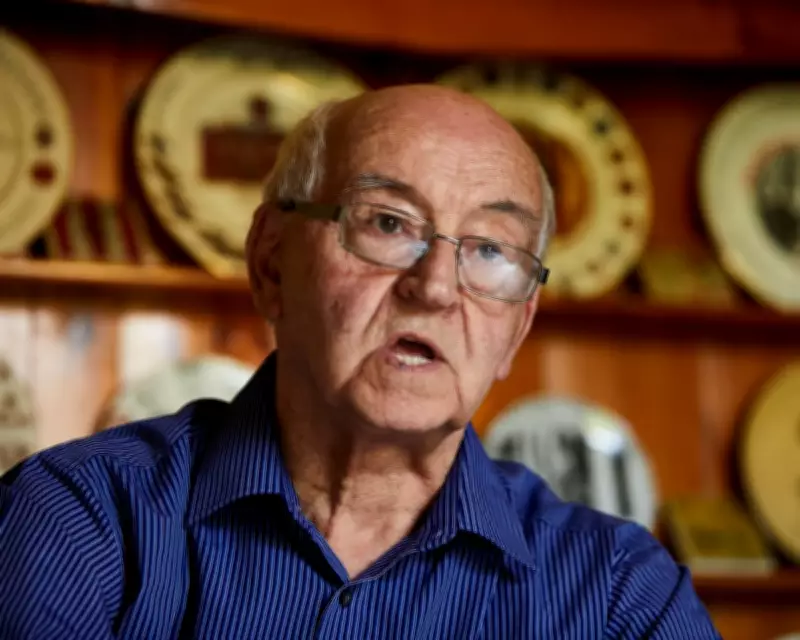
Harry Barnes, the former Labour Member of Parliament for North East Derbyshire, has passed away at the age of 89 after a battle with cancer. Barnes represented his constituency for an impressive 18 years, from 1987 until 2005, establishing himself as a serious and thoughtful politician who skillfully balanced deep principles with necessary pragmatism.
A Political Journey Rooted in Education and Experience
Barnes arrived in the House of Commons as a mature politician with decades of political study and teaching behind him. Born in 1936 in Easington, County Durham, he was the only child of Joseph Barnes, a miner, and Betsy Barnes, who worked as a household cleaner. His early life was marked by the devastating 1951 Easington colliery explosion that killed 83 people and profoundly affected his community.
After leaving school at 16 to work as a railway clerk, Barnes completed national service from 1954 to 1956, working on the Iraq state railway. This experience in the Middle East exposed him to poverty and hardship that would significantly shape his future political outlook. Upon returning to Britain, he pursued education as a mature student, first at Ruskin College, Oxford, and then at the University of Hull, where he earned a BA in philosophy and political studies.

From Lecturer to Parliamentarian
Barnes became a lecturer after graduation, teaching at Sheffield University from 1966 until his election to Parliament in 1987. He directed mature students' courses and taught several individuals who would later become Labour MPs themselves. His political activism began early when he joined the Labour Party in 1957 after entering an essay competition run by local MP Manny Shinwell.
Barnes was deeply involved with socialist organizations throughout his career, particularly the Independent Labour Publications (ILP), where he served on the national administrative council and worked for their newsletter from 1975 to 1985. During the miners' strike of 1984-85, he established the Dronfield miners' support group near his Derbyshire home, demonstrating his commitment to working-class causes despite private criticisms of NUM president Arthur Scargill's tactics.
A Record of Rebellion and Innovation
As an MP, Barnes developed a reputation for independence that earned him the title of Labour's most rebellious MP in 1993. According to his former parliamentary researcher Gary Kent, "He was exercising his rights as a backbencher to use his judgment without fear or favour." Despite being consistently on the left of the party, he refused to be constrained by ideology and would rebel against both his own frontbench and leftwing positions when they didn't align with his thinking.
Barnes was notably productive legislatively. In 1988, he introduced a private member's bill to improve miners' safety through better research and control of underground fires. In 1992, he proposed legislation to modernize the electoral register, an initiative that eventually led to the rolling register system adopted by Tony Blair's government.
Championing Peace in Northern Ireland and Beyond
One of Barnes' most significant contributions was his work toward peace in Northern Ireland. In 1990, he co-founded New Consensus (later New Dialogue) with Conservative MP Peter Bottomley to pursue fresh thinking on Irish issues. This work eventually led to his appointment to the Northern Ireland affairs committee when Labour came to power in 1997.
Barnes consistently opposed the Gulf War but maintained nuanced positions on international conflicts. He broke with the Labour Against the War group when it called for troop withdrawal from Iraq, arguing that Iraqi civil society needed support. He served as an honorary member of Iraqi trade unions and president of Labour Friends of Iraq, while also actively supporting Kurdish communities in the region.
Later Years and Legacy
Barnes suffered a stroke at age 61 in 1998 but returned to parliamentary work. He stood down at the 2005 election and remained active until affected by Alzheimer's disease. He was married to Ann Stephenson, whom he met at Hull University, and she worked as his constituency secretary. They had two children, Stephen and Joanne, who survive him along with his wife.

Throughout his career, Barnes maintained a self-deprecating humor, comparing himself to prolific character actor Sam Kydd—"always there in the background, but never famous." His legacy endures as that of a principled yet pragmatic politician who consistently sought new solutions to persistent problems, particularly in the pursuit of peace and social justice.