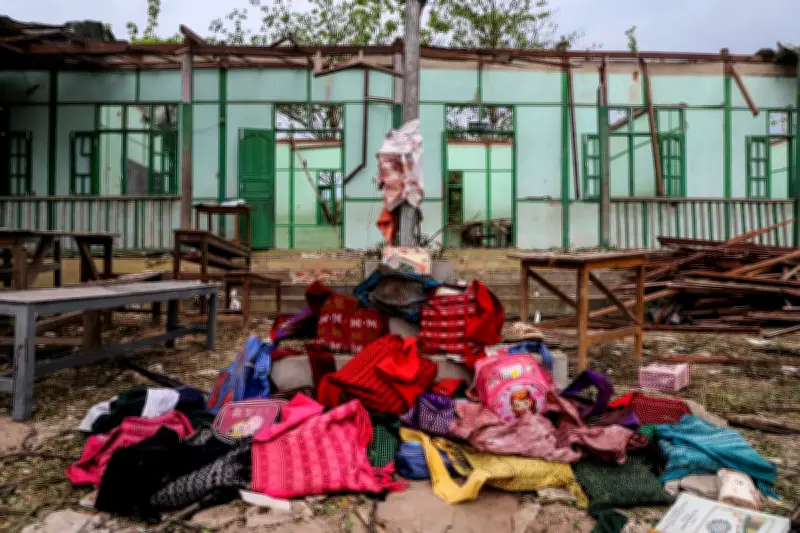
A significant surge in violent attacks on educational institutions worldwide has been documented, with a new study revealing a 40% increase in such incidents. The report, published by the Global Coalition to Protect Education from Attack (GCPEA), recorded over 8,556 attacks and more than 10,600 students and staff killed, injured, abducted, or arrested in 2024 and 2025.
Geographic Scope and High-Risk Areas
Attacks were reported in 83 countries, with the highest numbers in Colombia, the Democratic Republic of the Congo, Ethiopia, Haiti, Palestine, and Ukraine. Ukraine experienced approximately 900 attacks on schools, while Palestine saw at least 2,400 attacks targeting students and staff.
Military Occupation of Schools Doubles
The report highlights a 91% increase in cases where military forces or armed groups occupied schools or universities, with 1,912 such incidents recorded. Lisa Chung Bender, director of the GCPEA, warned that global norms protecting children are collapsing, stating, "The world is drifting toward a place where even the youngest are no longer off-limits."

Casualties and Kidnappings
The highest numbers of victims were in Myanmar, Nigeria, Yemen, and Cameroon, where over 1,700 students and staff were killed or injured. In Nigeria, more than 700 students and staff were kidnapped, while in Myanmar, at least 80 were killed and 240 injured.
Targeting of Vulnerable Groups
Women and girls were specifically targeted in at least 11 countries. For example, in Nigeria on 17 November 2025, gunmen attacked a girls' boarding school, killing the vice-principal and abducting 25 female pupils. Students with disabilities also faced attacks, including a controlled detonation by the Israeli military on a school for special needs children in Lebanon on 11 September 2025.
Use of Explosives and Drones
High explosives, including drone-borne munitions, were frequently used in attacks on schools, causing extensive casualties and infrastructure damage, forcing many institutions to close.
Expert Commentary
Prof Tejendra Pherali of University College London described the trend as systematic: "Behind these numbers are children who no longer see schools as a place of safety. It's not just education that is lost – it's safety, futures, and trust." Kieran King from War Child UK noted a 373% increase in grave violations against children since 2010, linking the rise to impunity for war crimes and aid cuts.
Call for Action
Chung Bender emphasized that attacks are preventable, urging states to end military use of schools, strengthen legal protections, and invest in monitoring systems. The report coincides with a peak in global conflicts, with 65 conflicts registered in 2025, the highest since 1992, and over 244,000 fatalities from organized violence.