French Local Elections Enter Decisive Second Round with Major Cities at Stake
Voting has commenced across France in the crucial second round of local elections, widely viewed as a significant bellwether for the upcoming 2027 presidential race. With cities like Paris and Marseille hanging in the balance, both the radical left and far-right factions are anticipating potential gains that could reshape the nation's political landscape.
Electoral Alliances Prove Pivotal in Tight Contests
While most of France's approximately 35,000 communes elected their councils in the first round last Sunday, the second round will be decisive in municipalities with tighter races, particularly in large urban areas. Electoral alliances are expected to play a vital role in determining outcomes, with analysts noting that these local contests often provide important insights for national ballots.
"Local elections create momentum, provide a boost, and establish a narrative," remarked Frédéric Dabi of the polling institute Ifop. Beyond reflecting voter sentiment ahead of the 2027 vote—where the far-right National Rally (RN) sees its best chance yet to seize power as Emmanuel Macron steps down—these elections may indicate which tactical alliances could be forged at the national level.

Paris Mayoral Race: A Three-Way Battle with National Implications
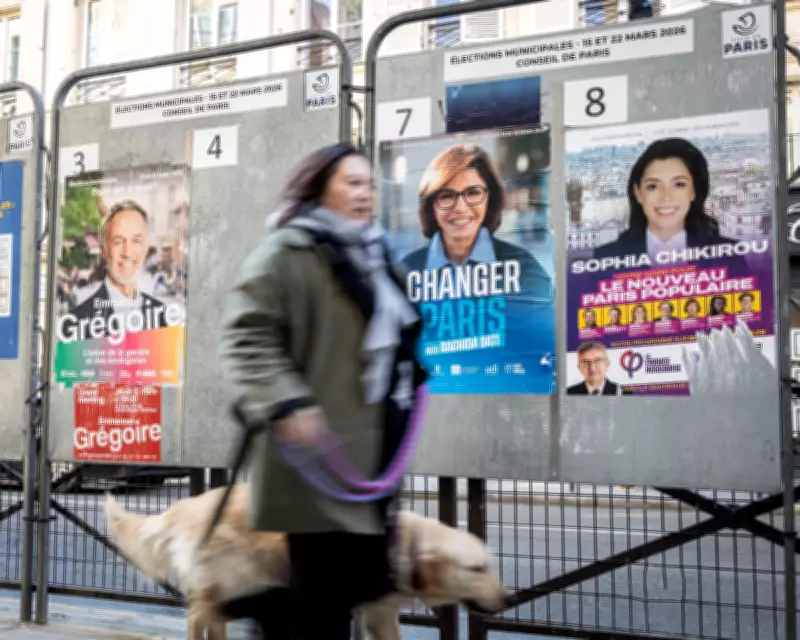
One of the most closely watched contests is in Paris, where city hall has been held by the Socialist Party (PS) since 2001. Centre-left candidate Emmanuel Grégoire led the first round with 38% of the vote, ahead of conservative Rachida Dati at 25.5%. Three other candidates qualified for the second round, but the dynamics have shifted significantly.
Moderate rightwinger Pierre-Yves Bournazel has merged his list with Dati's, while far-right candidate Sarah Knafo has withdrawn, potentially consolidating the capital's rightwing vote. On the left, Grégoire has refused to ally with Sophia Chikirou of Jean-Luc Mélenchon's radical-left France Unbowed (LFI), citing concerns over extremism, antisemitism, and violence.
This sets up a three-way race that could have profound implications: a Grégoire victory would reinforce the mainstream left's reluctance to collaborate with LFI, while a loss might be hailed by the right as evidence of the power of a broader rightwing alliance.
Marseille's Unique Political Dynamic
In Marseille, France's second-largest city, the political landscape differs markedly. Far-right RN candidate Franck Allisio finished just one percentage point behind outgoing centre-left mayor Benoît Payan in the first round. Like Grégoire, Payan ruled out an alliance with LFI, but its candidate, Sébastien Delogu, withdrew to prevent an RN victory.
Despite RN calls for her to step aside, a conservative candidate remains in the race, adding complexity to the contest. The RN, already the largest single party in the French parliament, also has high hopes in Toulon and Nice, where its ally Éric Ciotti is the frontrunner as a joint candidate for his breakaway conservative party and the RN.
Broader National Trends and Key Races
Bruno Retailleau, national leader of the main conservative party Les Républicains (LR), has declined to support the outgoing centre-right mayor of Nice against Ciotti, potentially paving the way for a conservative and far-right electoral alliance in 2027. In some cities, the radical left is perceived as the primary threat, prompting unusual alliances.
For instance, the PS has merged its list with Macron's centrists in Strasbourg to counter an LFI challenge, while Socialists have united with the Greens in Lille to block the radical-left party. Conversely, local alliances between the mainstream and radical left could yield successes in cities like Avignon, Brest, Nantes, and Toulouse, with LFI potentially winning Roubaix independently.
Another critical race is in Le Havre, where Mayor Édouard Philippe, a former prime minister, is well-positioned to retain his position and could emerge as a leading presidential contender against RN figures like Jordan Bardella or Marine Le Pen.

Polling and Results Timeline
Polling stations opened at 8 a.m. local time and will close in major cities at 8 p.m., with results expected throughout the evening. These local elections not only determine municipal leadership but also serve as a crucial barometer for France's evolving political alliances and strategies ahead of the next presidential election.