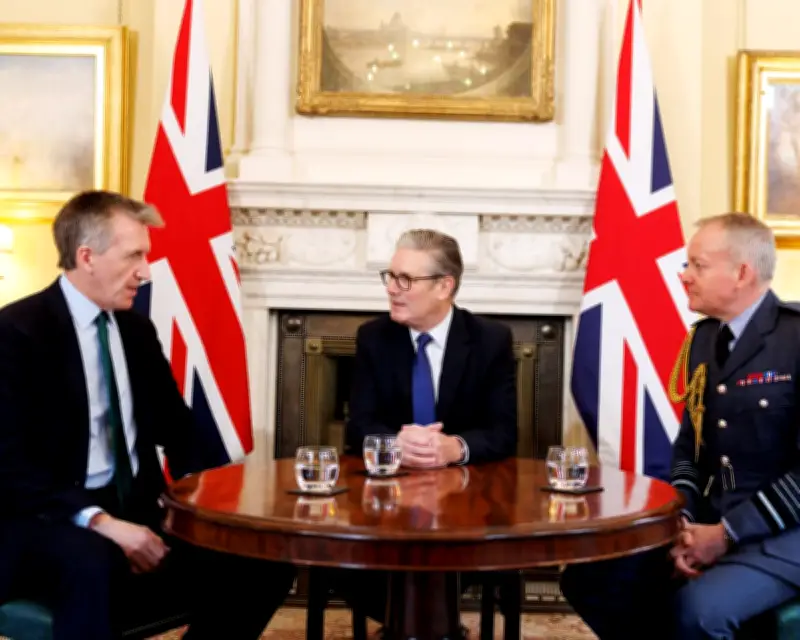
Dan Jarvis, the new defence secretary, is set to revisit a controversial plan for funding the armed forces and may push for additional funds from the Treasury, according to allies. Multiple government sources indicate that Jarvis will look to "reprioritise" aspects of the defence investment plan (Dip), which was delayed until July following the resignation of John Healey over a funding disagreement.
Jarvis's Strong Position
An ally of Jarvis stated that he holds a strong hand in future negotiations with Prime Minister Keir Starmer, who faces a potential leadership challenge from Andy Burnham. "They can't sack him [Jarvis] or let him resign," the ally said. This comes as Starmer prepares to meet world leaders at the G7 summit in France, with the defence row casting a shadow over the discussions.
Healey's Resignation
John Healey resigned as defence secretary on Thursday, refusing to accept a Dip settlement that did not "give our forces the resources they need." He accused the Treasury of unwillingness to provide necessary funds for national defence amid rising threats. Culture Secretary Lisa Nandy told the BBC that discussions about the Dip are ongoing, with her department among those still negotiating with the Treasury for additional defence funding.

However, other senior sources suggest there will likely be tweaks within the Dip rather than extra cash, implying Jarvis might free up funds by cutting projects Healey was reluctant to axe. Sources close to Healey argue that such tweaks miss the point, emphasizing the need for a plan to reach 3% of GDP defence spending by 2030.
Cabinet Concerns
Cabinet ministers have expressed reluctance to reopen their departments' spending settlements, with some citing "red lines" on capital project investments they are unwilling to cut. Meanwhile, the Royal Marines recently seized a Russia-linked oil tanker in the Channel, an operation months in planning but accompanied by combative rhetoric from Starmer, who declared, "Another bad day to be Vladimir Putin."
Funding Disputes
Multiple sources in No 10, the Treasury, and the Ministry of Defence (MoD) revealed concerns about the Dip before Healey's resignation. Chancellor Rachel Reeves and Starmer had reportedly asked Healey to rebalance funding, particularly towards autonomous ships and drones. Others voiced frustration over the department's financial black hole, which existed when Healey took office and was not adequately addressed in the spending review. "That is all on John," one minister commented.
Healey stated he resigned after Downing Street offered only £13.5bn to plug an £18bn gap in major defence projects, partly funded by cutting other departments' capital budgets by 1%. He was also concerned that Starmer did not embrace a Nato target of 3.5% of GDP spending by 2035. Despite Starmer's February statement that Britain "needs to go faster" on defence, he offered Healey an extra £2bn, raising spending to 2.68% by 2030.
International Context
Starmer spoke with US President Donald Trump and Nato Secretary General Mark Rutte after Healey's resignation. Downing Street confirmed that Starmer told Rutte the UK would spend 3% of GDP on defence by the end of 2034. On Sunday, Japanese Prime Minister Sanae Takaichi visited Downing Street for discussions, including the Gcap next-generation fighter jet project. Japanese sources indicated a desire for the UK to sign an international contract committing to the project by month's end.
Jarvis's Task
Jarvis, formerly security minister, has until the Nato summit in Ankara in early July to present an alternative plan for increased investment. A source close to Jarvis confirmed ongoing "new conversations" with the Treasury and No 10, though not necessarily about additional funding. Starmer has personally called cabinet ministers to unpick parts of their spending settlements for defence increases, but is reluctant to ask again.
Asked why Healey resigned if discussions were unfinished, Nandy said: "I can only tell you, from my point of view as somebody who is actively involved in these discussions, that these discussions are happening in real time." The stakes are high for Starmer, who may attend one of his final global meetings depending on Burnham's moves after the Makerfield byelection.

Starmer will travel to Évian, France, for the G7 summit on Monday, telling world leaders that the world is "more dangerous today than it has ever been in our lifetime" with wars on two fronts, rapid technological acceleration, and deteriorating global order. He will call for further sanctions on Russia and support for Ukraine, stating: "If Russia won't agree to a ceasefire and engage in meaningful negotiations, Ukraine will continue their fight, and we will back them all the way on that."