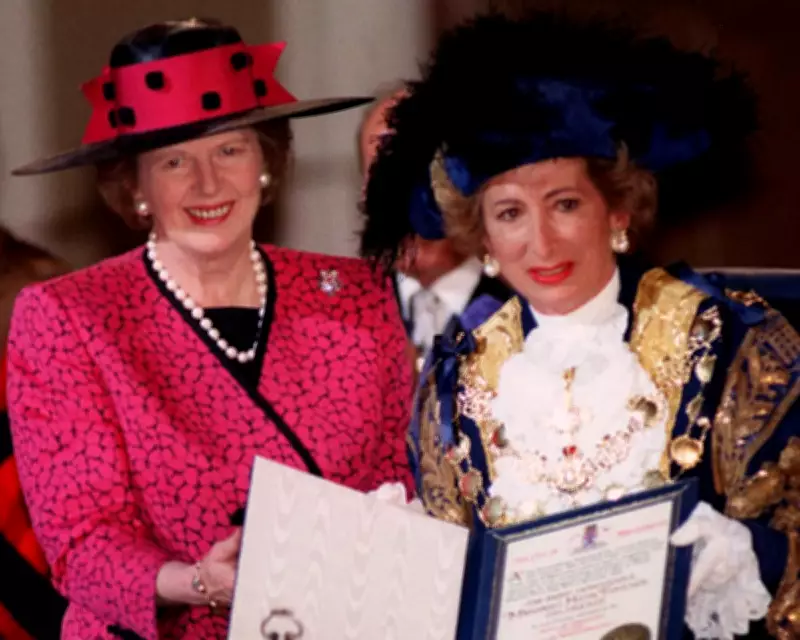
Dame Shirley Porter, the former leader of Westminster City Council who became synonymous with the 'homes for votes' scandal, has died at the age of 95. Once hailed as the 'Iron Lady of the town halls,' Porter was a grocer's daughter whose family founded the Tesco empire. Her political career ended in disgrace after she was found to have illegally sold council houses to boost Conservative votes.
The 'Homes for Votes' Scandal
Porter led Westminster Council from 1983 to 1991. In a scheme later dubbed 'homes for votes,' she targeted eight wards with potential Labour majorities, moving out council tenants and selling homes to buyers more likely to vote Tory. The policy was disguised under the slogan 'Building Stable Communities.' In 2001, the House of Lords ruled that there had been 'a blatant and dishonest misuse of public power and wilful misconduct.' After a 15-year legal battle, Porter agreed to repay £12.3 million in 2004, though her actual wealth was estimated at over £20 million, hidden in offshore accounts.
Early Life and Career
Born Shirley Cohen in London in 1930, she was the younger daughter of Sir Jack Cohen, founder of Tesco. She attended boarding school in Worthing and a Swiss finishing school before studying at a secretarial college. In 1949, she married Leslie Porter, later Tesco's managing director. Bored as a housewife, she became a magistrate and then a Tory councillor for Hyde Park ward in 1974. Her activism gave her a new identity: 'For the first time I was not someone's daughter, somebody's wife, somebody's mother.'

Leadership and Controversies
As council leader, Porter launched the 'Wars' (Westminster Against Reckless Spending) campaign and rationalised services. Fifteen chief officers left in her first four years. She gained a high profile in the Tory press, but her methods were controversial. In 1987, the council sold three cemeteries for five pence each to property developers, later forced to buy them back for £4.25 million. Despite scandals, the Tories won a 36-seat majority in 1990. Porter became lord mayor of Westminster in 1991 and was made a dame by John Major's government.
Downfall and Later Life
In 1989, district auditor John Magill began investigating the homes for votes scandal. He declared the policy illegal in 1996 and ordered Porter and others to repay £31 million. The liability eventually centred on Porter and her deputy. Legal battles dragged on until leaked emails revealed hidden wealth in the Virgin Islands. A settlement of £12.3 million was reached in 2004. Porter retired to Israel, complaining of injustice and writing memoirs that she never published. She died on 2 May 2026, survived by her daughter Linda. Her husband Leslie died in 2005 and her son John in 2021.
Despite her corruption, Porter and her husband were generous philanthropists, supporting the National Portrait Gallery, Victoria and Albert Museum, Royal Academy, and Tel Aviv University, which established the Porter School of Environmental Studies. In the words of journalist Nicholas Lezard, 'She remains by a considerable margin the most corrupt British public figure in living memory.'