Thursday 07 May 2026 4:00 am | Updated: Wednesday 06 May 2026 3:52 pm
Local elections 2026: City awaits 'significant' event for Labour leadership
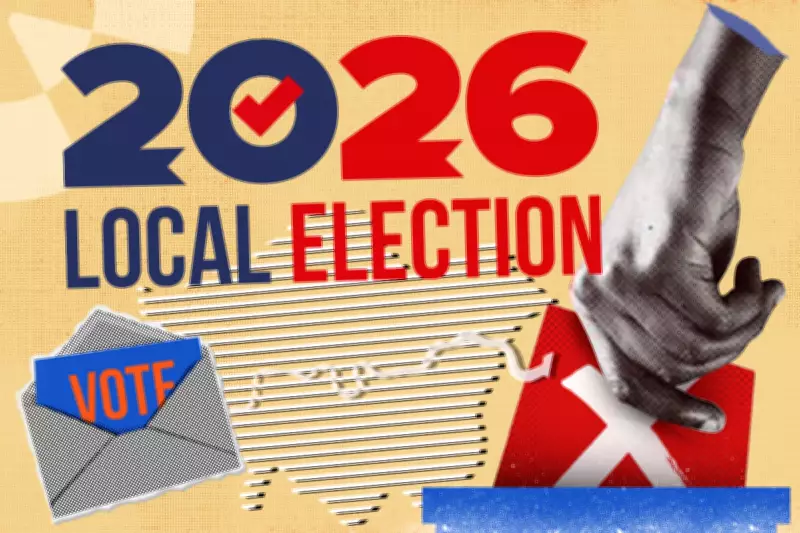
Local elections are set to be a 'significant' event for markets. City giants have warned that today's local elections will be 'significant' for market pricing, with traders closely monitoring possible leadership moves by figures such as Angela Rayner and Andy Burnham.
Several financial behemoths have lined up to caution investors that results across the country over the coming days could be unusually important for market pricing. Warnings by top researchers have centered on predictions around Labour's performance at the polls and any subsequent challenge to Sir Keir Starmer's leadership, with notes describing the risks posed to UK government bonds, the pound sterling, and domestic stocks.

The first sign of bond traders' looming worries around the Labour leadership came on Monday as long-term borrowing costs hit a high not seen since 1998. Traders appeared to price in impending turmoil, though 30-year gilt yields dropped on Wednesday as reports of a possible peace deal between the US and Iran eased market tensions.
Some banks have drawn up frameworks on what results could mean for market pricing, reflecting the heavy interest in results and wider polling data. Jefferies researchers, for example, suggested a vote share below Labour's record lows of 20 per cent seen in elections across 2009 and 2025 would 'refocus markets on leadership risk and fiscal pressure', pushing up the premia on the gilt curve compared to other advanced economies.
Traders braced for political turmoil
Most analysts fear a leadership contest could prompt the government to take a leftward turn and loosen fiscal policies, borrowing more from City firms. Banks are also scrambling to calculate the chances of Rayner or other candidates taking to Downing Street.
JP Morgan economist Allan Monks said the bank factored in a less than 50 per cent chance of Rayner becoming prime minister this year. He warned that the bank expected leadership contests to run on until at least September, resulting in 'months of uncertainty' as traders would have to wait to find out about fiscal policy proposals.
'It is likely to be difficult during a contest to know exactly what the economic policies of the candidates will be,' Monks said. 'The risk of revealing too much and provoking an unwanted reaction from the public or markets would be high.'
Researchers have also tracked which MPs back Manchester mayor Burnham's return to parliament after he criticised Starmer's government for being 'in hock to the bond markets'. Labour's National Executive Committee is seen as the key blocker to any potential return to parliament and subsequent leadership bid made by him. However, Panmure Liberum economist Simon French said he expected weaknesses across gilts, sterling and domestic asset prices to provide a 'feedback loop into any leadership race' as MPs would be warned that they would not be 'starting with a blank canvas'.
Starmer's ally Pat McFadden, the welfare secretary who may be tasked with introducing wider reforms later this year, said on Wednesday morning that the Prime Minister was in a 'resolute' mood ahead of the elections. He added that Starmer would look to fight back against any leadership contest despite his low popularity ratings.
Looming risks of Iran war
Some City economists said they were looking out for shifts in Labour's policy positions over the coming years, such as on joining the EU's customs union and defence spending. But political researchers at the Institute for Public Policy Research, a left-leaning think tank that has backed the Labour party's attempted crackdown on so-called profiteering, warned on polling day that the Iran war would cost the government up to £8bn a year if Labour failed to intervene.

Its new report suggested inflation could peak as high as 5.8 per cent, with researchers urging Chancellor Rachel Reeves to take dramatic action to curb price growth and prevent a series of interest rate hikes that could further tighten public finances. The think tank suggested the energy price cap should be capped at £2,000, given the projection for July is currently £1,929, while a temporary 10p fuel duty cut should be introduced. The think tank also argued that ministers should look to reduce energy demand, including by lowering speed limits.
The IPPR also urged the government to develop more 'targeted, progressive' taxes, such as a strengthened windfall tax on energy profits. Researchers claimed the wider policy package would be 'broadly fiscally neutral' as protected tax revenues and lower borrowing costs offset the damage to public finances from the war.
William Ellis, senior economist at the IPPR, said the Bank of England was 'not well suited to respond' to the imminent threats posed by the Iran war as interest rates had a 'lag' in affecting demand levels. He said: 'The lesson from Liz Truss is clear: it's not intervention that spooks markets, it's poor policy design and an ignorance of investors' concerns. With the right approach, the government can act decisively and responsibly at the same time.'
Londoners head to elections
While the double-sided risks of an economic crisis and political nightmare could trouble Labour leadership contenders, results filtering through on Friday and Saturday could also be an important check on how opposition leaders are faring in a multi-party system. London could provide a snapshot for electoral successes and failures as voters across all 32 boroughs will cast ballots.
City AM has previewed results for all boroughs, tracking the key local issues and examining party supporter bases in each council.
- Barking & Dagenham: 5pm
- Barnet: 5pm
- Bexley: 5am
- Brent: 5pm
- Bromley: 7pm
- Camden: 6pm
- Croydon: 4pm on Saturday May 9
- Ealing: 4.30am
- Enfield: 5pm
- Greenwich: 4pm
- Hackney: 5pm
- Hammersmith & Fulham: 5.30am
- Haringey: 5.30pm
- Harrow: 4.30pm
- Havering: 6am
- Hillingdon: 4pm
- Hounslow: 5.30pm
- Islington: 3pm
- Kensington & Chelsea: 5am
- Kingston-upon-Thames: 6pm
- Lambeth: 6pm
- Lewisham: 4pm on Saturday May 9
- Merton: 5am
- Newham: 6pm
- Redbridge: 5pm
- Richmond-upon-Thames: 5am
- Southwark: 6pm
- Sutton: 4.30am
- Tower Hamlets: 6pm on Saturday May 9
- Waltham Forest: 3pm
- Wandsworth: 4am
- Westminster: 3.30am