Congresswoman Introduces Legislation to Protect World Cup Events from Immigration Raids
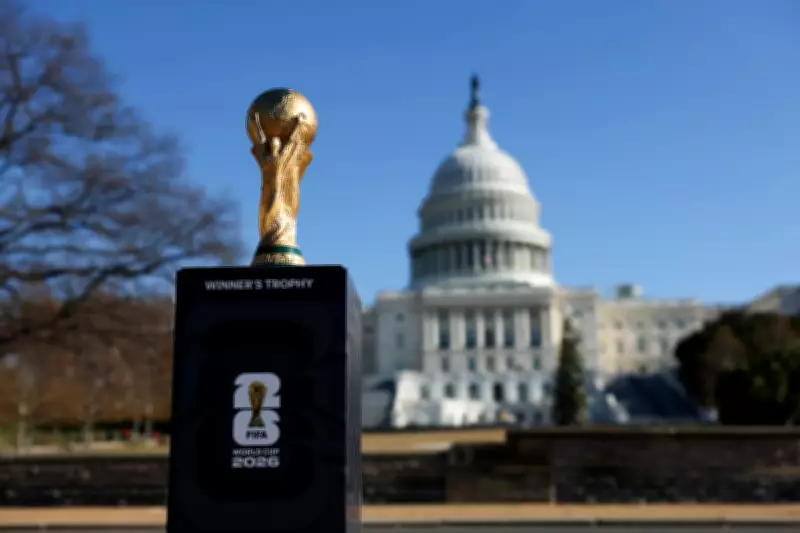
In a significant move to safeguard the upcoming FIFA World Cup in the United States, New Jersey Congresswoman Nellie Pou has proposed new legislation aimed at prohibiting Immigration and Customs Enforcement (ICE) raids near tournament venues. The bill, introduced on Thursday, seeks to create a one-mile exclusion zone around all World Cup matches and official fan festivals, ensuring that visitors and participants can enjoy the events without fear of detention.
The Save the World Cup Bill: A Response to Enforcement Concerns
The legislation, officially titled the Save the World Cup bill, comes as a direct response to recent testimony from ICE Acting Director Todd Lyons, who refused to rule out enforcement actions at or near World Cup events. Congresswoman Pou, a Democrat, emphasized that the measure is designed to remove what she described as the "chilling effect" of potential ICE operations on the global sporting spectacle.
"With fewer than 90 days until kickoff, the World Cup should bring the world together and not leave families wondering if ICE agents will be waiting outside stadiums," Pou stated in a release. "When I recently asked the head of ICE directly for a simple assurance that they would stay away from the games, he refused. That is unacceptable. So my legislation draws a firm line on the pitch: no ICE raids."

Security Preparations and Political Backing
The bill has garnered support from key Democratic figures, including California Congressman Eric Swalwell and New Jersey Congresswoman LaMonica McIver, both members of the House homeland security taskforce overseeing World Cup security preparations. Mississippi Congressman Bennie Thompson, the ranking Democrat on the homeland security committee, has also endorsed the proposal.
Swalwell, a former Division I soccer player, highlighted the importance of the legislation: "How can our country host the World Cup while deporting visiting fans from around the world? As a former player, I know what an honor it is to host the world's biggest sporting event. Our priority should be to showcase our best – not have police commandeering buses, trains and public spaces. This bill ensures ICE cannot turn everyday public transportation into a place of terror."
Background and Broader Context
Concerns about ICE enforcement at World Cup events have been mounting since February, when Democrats on the homeland security committee began raising alarms following Lyons' testimony. The issue gained urgency with recent incidents, including the killings of Renee Good and Alex Pretti, prompting Congress members to send a letter to ICE expressing worries about the potential chilling effect and lack of coordination between the Department of Homeland Security (DHS) and local event planners.
The World Cup is scheduled to begin its US matches on June 12, with games hosted in eleven cities: Atlanta, Boston, Dallas, Houston, Kansas City, Los Angeles, Miami, New York/New Jersey, Philadelphia, San Francisco Bay Area, and Seattle. Los Angeles, in particular, has been a flashpoint for ICE enforcement conflicts, with protests and controversial military deployments that were later blocked by courts as illegal.
Funding and Political Impasse
In related developments, the DHS announced on Wednesday that it had awarded $625 million in security grants to the host cities, addressing local concerns about preparedness that Pou had highlighted in a recent editorial. However, it remains unclear whether these funds have been distributed, as the DHS is currently shut down due to a political impasse between the administration and Senate Democrats over measures to ensure ICE enforcement adheres to legal and constitutional standards.
Pou concluded: "There is no successful tournament if fans and players are looking over their shoulders. We want law enforcement to focus on strong security for the World Cup, not meeting civil immigration quotas. We should not allow fear to define this moment and ruin the games." The bill now moves forward for consideration as the countdown to the World Cup continues.