
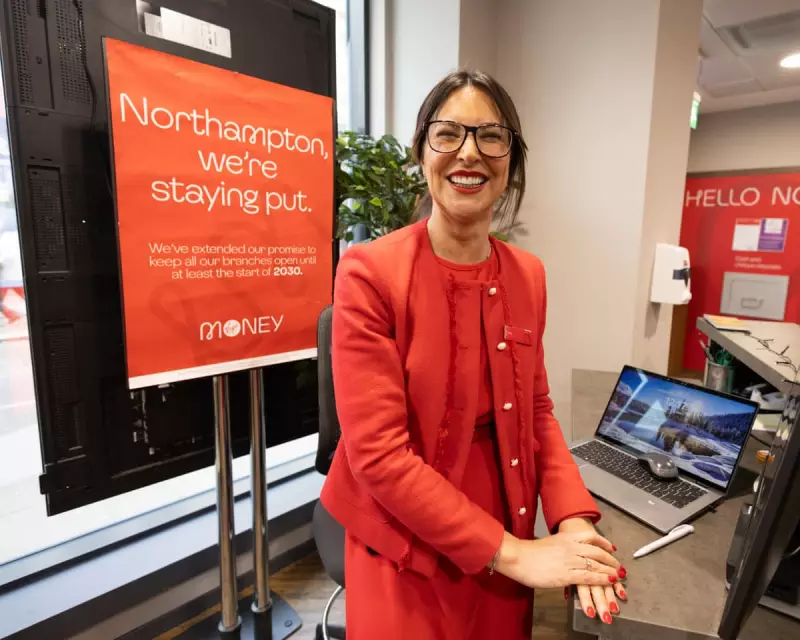
In a surprising reversal of a long-running trend, Britain's banks are staging a quiet comeback on the nation's high streets. After shuttering more than 6,000 branches since 2015, major lenders are now pausing closures and even opening new sites, offering a lifeline to communities and customers who still depend on face-to-face service.
A Pledge for the High Street
This shift is being led by some of the UK's biggest financial names. Nationwide Building Society has made one of the most significant commitments, promising to keep its 696 branches open until at least 2030. This pledge brought particular relief in towns like Northampton, where customers of the recently acquired Virgin Money were concerned about their local branch's future.
For Jatish and Sudha Shah, a couple in their 70s, the guarantee was crucial. Jatish, who is hard of hearing, values the private space his local Virgin Money branch provides to discuss accounts and check on the couple's ISAs. "I know we could do it online and I’m quite capable, but I prefer face to face," he said, adding they would have considered switching banks had it closed.
They are not alone in this sentiment. HSBC UK has vowed to keep its 327 remaining branches open until 2027. Barclays, previously aggressive in shutting sites, has extended opening hours at dozens of its locations. Even newer 'challenger' banks are investing, with Metro Bank launching new sites and Newcastle Building Society refurbishing a historic building for a flagship branch.
Why Banks Are Reconsidering Physical Spaces
This change in strategy does not signal a mass return to queuing for simple transactions. Nikhil Rathi, CEO of the Financial Conduct Authority, noted the commercial shift, with institutions now "seek[ing] to make a virtue" of keeping branches open.
Analysts point to a strategic sweet spot. Branches are increasingly morphing into hubs for advice and complex services, rather than places for routine deposits and withdrawals. They are vital for serving small business clients, older customers, and those needing help with significant life events like mortgages or power of attorney.
Intriguingly, the appeal spans generations. Research from KPMG reveals that more 18- to 24-year-olds visited a branch last year than those over 65, with younger customers making up 72% of visits. "It’s a misconception that younger customers only care about digital banking," said Peter Rothwell of KPMG UK, noting uses like depositing cash from side jobs.
The Future of Face-to-Face Banking
Despite this pause, the long-term trajectory for traditional branches remains one of evolution, not simple expansion. Banking hubs, where multiple lenders share a single location, have often been criticised for lacking personal service and are underused. Meanwhile, threats like online scams and digital outages are reminding customers of the security a physical location can provide.
Gary Greenwood, an analyst at Shore Capital, predicts branches will focus ever more narrowly on support functions. "Day to day transactions will be processed via self-service terminals while staff will be focused on providing value-added advice," he said.
Some even suggest that artificial intelligence, by automating back-office tasks, could free up resources for more in-person contact. However, John Cronin of SeaPoint Insights cautions that the current trend may be a pause, not a permanent end to closures: "Maybe there is another wave of branch closures [coming] in a few years’ time."
For now, on streets like Abington Street in Northampton, the renewed commitment offers stability. Customers like Diana Yates, 73, who visited her Nationwide branch to cash in bonds, embody the ongoing need. "I have got internet banking... but I’m not confident doing things with large amounts of money on my own," she explained. For her and many others, the human touch in banking remains irreplaceable.




