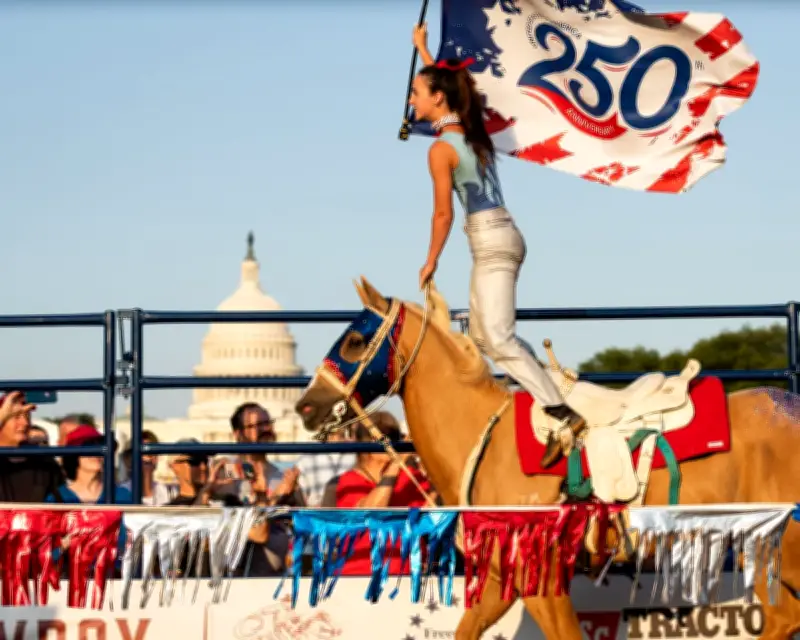
In a recent column for Guardian US, Jamil Smith challenges the celebratory mood surrounding America's 250th birthday, arguing that the nation is not a finished monument but a structure still under repair. Smith contends that the founding declaration of 1776 was made while the nation enslaved human beings, and a truer account of American freedom runs through 1619 and Juneteenth.
Dissatisfaction with the country's direction
Smith notes that affection for the country is thin this summer, citing a Pew Research Center finding that 69% of Americans were dissatisfied with the country's direction early this year. He asserts that this is not ingratitude but clear vision.
Supreme Court rulings as a diagnosis
In the final days before July 4, the US Supreme Court delivered a diagnosis of the country. It preserved birthright citizenship under the 14th Amendment, which Smith calls one of the country's greatest repairs, while loosening a guardrail against corruption and weakening another promise of equal protection.

Smith emphasizes that repair is not nostalgia or a fresh coat of paint but the unglamorous work of keeping a structure standing: protecting democracy and civil rights, building homes, limiting the power of money, and preserving public memory.
The 14th Amendment as a repair
The Supreme Court blocked the president's executive order to end birthright citizenship for children of undocumented and temporary residents. Justice Ketanji Brown Jackson, concurring, called the Reconstruction amendments "an anticaste, antisubordination reset," not a mere spot treatment. Smith notes that the citizenship clause was a repair built after Dred Scott, slavery, and war.
However, the victory did not last the afternoon. The president called the ruling "too bad for our Country" and urged Congress to end birthright citizenship, insisting no amendment was needed. Justice Brett Kavanaugh wrote that Congress could carve out exceptions by statute, suggesting a repair can be upheld in the morning and marked for demolition by nightfall.
Memory as a form of repair
Smith argues that memory is itself a form of repair, citing the work of Bryan Stevenson and the Equal Justice Initiative's Legacy Sites. He warns against distortion that allows old hierarchies to return in new language.
The Thomas dissent recast the 14th Amendment as a narrow favor to freed slaves, which Jackson named as a danger that pits Black Americans against immigrants, contrary to the intentions of Reconstruction advocates.
Campaign finance and transgender rights
The court also struck down decades-old limits on party spending in coordination with candidates, removing a guardrail against corruption. Additionally, the court upheld state laws barring transgender girls from girls' sports, which Smith calls permission to discriminate rather than equal protection.
Material repair needed
Smith highlights that repair is not only constitutional but material. Congress passed a rare bipartisan housing bill, but the president canceled the signing ceremony, calling it "a big yawn" and prioritizing a voting bill that would make registration harder.
Smith concludes that celebration will not house people, protect voters, or repair what power is trying to break. He calls for naming plainly what is being damaged and by whom, then getting busy fixing it. "A republic does not survive because its people praise it. It survives because they repair it."