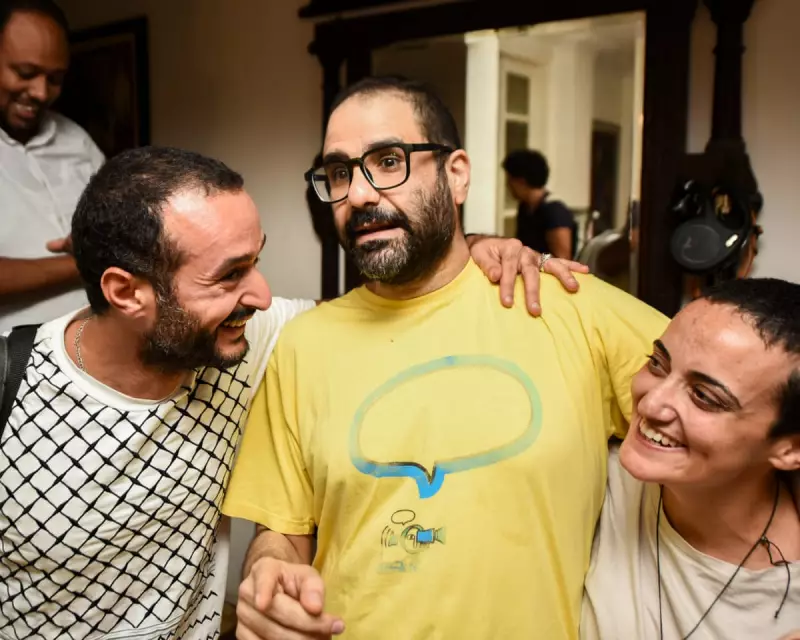
The British-Egyptian human rights campaigner, Alaa Abd el-Fattah, has issued an unreserved apology for what he describes as "shocking and hurtful" tweets he posted more than a decade ago. The apology comes amid a fierce political backlash in the UK, with some Conservative MPs questioning Prime Minister Keir Starmer's support and calling for his citizenship to be revoked.
A Statement Issued After Frantic Consultations
In a statement released in the early hours of Monday morning, following a day of intense discussions, Abd el-Fattah expressed regret for the messages written during what he called heated online battles. The tweets, posted between 2010 and 2012 around the time of the Arab Spring, included inflammatory language about Zionists and derogatory remarks about British people.
"Looking at the tweets now – the ones that were not completely twisted out of their meaning – I do understand how shocking and hurtful they are, and for that I unequivocally apologise," he wrote. He attributed the posts to the anger and frustration of a younger man during a period of regional crises, including wars in Iraq, Lebanon, and Gaza, and rising police brutality in Egypt.

Political Fallout and Calls for Deportation
The resurfacing of the tweets has triggered significant political controversy. Shadow ministers highlighted them to challenge Starmer's backing of the activist, who was recently released from an Egyptian prison after more than 10 years and allowed to travel to the UK. Conservative leader Kemi Badenoch has demanded his deportation, stating, "I do not want people who hate Britain coming to our country." Meanwhile, Reform UK's Nigel Farage claims to have reported Abd el-Fattah to counter-terrorism police.
Within the Labour Party, there is reported regret that more scrutiny was not applied to his past before public support was offered. Abd el-Fattah was granted British citizenship in 2021 under laws allowing mothers to pass on citizenship, as his mother was born in London.
Defence of Record and Claims of Misrepresentation
In his detailed apology, Abd el-Fattah asked to be judged on his real-world activism, stating he has paid a steep price for defending minorities, LGBTQ+ rights, and freedom of speech in Egypt. He argued that some tweets have been deliberately misconstrued, including one falsely alleging homophobia and another wrongly interpreted as Holocaust denial.
"I take accusations of antisemitism very seriously," he asserted, pointing to his past defence of religious minorities in Egypt. He emphasised that his life's work has been dedicated to non-violent pro-democracy activism, for which he was repeatedly imprisoned.
The activist believed he had addressed the issue of his tweets after they first emerged in 2014, leading to the withdrawal of his nomination for the Sakharov Prize. He dedicated a chapter to the subject in a book of essays sent to MPs, including the Prime Minister, though it did not fully cover the volume and aggression of some posts.
Abd el-Fattah concluded by reflecting on his missed years with his family, noting the recent weekend was the first time he could celebrate his son's birthday with him since 2012. He reiterated his commitment to equality, justice, and secular democracy.