
The director of Britain's leading foreign policy institute has declared that Donald Trump has effectively ended the Western alliance, compelling the United Kingdom to pursue a more assertive and independent strategy on the global stage, particularly towards the United States and China.
A Stark Warning on the Demise of Shared Principles
In her annual lecture, Bronwen Maddox, director of Chatham House, issued a stark assessment. She argued that the risk of remaining silent and failing to defend the core tenets of the liberal international order is that they become mere historical artefacts, rather than the foundation of the future.
Maddox described Trump's impulsiveness, appetite for military action, and rejection of international law as revolutionary. She stated that allies must now consider the previously unthinkable: defending themselves against the US in both trade and security matters.
"It is not grandiose to call this the end of the western alliance," Maddox asserted, referring to the shared commitment to individual liberty, constitutional democracy, and free trade that has driven prosperity and global influence for decades.
The UK's Precarious Balancing Act
Maddox highlighted the profound dilemma facing the UK and Europe. They desperately seek two key things from America: a favourable trade deal and continued defence cooperation, including support for Ukraine. This need makes challenging Washington exceptionally difficult.
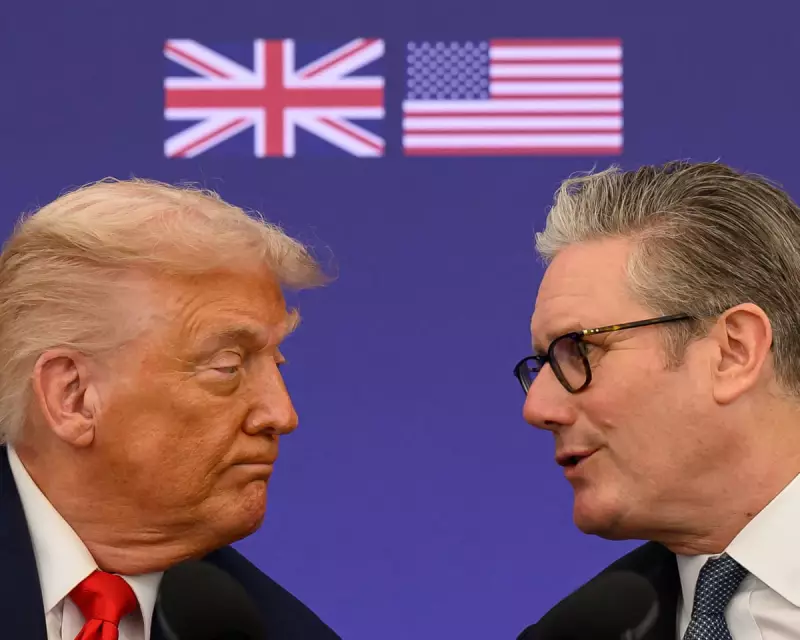
"We have seen in so many ways how the Trump administration can react very, very strongly to small things that people say," Maddox noted in an interview with the Guardian, referencing the meeting between Trump and Keir Starmer at Chequers last September.
She criticised the UK's current approach as a balancing act of such agility that its actual policy has become hard to discern. To preserve autonomy while maintaining the special relationship, the UK must be willing to publicly differ. Maddox urged Labour leader Keir Starmer to take a firm stand, for example, by explicitly defending the BBC against Trump's $10 billion defamation lawsuit.
Confronting China and Building New Coalitions
Ahead of Starmer's imminent visit to China, Maddox pressed for a tougher stance. While not directly challenging China's plans for a large new embassy in London, she questioned the necessity of such a vast diplomatic footprint.
She also warned that the pending decision on allowing Chinese technology into UK wind turbines is critically underplayed, as it could grant Beijing an "off switch" and deep insight into national energy consumption. Furthermore, she called for Labour to address UK universities' financial dependence on Chinese students.
As the old global order unravels, Maddox argued for the creation of new, regional "coalitions of the willing" built around common interests. Many nations will need to invest more in their own defence and quickly identify like-minded partners.
"China is certain to try to offer to fill the vacuum created by Trump," Maddox warned, noting that Beijing will rhetorically champion global governance and rule of law while simultaneously rejecting their application to internal matters like Taiwan.




