Calls have been made urging the Government to clarify the rules around council housing for foreign public office holders and their spouses after a South London council took back possession of a council flat linked to Sierra Leone's first lady.
The tenancy which Fatima Bio, the first lady of Sierra Leone, reportedly had in Walworth, in the borough of Southwark, was first reported by The Times. The newspaper reported Ms Bio registered to vote at the flat several times since 2009, with the council confirming at the time the property had the same tenant since 2007. The Press Association understands Ms Bio, whose husband Julius Maada Bio has been president of Sierra Leone in west Africa since 2018, is understood not to have been evicted but the council has taken possession.
Council Action and Response
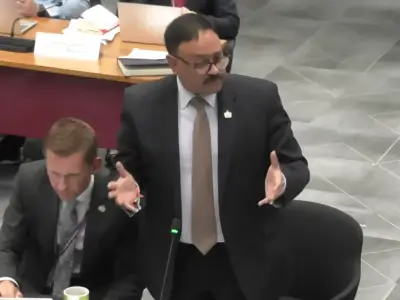
Green Party councillor Reginald Popoola, who is Southwark Council's executive member for council homes, said: "We can confirm we have taken possession of a property in Walworth following a 12-month investigation by our housing investigations team. I look forward to bringing this council property back to its original purpose, which is to provide a safe and secure home for people with legitimate housing need on the council's waiting list. This property will be swiftly allocated to a local family in genuine housing need."

Political Reactions and Debate
Lord Jamieson, a Conservative shadow housing minister, said the case was "high profile" and "raised significant public concern, and has rightly received widespread scrutiny", as peers debated the Social Housing Bill this week. He added: "I appreciate that that has now been resolved but that took 12 months from it becoming publicly aware. It's not about a single individual or a single country, rather it's about the fact that where individuals hold senior public office overseas or are closely associated with those who do, is it not reasonable to ask whether existing eligibility rules are sufficiently clear and robust?"
Lord Jamieson had backed a change to the draft new law to give ministers the power to issue guidance on "access to social housing by foreign public office holders" or their spouses, or people subject to UK-imposed sanctions.
Local government minister Baroness Taylor of Stevenage said the amendment was "unnecessary" because ministers can already use the Housing Act 1996 to issue guidance on who councils should offer social housing to. "Authorities can apply qualification rules such as local connection and income tests to reflect local priorities," she told the Lords. The minister also said: "With regard to the specific case raised by Lord Jamieson, it wouldn't be appropriate for me to comment on that case in the chamber here."
Broader Implications for Social Housing
The Social Housing Bill contains several reforms to the way council homes are rented and sold, including lengthening the time that someone must live in their council home before they have a "right to buy" it to 10 years, up from three. Lord Jamieson also urged ministers to consider limiting social housing to British citizens only.
"Given the pressures that exist on housing waiting lists across the country, it's important that the Government are clear about who is eligible for social housing and that we ask ourself if reform is needed," he said. "Ultimately, this amendment is about the principles that underpin allocation of scarce public resources. As of March 2023, there were approximately 1.33 million households on the local authority housing registers in England, the highest figures for a decade and significantly higher than recent years. Behind those statistics are families, pensioners, young people, vulnerable individuals all waiting for access to a secure and affordable accommodation. At the same time, 431,000 households in social housing had a lead tenant who was a non-UK national, representing around 10% of all social housing households. These figures inevitably raise legitimate questions about eligibility, prioritisation and fairness."

The minister replied that in 2024/25, 89% of lead tenants in new social housing lettings were UK nationals, while 4% were European nationals and 8% were from outside the European Economic Area, "broadly the same as the previous year". Lady Taylor continued: "Eligibility for social housing is tightly controlled – if a person's visa prevents access to state benefits or local authority housing assistance, they are not eligible for social housing. Only eligible people can join waiting lists and receive a tenancy. Where foreign nationals are eligible, they will have their housing needs considered on the same basis as other eligible applicants, in accordance with the local authority's housing allocation scheme."
The Bill faces further scrutiny in Parliament before it can become law.