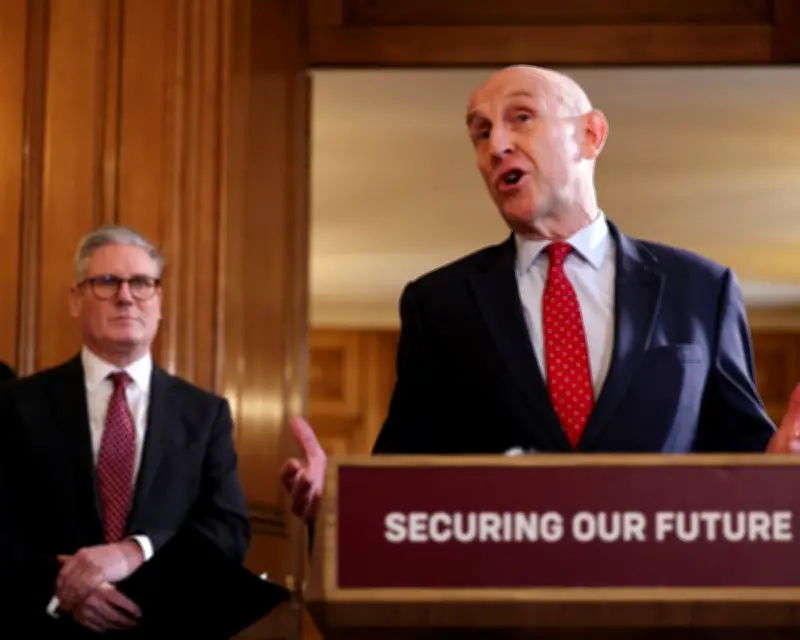
Keir Starmer looks on as defence secretary John Healey makes a speech. Healey resigned on Thursday. Photograph: Adrian Dennis/AFP Pool/AP
Reeves grudgingly resorts to departmental salami slicing to fund UK defence budget
Heather Stewart Economics editor
Starmer shows no will to pursue the main options for rising commitments: spending cuts, tax rises or borrowing

When Keir Starmer wanted to promise Donald Trump that the UK would increase defence spending, he decided to fund it by slashing the UK’s aid budget – losing a cabinet minister, Anneliese Dodds, in the process.
This time around, with John Healey’s Ministry of Defence (MoD) demanding an additional £18.5bn over four years to fund the defence investment plan, there was no such lever to hand.
Instead, asked to find the money, the chancellor, Rachel Reeves, grudgingly resorted to classic Treasury salami slicing: asking Whitehall departments to pare about 1% off capital budgets they painstakingly negotiated less than a year ago.
That sits uneasily with the government’s promises on the public services – repairing crumbling hospitals and overcrowded schools, for example – and the chancellor’s hopes of using investment in green energy to kickstart economic growth.
In another well-worn manoeuvre, alongside demanding cuts elsewhere, Reeves also promised to use her department’s reserve to pay for £3.5bn worth of projects the MoD had expected to have to fund.
When Healey saw the end result – a £13.5bn uplift over four years – he was horrified at what he saw as penny-pinching, and duly resigned.
Defending the cautious approach, Treasury insiders point to the MoD’s notorious profligacy and tend to shrug at some of the dire warnings from military chiefs, who have an inbuilt bias towards higher spending.
And they reject the idea that the settlement Healey was being offered fell well short of what was needed, pointing out that £13.5bn over four years is £1bn a year or so less than the MoD had demanded – a modest sum to resign over.
Yet Healey’s quiet fury came in the context of the wider argument about how the UK can fund rising defence commitments – including the promise Starmer has vocally made to spend 3% of GDP on defence by some point in the next parliament, and 3.5% by 2035.
Here, there are essentially three options: spending cuts, tax rises or borrowing, and Starmer has shown no political will to pursue any of them.
Spending cuts
The question here is, which spending? The Treasury had already squeezed departments in the run-up to the spending review; welfare cuts were botched last year and had to be reversed after a backlash from Labour MPs. Other costly spending commitments, such as the pensions triple lock, are ruled out for this parliament by the party’s manifesto.
Tax rises
£18.5bn over four years amounts to £4.5bn or so a year, or a bit more than 0.5p on the basic rate of income tax. But if the UK is serious about the 3.5% of GDP promise, it would have to move towards finding an eye-watering £30bn a year in additional spending over the next decade.
That would be a major structural change in the makeup of public spending: effectively the reversal of the post-cold war “peace dividend” that helped fund the welfare state in the UK and across Europe.
Given the magnitude of that pledge, Starmer could have started to make the argument that in this new, more dangerous world, the UK needed to be better defended – and the price was higher taxes. Perhaps that might mean revisiting Labour’s manifesto tax promise not to touch national insurance or income tax. The strategic defence review called for a “national conversation” about how to proceed.
Yet after two bruising tax-raising budgets, there is little political appetite in No 10 for more, and given the long-term nature of the defence commitment, the Treasury was happy to defer any firm decision for now.
Borrowing
Reeves changed the fiscal rules to allow for a significant increase in borrowing to fund investment, but with global investors already tending to charge the UK a higher interest rate than other large economies, the Treasury is reluctant to go further.

There have been various suggestions for increasing borrowing without jeopardising financial stability. Gordon Brown has advocated some form of collective borrowing scheme, alongside Nato or European allies, for example, focused on defence, and argued that the UK’s part in it could sit outside the fiscal rules.
There have been some conversations about such a vehicle – though the Treasury fears markets would still view it as additional borrowing and punish the UK accordingly.
Others have mooted trying to raise more money directly from the public, by persuading them to invest in “war bonds” – but there is little enthusiasm in No 11 for that plan, which would again require a deftly handled public campaign.
Any of the three options, then, would have required difficult trade-offs – and Healey’s frustration seemed to be that despite vocally promising higher defence spending, Starmer was unwilling to pursue any of them. The resulting messy compromise may well have hastened the arrival in No 10 of Andy Burnham – who would face exactly the same pressures in the years ahead.