The announcement of the withdrawal of thousands of US troops from Germany underscores the pressing need for a pan-European defence strategy. As Donald Trump's second term faces declining poll ratings and an unpopular war in the Middle East, European governments have increasingly become targets of the US president's frustration.
US Pressure on European Leaders
Sir Keir Starmer's refusal to support the attack on Iran led to unfavorable comparisons with Winston Churchill and King Charles. Spain has been threatened with a trade embargo for similar reasons. Italy's prime minister, Giorgia Meloni, once seen as a key ally, has also faced criticism. Trump stated, 'I'm shocked by her. I thought she had courage. I was wrong.'
Germany in the Crosshairs
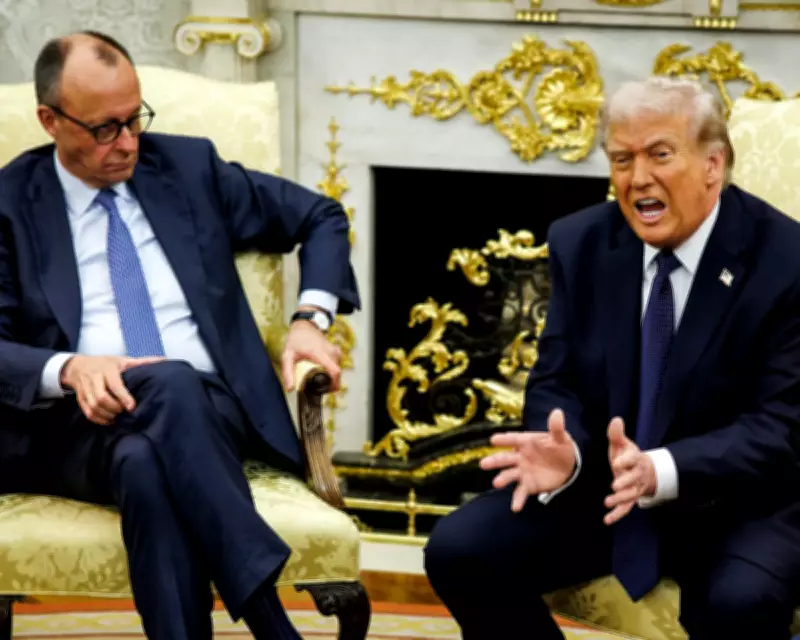
Currently, German Chancellor Friedrich Merz is in Washington's focus. Following his accurate observation that the US lacks a convincing strategy on Iran, the Pentagon announced the withdrawal of 5,000 US troops from bases in Germany. Vital long-range weapons are also being withheld as American stockpiles deplete due to Middle East events. Additionally, Trump threatened to raise tariffs on European car manufacturers to 25%, a measure that would hit Germany hardest.

Merz's Diplomatic Balancing Act
At the weekend, Merz emphasized he was not 'giving up' on the transatlantic relationship or his relationship with Trump. Given the stakes, he was right to do so, though Trump's thin skin, vengeful instincts, and hostility to the EU mean further conflicts are likely. However, Washington's desire to disengage from its postwar role as Europe's security guarantor has ramifications beyond diplomacy.
Future of European Defence
In a changed world, the potential shape of future European defence cooperation has become clearer over the past year. French President Emmanuel Macron has suggested extending France's nuclear deterrent across the continent. The EU has made €150bn available in cheap loans for security spending. Yet, strategic priorities and procurement policies remain fragmented along national lines.
Challenges and Opportunities
Merz has continued the direction set by his predecessor, Olaf Scholz, who announced a huge increase in defence spending after Russia's invasion of Ukraine. However, tensions persist over Berlin's procurement choices and the implications of Germany becoming the EU's military hegemon. The way to defuse these tensions is by making more resources available at an EU level through joint borrowing, boosting European manufacturers, and deepening cross-border collaboration.
From the green transition to migration and security, Europe's 21st-century challenges must be collectively confronted. Merz has shown traditional German aversion to more EU debt while relaxing domestic borrowing rules for defence. This may make short-term political sense, but Washington's warnings underline the obvious: a new model of European security must have solidarity and joint decision-making at its core.