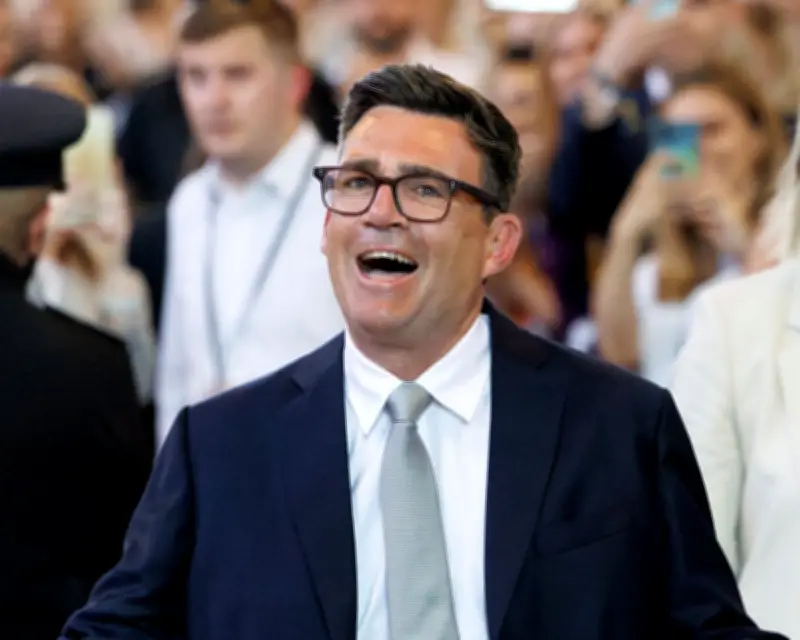
Andy Burnham is facing pressure to adopt an “economic populist” approach to combat the cost of living crisis if he becomes prime minister, as a detailed opinion poll indicates that radical policies could help Labour retain its majority at the next election.
Poll warns of Labour seat collapse
Senior figures advising the Makerfield MP have circulated a seat-by-seat poll showing Labour’s majority could be demolished, with the party on course to win fewer than 100 seats. However, the survey of about 10,000 voters suggests that adopting policies such as rent controls and higher taxes on wealth could engineer a dramatic turnaround against Nigel Farage’s Reform UK in key battleground seats.
The Persuasion UK research shows that Labour running on a platform of “cost of living populism” could win 34% of the national vote and 358 seats—a majority of 66. In contrast, sticking to its current trajectory could see the party slump to its lowest number of MPs since 1918, with just 95 seats from 19% of the vote share.

Radical policies tested in poll
The ideas road-tested in the poll include: introducing an emergency brake on landlords raising rents while the state builds and buys more social homes; an affordable energy guarantee; cheap bus fares; an expansion of free school meals to all primary-age children; and raising the rate of tax on investors’ profits to the same rate as workers’ wages.
Burnham is facing competing demands from Labour MPs, union leaders, political advisers, and business lobbyists over his policy agenda. While he has pledged to stick to Labour’s manifesto, it is widely expected he will look at areas where the party could be bolder after his stronger-than-anticipated victory against Reform in Makerfield.
Support for interventionist approach
One Labour source close to Burnham said his speech on Monday “made it clear that he would not be pitching business as usual” if he replaces Starmer as expected. “His instincts are economically interventionist, and he will act with radicalism to boost growth and living standards,” they said.
Angela Rayner, the former deputy prime minister, said Burnham had “shown the difference active political leadership can make” as mayor of Greater Manchester. “He’s right that government can’t just tell people to tighten their belts while costs soar. This poll shows that his leadership could transform our politics as well as economics.”
Miatta Fahnbulleh, an MP and former thinktank chief executive who has been advising Burnham on economic policy, said the polling showed addressing the cost of living was key for the party. “The cost of living is the most salient issue and this polling shows it’s not only the right thing to do in terms of addressing what people care about but it also makes sense politically for Labour.”
Consideration of chancellor role
Burnham has been considering appointing Ed Miliband as chancellor to challenge Treasury orthodoxy, but a final decision has not been made. However, others within Labour ranks are cautioning against a wholesale radical agenda amid concerns over the tight position of public finances and fears it could rattle bond markets. Pat McFadden, the work and pensions secretary, has been floated as a potential alternative chancellor by some MPs who say he would be a safer pair of hands.
The Persuasion UK research, conducted by Convergent Opinion and co-funded by the Global Fund for a New Economy, could strengthen the case for Burnham to adopt a bolder approach in government as Labour runs out of time in power. According to the MRP data, in the 124 Labour-held seats where Reform are a threat, Labour would retain as many as 92 on a “cost of living populism” platform instead of 41 on current polling. This includes dozens of “red wall” seats in the north of England.
A spokesperson for Burnham said he had promised to give families “the breathing space they need by tackling rising costs”.