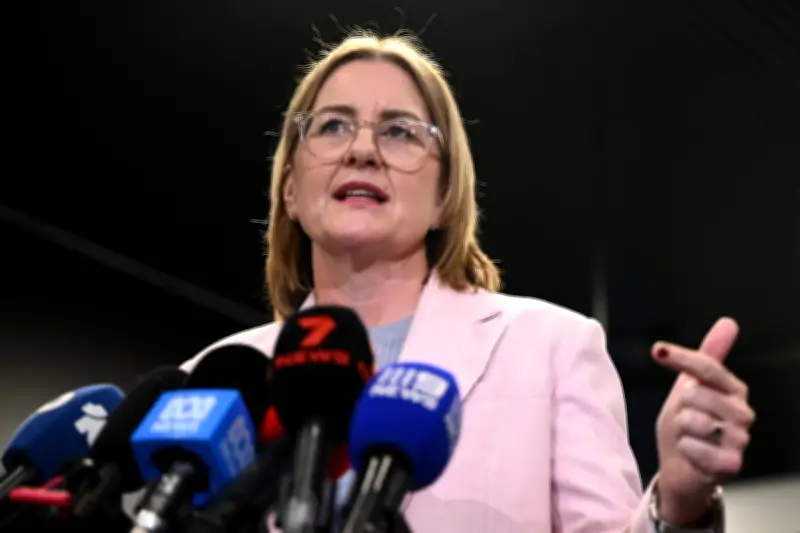
Free puppies might be the only policy that would improve the dire polling for Victorian Premier Jacinta Allan, 21 weeks out from the state election on the last Saturday of November, according to a RedBridge poll. The survey of 5,000 people shows Allan scores high only in unpopularity, while her opponent, Liberal leader Jess Wilson, is unknown to nearly 20% of the sample.
Allan faces corruption questions
Allan cannot hold a press conference without being grilled about her apparent lack of curiosity regarding credible accounts of serious corruption allegedly siphoning billions from government infrastructure projects. An opinion piece in the Age on Thursday offered a chance to change strategy, but she merely expressed regret about the waste and pledged to prevent recurrence. While Allan argues that a royal commission would primarily benefit barristers' children's orthodontists, the collateral might be that bikies and standover merchants would need to find alternative funding for their bling, luxury cars, and cryptocurrencies.
Wilson struggles with identity
Wilson's difficulty in establishing her identity is compounded by Victorians having seen five opposition leaders in as many years. Distractions include Liberal backbencher Moira Deeming, who recently claimed to be assaulted by former leader Matthew Guy but was quickly dismissed by Victoria Police. The state opposition told the court on Friday it would take no steps while legal proceedings are underway, as Deeming seeks a Supreme Court injunction to remain a Liberal. Even her former supporters in the Murdoch media may be experiencing buyers' remorse.

Greens and Socialists gain ground
Victoria was once the Greens' stronghold, but recent polling shows them struggling. Post-Covid teenagers who will vote for the first time in 2026 were 14 when Daniel Andrews won in 2022 and 10 when he won in 2018; the Greens are now part of the establishment to them. Younger voters are looking elsewhere, with the Victorian Socialists gaining momentum from recruitment at weekly pro-Palestine protests. If Socialists and Greens hold the balance of power in a hung parliament, it could reshape politics. In the US, similar trends saw socialist-lite Zohran Mamdani elected in New York City and 29-year-old democratic socialist Melat Kiros defeat a 68-year-old Democrat incumbent in Colorado.
One Nation's potential
One Nation may make inroads in Victoria, historically immune to Pauline Hanson's appeal, but only if a credible local leader emerges. Past One Nation candidates have been dysfunctional, with internal contradictions and a tendency to preselect extremists. However, Gina Rinehart's investment and former Nationals leader Barnaby Joyce's campaign experience could change the outcome—or not.
Undecided voters key
Both Allan and Wilson have major policy initiatives to announce and must define their vision for a state experiencing rapid economic and population growth. If polling is correct, a slight majority of Victorians have decided their vote, but a significant undecided or soft vote leaves the outcome uncertain. History offers a parallel: in 1999, Steve Bracks faced Jeff Kennett with high undecided numbers until election eve. Voters were not undecided about the polarising Kennett but were weighing up the relatively unknown Bracks. The 2026 election may be similar, according to Jon Faine, a vice-chancellor's fellow at the University of Melbourne and former ABC Radio Melbourne Mornings presenter.