
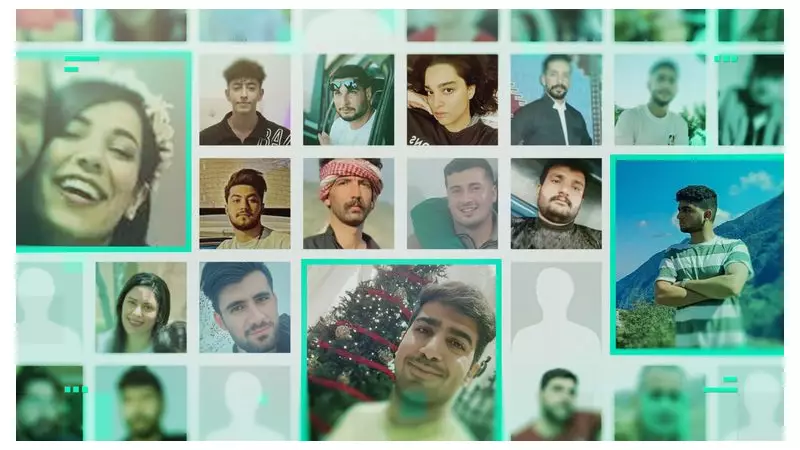
An investigation by Sky News has verified the identities and circumstances of more than 110 individuals killed during the recent, violent crackdown on protests in Iran. The findings expose not only the brutality of the state's response but also systematic attempts by authorities to conceal the true nature of the deaths.
A Glimpse into the Violence and Concealment
Since widespread demonstrations began three weeks ago, human rights groups estimate that thousands have died. Sky News's Data and Forensics team, working amidst a severe government-imposed internet blackout, has painstakingly verified over 110 of these fatalities. The dead include at least six women and eleven children, their stories pieced together from social media reports, morgue videos, information from human rights agencies, and interviews with grieving families.
Among the youngest was 15-year-old student Taha Safari, killed during protests in Azna on 1 January 2026. Another victim, 27-year-old fashion designer Nazli Janparva, was shot dead in Tehran on 8 January. Her social media revealed a passionate individual; in a 2022 message to a human rights group, she wrote: "Fight, fight until freedom. For now, the only goal is to overthrow the regime."
The reporting uncovers a disturbing pattern of obfuscation by Iranian authorities. Families of at least seven verified victims reported being forced to pay money—in some cases up to £7,000—to retrieve their loved ones' bodies from state morgues. This practice echoes previous claims of authorities demanding a "bullet fee" to cover the cost of ammunition used in killings.
Inconsistent Narratives and Forced Silence
Testimony from relatives points to direct pressure from the regime to falsify the cause of death. The cousin of 18-year-old Sourena Golgoun, a chemical engineering student shot at a protest on 8 January, told Sky News that authorities threatened families to claim victims were killed by "terrorists," not security forces. "We know that it's not true, we know it," he stated.
This aligns with the official Iranian narrative blaming "terrorist elements" for turning peaceful economic protests into "armed riots." However, evidence gathered contradicts this. In the case of 18-year-old Amir Ali Haydari, killed in Kermanshah on 8 January, his cousin Diako Haydari described a horrific scene: "He was shot in the heart, and as he was taking his last breath, they hit him in the head with the butt of a gun." Despite this, his death certificate listed the cause as a fall from a height.
Human rights lawyer Leila Alikarami notes this misrepresentation is not new but highlights its current scale. "When similar causes of death appear repeatedly... it strongly suggests a deliberate effort to conceal state responsibility," she said, adding it violates Iran's international human rights obligations.
The Chilling Reality of the Crackdown
A rare, first-hand account from a witness named Kiarash, who fled Iran, provides a harrowing look at the scale of the violence. He described searching a warehouse packed with bodies for his sister-in-law's friend, a young woman shot in the neck. "There were so many children there," he recalled. "They were in small bags - thrown between two warehouses." He spoke of a mother finding her child, screaming, "this is my baby…please don't touch her."
Kiarash's testimony underscores the regime's response: "The people are asking for what they want... But no one is listening to them. They are replying with bullets, with heavy machine guns." Sky News analysis confirms that the vast majority of verified victims died from gunfire, with 8 January—the day the internet was shut down—being the deadliest single day.
As the internet blackout persists, now over a week long at the time of reporting, the full scale of the tragedy remains obscured. An Iranian woman in Canada, speaking anonymously, voiced the anguish of the diaspora: "As soon as I try to close my eyes and sleep, the first image that comes to my mind is images of the morgues." She shared a final message from a friend in Iran: "If I am dead, tell the world that I am dying for liberty."
While Sky News continues to track and verify casualties, thousands are still unaccounted for. The verified list of over 110 names offers only a fragmentary snapshot of the loss, but it stands as a crucial record against the state's campaign of violence and silence.




