
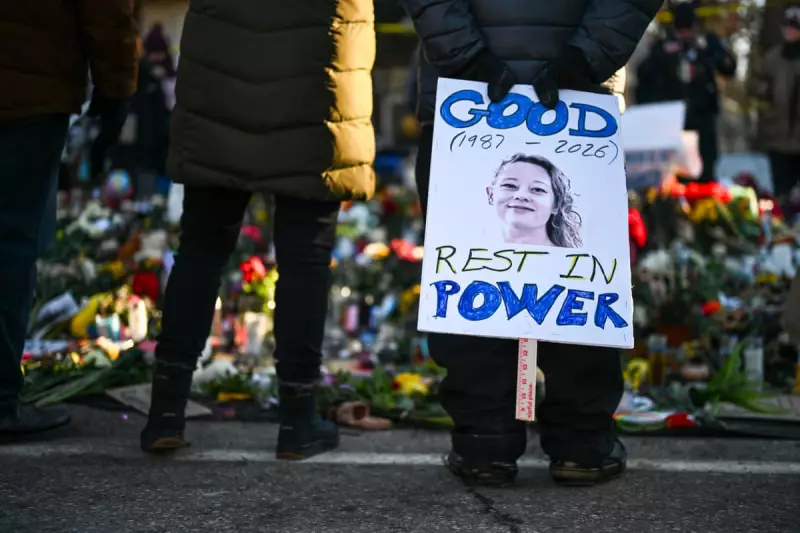
Newly released documents have shed stark light on the chaotic aftermath of a fatal shooting in Minneapolis, where a 37-year-old woman was killed by an officer from US Immigration and Customs Enforcement (ICE).
The incident, which occurred on the morning of 7 January 2026, resulted in the death of Renee Good and has ignited significant protests and political controversy across the United States.
Paramedics' Report Details Fatal Wounds
According to incident reports from the Minneapolis fire department obtained by the Guardian, paramedics arrived at the scene on Portland Avenue at approximately 9.42am. They found Good unresponsive in the driver's seat of her car, with visible blood on her face and torso.
The report states that responders identified two apparent gunshot wounds to the right side of her chest, another to her left forearm, and a possible wound to the left side of her head. They noted she was not breathing and had only an irregular pulse.
Due to an escalating situation with law enforcement and bystanders, paramedics moved Good to a different location to begin treatment. They performed chest compressions, applied a tourniquet, and continued CPR during transport to hospital. Despite all efforts, resuscitation was discontinued at around 10.30am.
Panicked 911 Calls Capture Immediate Aftermath
Transcripts of multiple emergency calls reveal the panic and confusion that followed the shooting. The first call came in at roughly 9.38am, just minutes after shots were fired.
One distraught caller told the dispatcher, "They just shot a lady point-blank range in her car." When asked if the woman had been shot, the caller responded, "She's fuckin' dead. They fuckin' shot her." The caller added that the shooting occurred because "she wouldn't open her car door."
Another witness reported seeing an ICE officer fire two shots through the car's windshield. "I saw blood all over the driver," the caller stated, describing how the vehicle then crashed into a parked car.
A separate call, seemingly from a federal officer requesting backup, described "officers stuck in a vehicle" and "agitators on scene," noting that "shots [were] fired by our locals."
Law Enforcement Communications Show Escalating Tensions
Internal communications among emergency personnel detail the rapidly deteriorating situation on the ground. Messages from the scene urgently called for crowd control, with updates stating the crowd was "getting hostile" and attempting to surround officers.
Records show that the ICE agent who fired the shots, identified as Jonathan Ross, was transported away from the scene to a federal building by 10.04am. A message at 10.07am instructed someone to "contact who is in charge of feds and have them leave scene."
Tensions reportedly calmed only after all ICE agents had departed the area nearly two hours after the initial shooting.
Conflicting Accounts and National Repercussions
The Trump administration has defended the agent's actions, claiming he acted in self-defence and that Good attempted to run him over. This account has been widely disputed by Minnesota leaders and eyewitnesses, with video footage suggesting Good's car was turning away when the officer opened fire.
The killing has fuelled ongoing protests in Minneapolis and other US cities. In a significant escalation, former President Donald Trump threatened to invoke the Insurrection Act in Minnesota in response to the demonstrations, while Governor Tim Walz urged peaceful protest.
The administration has since announced the deployment of hundreds more federal agents to Minneapolis, following what immigration officials described as ICE's "largest operation to date" in the Twin Cities.




