
In the shadow of a Minneapolis police precinct burned during the 2020 Black Lives Matter protests, Jamie Schwesnedl starts his afternoon shift. Plugging his phone into his car, he tunes into a network of community alerts, his mission to watch for and disrupt the operations of Immigration and Customs Enforcement (ICE) officers saturating his neighbourhood.
Grassroots Networks Rise as Federal Presence Grows
Schwesnedl is one of thousands in the Twin Cities who have joined rapid-response groups, a direct reaction to the Department of Homeland Security sending 2,000 federal agents to Minneapolis earlier this month. This operation, described by the Trump administration as its "largest to date" targeting immigrants, has employed tactics including door-knocking and aggressive arrests, reigniting tensions in a city with a deep history of racialised police violence.
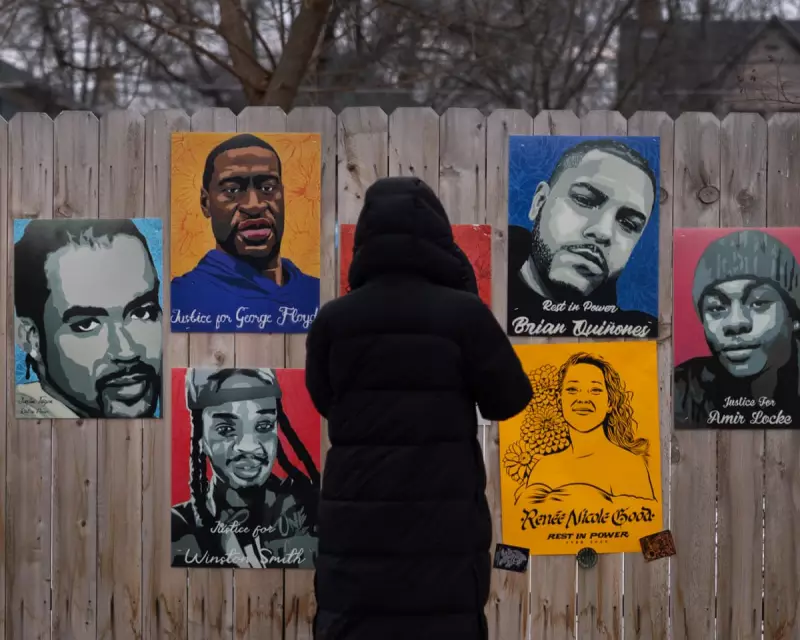
Participation surged further after Renee Good was killed by an ICE agent on 7 January 2026. Her poster now hangs near a memorial alongside images of George Floyd and other victims. "It's very clear that the Trump administration is looking to disguise what is a blatant campaign of cruelty," said city council member Robin Wonsley.
For organisers like Andrew Fahlstrom of Defend the 612, the current crisis builds on infrastructure forged in 2020. After Floyd was killed three blocks from his house, police vanished for a week. "We had to organise our own infrastructure," Fahlstrom stated, a sentiment echoed today. "This is not our first rodeo."
'We Keep Us Safe': Mutual Aid and Community Defence
The ethos from the 2020 protests—"Who keeps us safe? We keep us safe!"—now underpins a city under federal pressure. Parents stand guard outside schools in -10.6C weather. People with whistles mill on street corners. Networks like the Community Aid Network (CANMN), created during the uprising, have seen demand for food deliveries double in December and again in January.
"People are terrified and not leaving their houses," said Jennifer Arnold of Inquilinxs Unidxs Por Justicia. In response, neighbours provide rides, laundry, food, and rent support. Becky, a mother who drives children with vulnerable parents to school, said, "The situation is reminiscent of 2020 in that the government is shooting at us. But the scale of my involvement is greater."
At George Floyd Square, a memorial and community hub where police are not welcome, organiser Marcia Howard recently told neighbours, "It's just us, y'all. No one's here to save us." The group has met twice daily for over five years.
Escalating Tensions and a National Warning
The federal response has intensified alongside community action. On Thursday, 15 January 2026, Trump threatened to enact the Insurrection Act to quell resistance. A federal judge later warned agents not to retaliate against peaceful protesters. The administration also began a criminal investigation into Mayor Jacob Frey and Governor Tim Walz, who has since mobilised the Minnesota National Guard.
Threats against observers have grown. An ICE agent reportedly told a witness, "You guys gotta stop obstructing us – that's why that lesbian bitch is dead," referencing Good. DHS assistant secretary Tricia McLaughlin defended ICE actions, stating, "If you impede law enforcement operations... there are dangerous and, in this case deadly, consequences."
Despite the chilling message of Good's death, Fahlstrom said it had the opposite effect. "Thousands more people were signing up to do exactly the work that Renee Good was doing."
As Schwesnedl patrols, he acknowledges that often, people are "snatched too quickly" to intervene. But the purpose of ICE watch, he insists, is persistence. You never know how many you might save. With the situation darkening, Fahlstrom issued a stark warning: "People around the country need to be organising. Minneapolis is not gonna be the last place that falls under federal occupation."




