
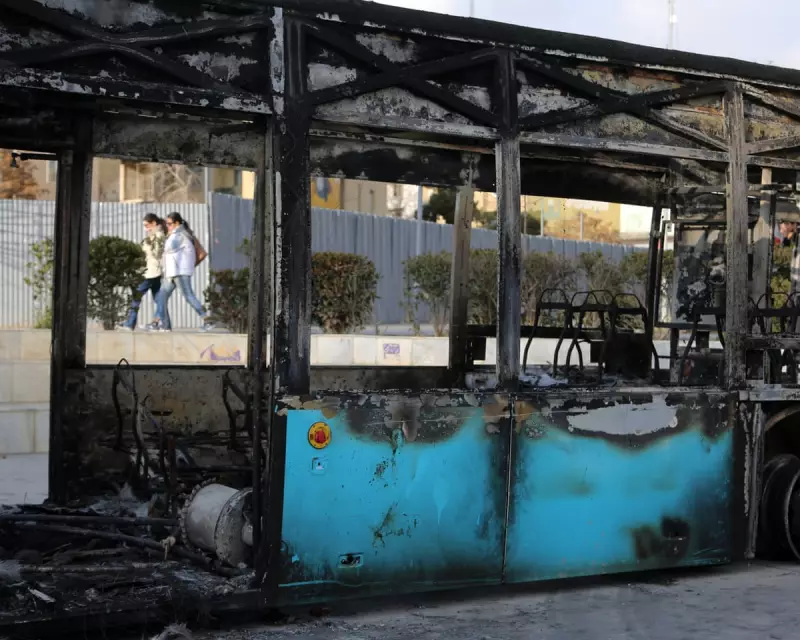
In late December, a wave of unrest swept through Iran, sparked initially by severe economic pressures felt by merchants and bazaaris before spreading to wider society. The movement rapidly evolved, with calls for outright regime change capturing international headlines. As has been its pattern, the Iranian government chose a path of violent repression over dialogue, silencing demonstrations rather than addressing the deep-seated popular grievances.
The Regime's Apocalyptic Ideology and Brutal Response
The scale of the state's crackdown can only be understood by examining its core ideological foundations. The Islamic Republic is not merely a theocracy; it operates as a node within a broader network of Shia jihadist militias across the Middle East. These groups are mobilised during internal crises to quell dissent with force.
Disturbing reports indicated that militias from neighbouring countries, notably Iraq, entered Iran to assist in suppressing the protests. The regime also leans on a dedicated domestic ideological base that demands swift and harsh action during periods of political instability. Graphic evidence emerging from sites like Kahrizak, showing the tragic accumulation of bodies, made it clear the primary instigator of lethal violence was the state itself.
Fearing foreign intervention and potential collapse, the regime's response was notably more brutal than in past uprisings, resulting in a significant loss of life and the stifling of peaceful, democratic expression.
The Hijacking of a Movement: Pahlavi and Persian Nationalism
While a desire for regime change is a genuine sentiment for many Iranians, its sudden prominence in this uprising was significantly shaped—and arguably distorted—by external forces. Reza Pahlavi, the son of the deposed Shah, alongside monarchist groups in the diaspora, some with alleged foreign backing including from Israel, played a pivotal role.
Pahlavi issued calls for Iranians to occupy streets and public spaces, yet failed to present a coherent strategy or ensure organisational readiness. His narrative of a "final battle," combined with expectations of foreign intervention fuelled by figures like Donald Trump on social media, encouraged high-risk protests without a clear roadmap.
Consequently, the protest movement was in many ways hijacked. The democratic aspirations that characterised earlier movements—like the Green Movement and the Woman, Life, Freedom uprising originating in Kurdistan—were overshadowed. This latest unrest took on ultra-right nationalist tendencies, advancing a Persian supremacist discourse that instrumentalised popular discontent rather than promoting a pluralistic, democratic vision for Iran's future.
Marginalised Voices and a Silenced Democracy
This shift had profound consequences for Iran's diverse civil society. Iran is a multinational state with significant Kurdish, Azeri, Baluch, and Arab populations. The political and ethnic demands of these non-Persian communities, which explicitly reject Persian supremacy, were eclipsed by the singular push for regime overthrow at any cost.
Kurdish political organisations voiced strong opposition to Pahlavi and his nationalist ideology. Furthermore, the central roles historically played by women and Gen Z in democratic movements were marginalised and quickly overshadowed by the dominant monarchist narrative.
Pahlavi's ineffective leadership and the consolidation of this Persian nationalist frame severely constrained genuine democratic political discourse, undermining meaningful dialogue within Iranian civil society.
Ultimately, mainstream media often circulates two competing narratives: one of a fundamentalist regime committing atrocities, and another promoting a nationalist, monarchist alternative. Largely absent from both are the lived realities of Iranians subjected to state violence and the voices of excluded civil society actors and ethnic minority movements who continue to struggle for a hearing.




