
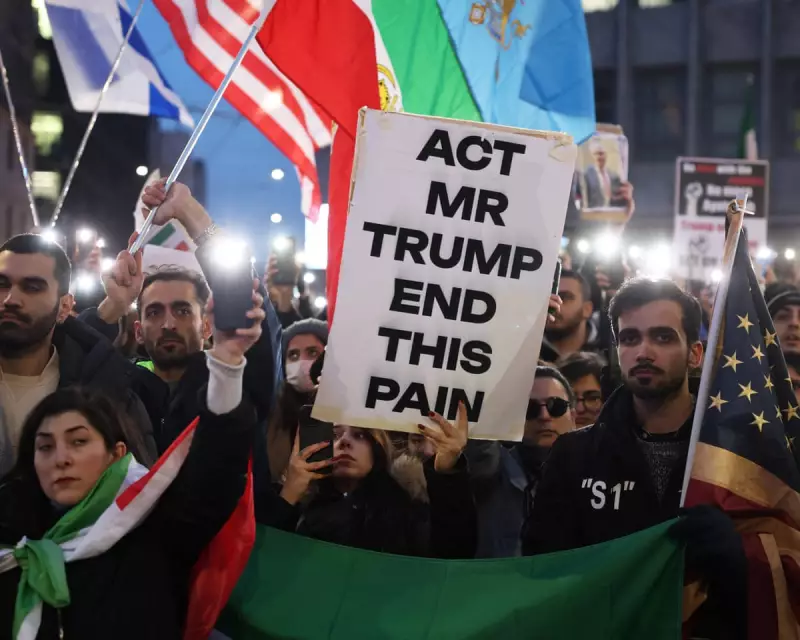
As protests in Iran appear to slow and the reported death toll varies wildly, the international community watches closely. The exiled son of Iran's former Shah, Reza Pahlavi, has publicly urged Western powers to help unseat Supreme Leader Ali Khamenei, while former US President Donald Trump's threats of being "locked and loaded" have temporarily receded. Amidst this, the voices of Iranians living abroad, with their families directly impacted inside the country, offer a crucial and poignant perspective on the crisis.
Families in the Dark: The Agony of the Blackout
For the diaspora, the internet blackout imposed by Iranian authorities has been a source of profound anxiety. Roya, a 27-year-old marketing professional in Switzerland, described the exhausting wait for the "double tick" on WhatsApp, a sign her messages had been delivered to her family. Relief came only in a fleeting, expensive phone call from her mother, who sounded exhausted and sad. "My heart was in my mouth," Roya said. Friends who escaped to Turkey reported the death toll was "way higher" than official estimates, but also conveyed a spirit of anger and strength among protesters.
This fragmented communication is a common thread. Arta, 38, in Europe, last visited her parents just days before the demonstrations spread. She witnessed economic strife and a strike in Tehran's bazaar firsthand. Now, she mourns those lost and waits desperately to hear her mother's voice again after connections were severed. For Mani, a 27-year-old student in Scotland with family among the protesters, a ten-second call from his brother was a lifeline. The psychological toll is severe, with many reporting constant fear, panic attacks, and a life put on hold.
A Divided Diaspora: Intervention or Internal Change?
The crisis has exposed deep divisions within the Iranian diaspora regarding the path forward. Some, like Rose, a 26-year-old student in the UK, plead for urgent foreign intervention. "We want President Trump to help us urgently," she stated, fearing mass arrests, executions, and unseen crimes against civilians. Mani in Scotland echoed this, believing global action is the only chance to topple a "hateful government" and stop the killing.
Conversely, others view foreign involvement with deep suspicion and historical dread. Roya argued passionately that Iran must be taken back "by ourselves and for ourselves," warning that foreign intervention has never benefited Iran. She expressed scepticism about figures like Reza Pahlavi, questioning his understanding of modern Iran after years in exile. Hana, a 40-year-old IT professional in Germany, called any US involvement a potential "disaster," likely to spark civil war and regional instability without guaranteeing democracy.
The Long Road Ahead: A Generational Shift?
Beyond the immediate crisis lies the daunting question of what comes next. Reza, a teacher in the UK, is pessimistic about quick fixes, viewing Iran's problems as deeply cultural and rooted in corruption. He believes meaningful change is a generational project, impossible to impose from outside or by a single figure. "Throughout history, only Iranians have changed Iran," he asserted.
This sentiment is shared by those who doubt the alternatives. Roya worries about the loud voices calling for a return to monarchy, while Hana opposes regime change primarily because she sees no viable alternative to the current structure. The lack of a unified opposition figure leaves a vacuum, fuelling uncertainty about Iran's future political landscape.
The human cost remains staggering, with estimates of those killed ranging from under 2,000 to more than 12,000. While Trump claimed the "killing in Iran is stopping" based on unspecified authority, the accounts from those with family on the ground suggest a reality of grief, resilience, and an unresolved struggle that may indeed, as some fear, take a generation to fully resolve.




