
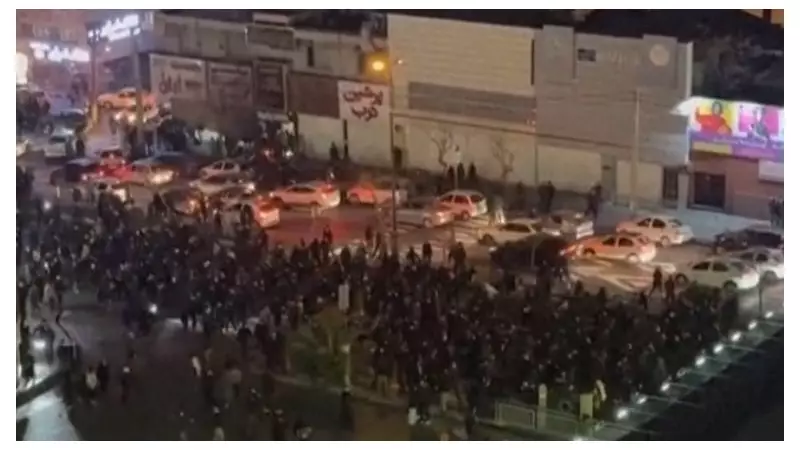
Iran's supreme leader has accused demonstrators of acting as foreign mercenaries for Donald Trump, as a senior prosecutor warned that some protesters could face the death penalty. The warnings come amid a severe nationwide crackdown, with the death toll from the unrest reportedly reaching at least 62 people.
Leadership Points Finger at Foreign Enemies
In a televised address on Friday, Supreme Leader Ayatollah Ali Khamenei claimed that "vandals and rioters" were "ruining their own streets to make the president of another country happy." He stated that Tehran would not tolerate citizens acting on behalf of foreign powers. The comments were a direct reference to the United States and its president, Donald Trump.
State media in Iran has consistently blamed the protests, which began last month over a sharp economic decline and the falling value of the rial currency, on "terrorist agents" from the US and Israel. The demonstrations, which started in Tehran, have now spread to all 31 of Iran's provinces, presenting the most serious challenge to the government in years.
Death Penalty Threat and Internet Blackout
Adding to the tense atmosphere, Tehran prosecutor Ali Salehi stated that some protesters could be charged with "moharebeh" or "waging war against God," a crime punishable by execution. He warned that authorities would show no leniency towards what he termed "armed terrorists." The semi-official Tasnim news agency also reported that several police officers had been shot dead by armed demonstrators.
In a move to stifle communication and organisation, Iranian authorities imposed a nationwide internet blackout starting late on Thursday, which extended through Friday. The blackout, confirmed by internet monitoring group NetBlocks, also affected international phone calls, largely cutting the country off from the outside world.
International Reactions and Trump's Warning
The situation has drawn sharp international concern. During a White House briefing, President Donald Trump praised the protesters, stating "Iran's in big trouble" and warning that "if they start killing people like they have in the past, we will get involved." He clarified that involvement would not mean "boots on the ground" but hitting the regime "very, very hard where it hurts."
In a joint statement, the leaders of France, the UK, and Germany strongly condemned the killing of protesters and expressed deep concern over violence by Iranian security forces. The United Nations human rights agency also said it was "disturbed" by reports of the violence and destruction.
The protests gained momentum following a call from exiled Crown Prince Reza Pahlavi for a mass demonstration. Pahlavi, the son of Iran's last monarch, warned the Islamic Republic that suppression "will not go unanswered." However, President Trump later stated he would not meet with Pahlavi and was unsure backing him would be appropriate. According to the US-based Human Rights Activists News Agency, over 2,300 people have been detained in connection with the protests.




